Sitharaman in Chennai: Thirumurais Bridge Ancient Panns to Carnatic Music
Synopsis
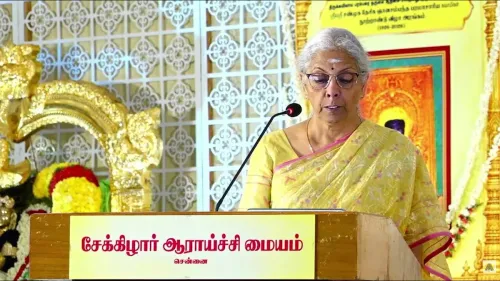
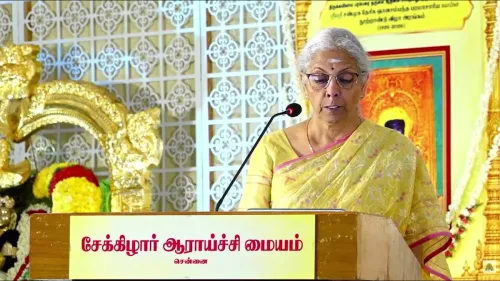
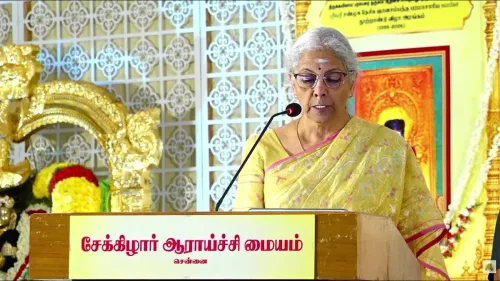
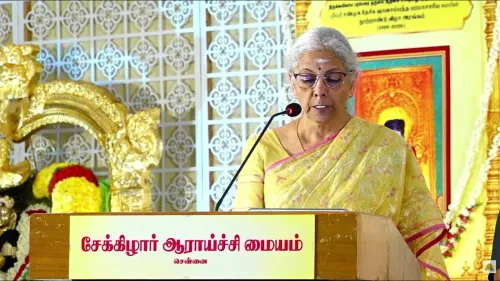
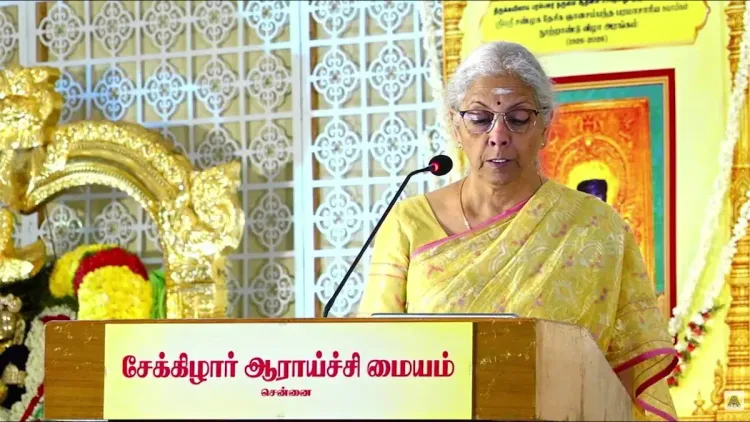
Union Finance Minister Nirmala Sitharaman, speaking in Chennai, drew a direct line from the thousand-year-old Thirumurai hymns and their ancient Pann melodic modes to present-day Carnatic ragas, praising Oduvar Moorthis for keeping the tradition alive in temples.
Key Takeaways
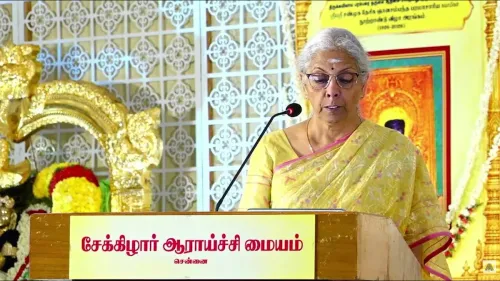
Union Finance Minister Nirmala Sitharaman spoke in Chennai on 1 August 2026 on the musical legacy of the Thirumurais .
The Thirumurais are a twelve-volume Tamil Shaivite devotional canon compiled roughly a thousand years ago .
Compilers recorded the specific Pann (ancient melodic mode) for each hymn — a notation tradition still followed in temples today.
Many ragas on today's Carnatic concert stage trace their roots to these ancient Panns , a fact Sitharaman said all musicians acknowledge.
Oduvar Moorthis , hereditary temple singers, continue to render each Thirumurai hymn in its originally prescribed Pann.
The post was marked 1/n , indicating further remarks from the Chennai speech are forthcoming.
A thread of living sound connects thousand-year-old Tamil hymns to today's concert stage — and Union Finance Minister Nirmala Sitharaman made that case explicitly during remarks delivered in Chennai on Saturday, 1 August 2026, celebrating the musical legacy of the Thirumurais.
Ancient Panns, modern ragas — an unbroken line
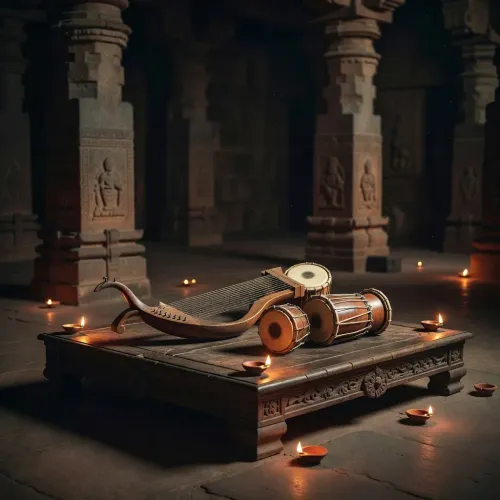
The Thirumurais are the twelve-volume canon of Tamil Shaivite devotional hymns, compiled roughly a thousand years ago. What makes them extraordinary is not just their verse — it is the precision of their notation. When the compilers assembled this canon, they recorded the specific Pann — the ancient Tamil melodic mode — in which each hymn was to be sung. That instruction has not been lost. It has been followed, temple by temple, generation by generation, to this day.
Sitharaman pointed to a fact that Carnatic musicians themselves acknowledge: many ragas heard on today's concert platforms trace their roots directly to those Panns. The melodic architecture of classical south Indian music did not appear from nowhere. It grew, in significant measure, from the soil of devotional Tamil verse.
The Oduvar Moorthis — keepers of the living tradition
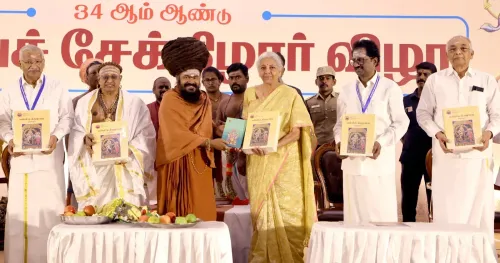
The custodians of this continuity are the Oduvar Moorthis, hereditary singers who render the Thirumurai hymns inside Shiva temples across Tamil Nadu. Their practice is not a revival or a reconstruction — it is an uninterrupted performance tradition. They sing each hymn in the Pann that was recorded for it nearly a millennium ago, making them, in effect, living manuscripts.
Sitharaman's remarks underscore a point that cuts across musicology and heritage: the temple space has functioned as a preservation system, holding performative instructions that no archive alone could have protected. 'It is something we must celebrate,' she said, framing the tradition not as a relic but as a living achievement worthy of active recognition.
Why this moment matters for Tamil classical heritage
The remarks arrive at a time of renewed public interest in the roots of Carnatic music and the place of Tamil devotional literature within it. By drawing a direct line from the Panns to contemporary raga practice — and by naming the Oduvar Moorthis as active carriers of that lineage — Sitharaman placed a senior government voice firmly behind the cultural argument that India's classical music tradition is inseparable from its temple and linguistic heritage.
The thread was posted as part one of a series (1/n), signalling that her full remarks in Chennai covered considerably more ground. The music world will be watching what follows.
Point of View
The speech attempts to place government voice on credible cultural ground. The invocation of the Oduvar Moorthis — a community largely invisible in national discourse — signals an intent to recognise living tradition-bearers, not just ancient texts. With more of the Chennai remarks still to be posted, the full political and cultural framing remains to be seen.
NationPress
16 Sept 2026
Frequently Asked Questions
What are the Thirumurais?
The Thirumurais are a twelve-volume canon of Tamil Shaivite devotional hymns compiled approximately a thousand years ago. They are among the most sacred texts in Tamil Shaiva tradition and continue to be sung in temples across Tamil Nadu.
What is a Pann in Tamil music?
A Pann is an ancient Tamil melodic mode, similar in concept to a raga. The compilers of the Thirumurais recorded the specific Pann for each hymn, and many of today's Carnatic ragas are believed to have roots in these ancient modes.
Who are the Oduvar Moorthis?
Oduvar Moorthis are hereditary singers who perform Thirumurai hymns inside Shiva temples. They follow the Pann prescribed for each hymn as recorded in the original compilation, maintaining an unbroken performance tradition spanning centuries.
What did Nirmala Sitharaman say about Carnatic music in Chennai?
Sitharaman said the Thirumurais' contribution to India's musical tradition is remarkable and must be celebrated. She noted that many ragas performed on Carnatic platforms today have roots in the ancient Panns to which the Thirumurai hymns were set, a fact she said all musicians acknowledge.
What is the connection between Thirumurai hymns and modern Carnatic music?
The ancient Panns used to set the Thirumurai hymns are considered precursors to many modern Carnatic ragas. Because the Panns were carefully recorded alongside each hymn a thousand years ago, musicologists and practitioners can trace a direct lineage from those devotional modes to today's concert repertoire.