Sitharaman in Chennai: Thirumarais Shaped Carnatic Ragas
Synopsis
Union Finance Minister Nirmala Sitharaman, speaking in Tamil at a Chennai event, highlighted the Thirumarais' documented influence on Carnatic music — arguing that melodic modes specified a thousand years ago in Tamil Shaiva hymns remain alive in concert halls and temples today through Othuvamurthis.
Key Takeaways
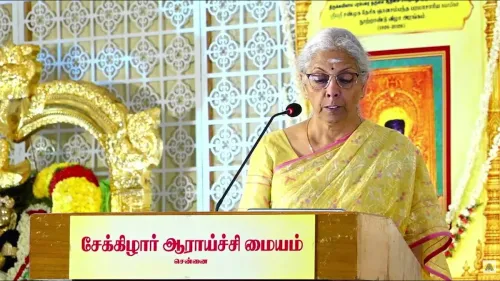
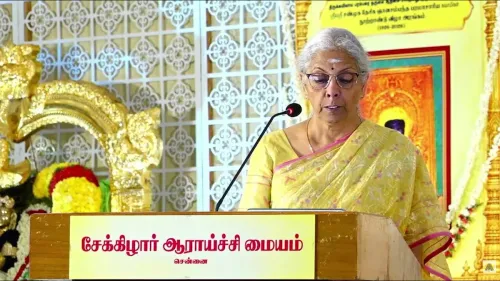
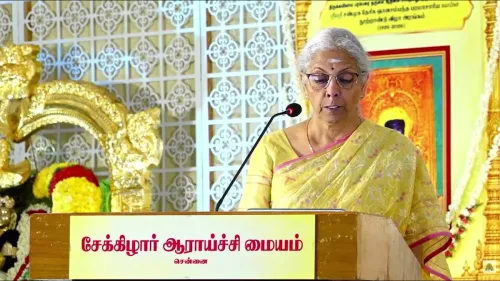
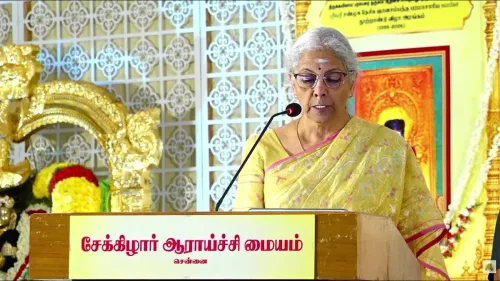
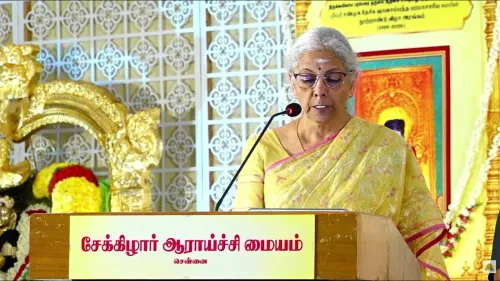
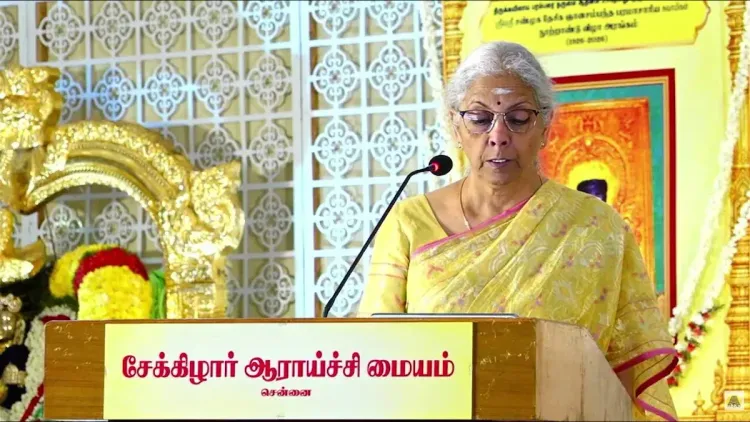
Union Finance Minister Nirmala Sitharaman spoke at a cultural event in Chennai on 1 August 2026 , delivering remarks in Tamil on the Thirumarais and classical music.
She stated that many ragas on today's Carnatic concert stage trace their origins to the panns specified in the Thirumarais, composed roughly between the 6th and 10th centuries CE .
The compilers of the Thirumarais recorded the exact melodic mode for each hymn — an instruction that has been followed continuously for over a thousand years.
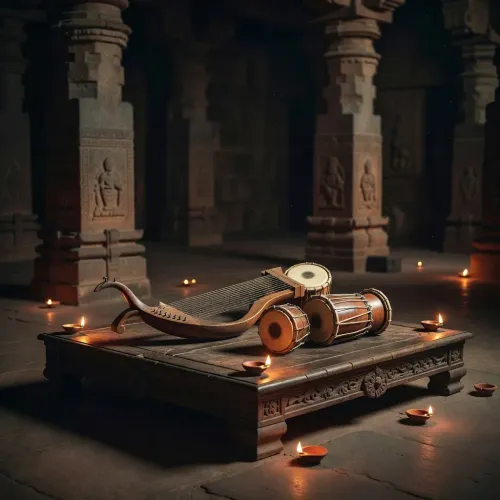
Othuvamurthis , hereditary temple singers in Tamil Shaiva shrines, continue to render the hymns in the traditionally prescribed modes with traditional instruments.
The remarks were shared as part one of a thread, suggesting a longer speech is being documented in instalments.
A thousand years before the modern concert stage, temple poets encoded not just words but music — specifying the precise melodic modes in which their hymns must be sung. At a cultural event in Chennai, Union Finance Minister Nirmala Sitharaman drew attention to that extraordinary continuity, arguing that the contribution of the Thirumarais to India's musical heritage is something every artist acknowledges and every citizen should celebrate.
Speaking in Tamil, Sitharaman observed that many ragas performed on Carnatic concert stages today trace their origins to the panns — melodic frameworks — in which the Thirumarais were originally set. 'The contribution these Thirumarais have made to our musical tradition is a matter of wonder. It is something we can celebrate,' she said, as quoted in the post shared from her official account.
Ragas rooted in a millennium-old notation
What makes the observation striking is the specificity of the claim: when the Thirumarais — the corpus of Tamil Shaiva devotional hymns composed roughly between the 6th and 10th centuries CE — were compiled, the compilers recorded alongside each hymn the pann in which it was to be rendered. That instruction has survived intact. The panns are widely recognised by musicologists as ancestral to raga structures that now form the backbone of Carnatic classical music.
Sitharaman highlighted that Othuvamurthis — the hereditary temple singers of Tamil Shaiva shrines — continue to this day to follow those same specifications, singing the hymns in the prescribed modes with the traditional instruments. An unbroken chain of practice, she suggested, stretching across a thousand years.
Why a Finance Minister is speaking in Tamil about temple music
Chennai is both the capital of Tamil Nadu and the historic heartland of Carnatic music. Public figures engaging with classical and devotional heritage at cultural gatherings in the city is not unusual — but the granularity of Sitharaman's remarks, delivered in Tamil and aimed squarely at the musician community and cultural scholars, signals a deliberate engagement with South Indian classical identity rather than a ceremonial aside.
The remarks were shared as part one of a thread (1/n), indicating a longer speech is being documented in instalments — further sections may elaborate on policy or institutional support for the tradition.
When a living tradition can point to its own written score from ten centuries ago, the burden of proof for cultural continuity is already met. The Thirumarais cleared that bar long before anyone thought to ask the question.
Point of View
Tamil-language engagement with the musicological lineage of the Thirumarais is a calculated cultural move in a state where classical and devotional heritage carries deep political resonance. By framing the Thirumarais not as religious texts but as foundational documents of a living musical science, she pitches the argument on terrain that cuts across sectarian lines and appeals to the Carnatic music community. The reference to Othuvamurthis — a specialist, often under-documented community — adds scholarly texture that lifts the remarks above routine political ceremony. Coming as part one of a longer thread, it signals a sustained attempt to build credibility on Tamil cultural ground ahead of what is likely a broader institutional or policy announcement.
NationPress
16 Sept 2026
Frequently Asked Questions
What are the Thirumarais and why are they important to Carnatic music?
The Thirumarais are a corpus of Tamil Shaiva devotional hymns composed between roughly the 6th and 10th centuries CE. They are important to Carnatic music because their compilers specified the melodic modes — called panns — in which each hymn was to be sung, and musicologists widely recognise these panns as ancestral to the raga structures used in Carnatic classical music today.
What did Nirmala Sitharaman say about Carnatic music in Chennai?
Sitharaman said that the contribution of the Thirumarais to India's musical tradition is 'a matter of wonder' and something to be celebrated. She noted that many ragas heard on Carnatic concert stages today originated in the panns of the Thirumarais, and that Othuvamurthis still follow the thousand-year-old melodic instructions in temple worship.
Who are Othuvamurthis?
Othuvamurthis are hereditary temple singers in Tamil Shaiva shrines who specialise in rendering the Thirumarais in the traditional melodic modes and with traditional instruments during temple rituals. They represent an unbroken line of practice stretching back over a millennium.
What is a pann in Tamil music?
A pann is a melodic framework or mode used in ancient Tamil music, analogous in function to a raga. The Thirumarais were composed and compiled with specific panns assigned to each hymn, and these modes are considered foundational precursors to many ragas in the Carnatic classical tradition.
Why was Nirmala Sitharaman speaking in Tamil at a cultural event in Chennai?
The specific occasion and venue could not be independently verified, but Chennai is both the capital of Tamil Nadu and the historic centre of Carnatic music. Sitharaman delivered the remarks in Tamil, and the post was shared as part one of a thread documenting a longer speech on Tamil cultural and musical heritage.