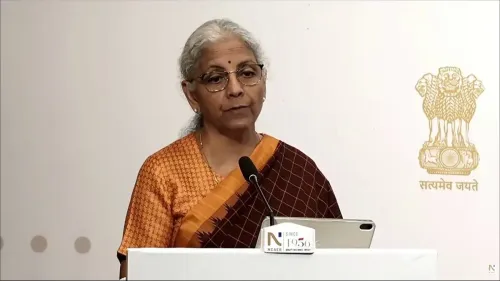
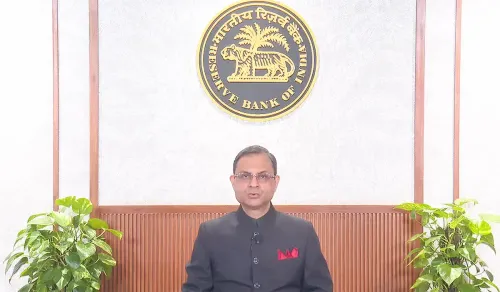
Sitharaman inaugurates RBI campus in Odisha's Khordha
Synopsis
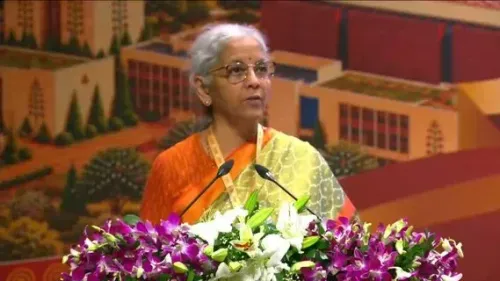
Union Finance Minister Nirmala Sitharaman inaugurated the Reserve Bank of India's new campus in Khordha, Odisha, invoking the Konark Sun Temple and the Aditya Hridayam Stotram to frame the institution as a protector of India's financial systems, consistent with the Modi government's Purvodaya eastern-development doctrine.
Key Takeaways
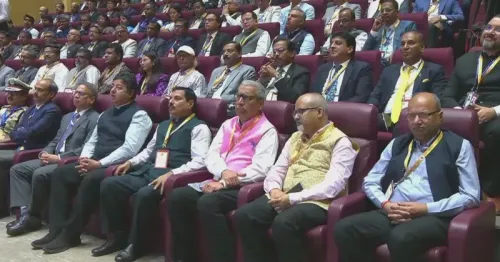
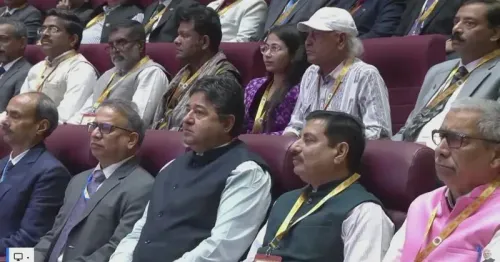
Union Finance Minister Nirmala Sitharaman inaugurated the RBI's new campus in Khordha, Odisha on 25 October 2026 .
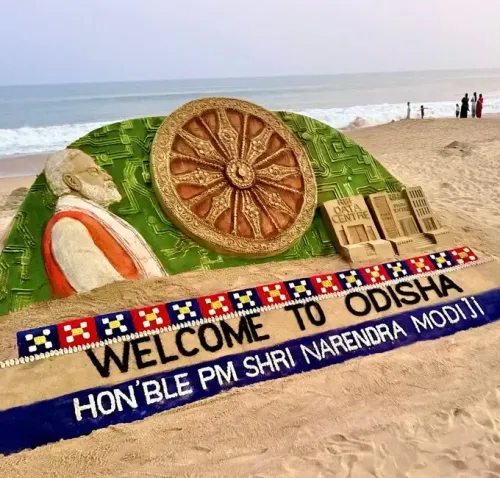
The campus is located near the Konark Sun Temple , a 13th-century UNESCO World Heritage Site .
Sitharaman cited the Aditya Hridayam Stotram from the Ramayana to frame the RBI as a protector and sustainer of India's financial system.
The inauguration was framed under the 'Purvodaya se Sarvodaya' doctrine: eastern India's rise as a driver of national growth.
The RBI campus extends India's apex monetary institution's operational presence into a region historically peripheral to the country's financial architecture.
Odisha's growing role in steel, port logistics, and renewables makes it an increasingly significant address for national institutions.
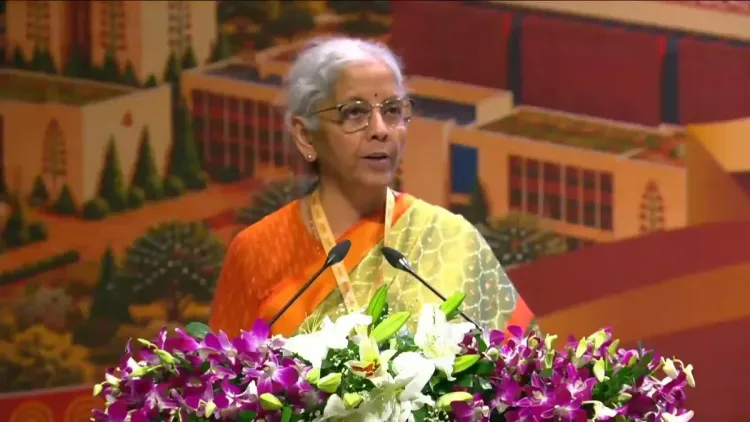
Where the 13th-century Konark Sun Temple has stood for centuries as a beacon of civilisation, Union Finance Minister Nirmala Sitharaman on Sunday, 25 October 2026, invoked its light as a metaphor for India's financial future — dedicating the Reserve Bank of India's new campus in Khordha, Odisha to the nation.
A Sanskrit verse, a battlefield, and a central bank
Sitharaman drew from the Aditya Hridayam Stotram of the Ramayana — the passage in which Maharshi Agastya counsels Shri Rama on the battlefield of Lanka, urging him to seek the grace of Surya Bhagwan, whose rays protect the worlds and nourish all living beings. The Finance Minister cast the new RBI campus in that same role: a protector of India's financial systems and a sustainer of the payment flows that keep the economy alive.
The choice of scripture was pointed, not decorative. The campus sits close to the Konark Sun Temple — a UNESCO World Heritage Site dedicated to the sun god — lending the inauguration a cultural resonance that went beyond ribbon-cutting.
'Purvodaya se Sarvodaya': the eastern India growth doctrine
Sitharaman framed the campus squarely within the Modi government's 'Purvodaya' doctrine — the idea that India's growth story must be anchored in its historically underserved eastern states. 'Purvodaya se Sarvodaya', she said: 'when the East rises, its light reaches all of India.'
Since 2014, the government has pushed infrastructure investment — connectivity, institutions, and financial access — deeper into eastern India, covering Odisha, West Bengal, Bihar, Jharkhand, and the Northeast. Placing an RBI campus in Khordha is consistent with that pattern: anchoring a national institution in a region that has long been peripheral to India's financial architecture.
What the RBI's Khordha presence means for eastern India
The Reserve Bank of India is the country's apex monetary authority — setting interest rates, regulating commercial banks, and, critically, overseeing the payment infrastructure through which trillions of rupees move daily. A dedicated campus in Odisha signals an operational deepening of that presence in the east, bringing regulatory and payment-system capacity closer to a region with fast-growing digital and industrial activity.
The RBI's existing footprint is concentrated in financial centres such as Mumbai, Delhi, Chennai, and Kolkata. A Khordha campus would extend that institutional network into a state that has seen accelerating economic activity, particularly in steel, port logistics, and renewable energy.
Odisha's rising profile as an institutional address
Odisha has steadily climbed India's institutional map. Beyond the Konark Sun Temple's global draw, the state hosts major industrial corridors and has been a focus of central government infrastructure outlay. Siting a national institution of the RBI's stature here is a statement about where the government believes the next chapter of Indian growth will be written.
The Finance Minister's presence in Khordha — and the careful cultural framing she chose — suggests this was not a routine administrative event. It was a signal, wrapped in a Sanskrit verse, about which direction India's economic sunrise is expected to come from.
Point of View
Which seeks to rebalance India's development geography eastward. Placing an RBI facility near Konark — and framing it in Sanskrit verse — fuses cultural legitimacy with economic statecraft, a combination the BJP has deployed consistently to build consensus around eastern India investment. For the RBI, the move suggests an operational decentralisation that could improve regulatory proximity to a fast-industrialising coastal state. Whether the campus translates into measurable gains in financial inclusion or payment infrastructure for Odisha will be the real test of the symbolism.
NationPress
25 Oct 2026
Frequently Asked Questions
Where is the new RBI campus located?
The new RBI campus is located in Khordha district, Odisha , close to the world-famous Konark Sun Temple .
Who inaugurated the RBI campus in Odisha?
Union Finance Minister Nirmala Sitharaman inaugurated the RBI campus in Khordha, Odisha on 25 October 2026 .
What is the Purvodaya doctrine Sitharaman mentioned?
'Purvodaya' refers to the Modi government's policy of prioritising development in eastern Indian states — Odisha, West Bengal, Bihar, Jharkhand and the Northeast — on the premise that India's overall growth depends on lifting its eastern regions.
What is the Aditya Hridayam Stotram referenced at the RBI campus inauguration?
The Aditya Hridayam Stotram is a hymn from the Ramayana in which Maharshi Agastya counsels Shri Rama to seek the blessings of Surya Bhagwan , describing the sun as a protector of the worlds and nourisher of all beings. Sitharaman used it to symbolise the RBI's role in protecting India's financial system.
Why is an RBI campus significant for Odisha?
An RBI campus in Odisha extends the apex monetary authority's institutional presence into eastern India, a region with growing industrial and digital economic activity that has historically been distant from India's major financial centres in Mumbai, Delhi, and Chennai.