Sitharaman Replies to Bankers' Books Evidence Bill Debate in RS
Synopsis
Union Finance Minister Nirmala Sitharaman replied to the Rajya Sabha discussion on The Bankers' Books Evidence Bill, 2026 on August 10, seeking to modernise the Bankers' Books Evidence Act of 1891 to reflect digital-era banking realities.
Key Takeaways
Nirmala Sitharaman delivered the government's reply to the Rajya Sabha debate on The Bankers' Books Evidence Bill, 2026 on August 10, 2026 .
The bill seeks to update the Bankers' Books Evidence Act, 1891 , which governs how bank records are admitted as evidence in Indian courts.
The original 1891 Act was designed for handwritten ledgers; the 2026 legislation addresses the realities of digital and electronic banking records.
Primary stakeholders include banking institutions and the judiciary , both of which rely on clear evidentiary standards for financial records.
After a Rajya Sabha vote, the bill must also clear Lok Sabha before it can become law.
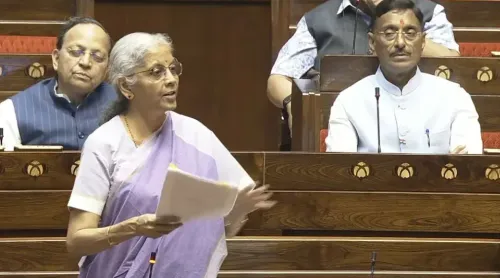
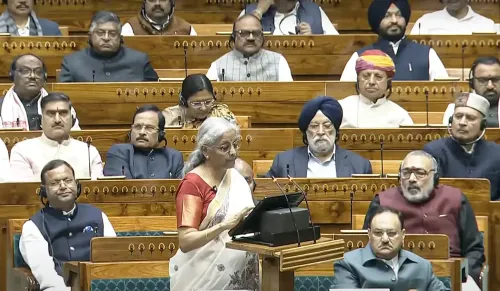
A colonial-era law governing how bank records are admitted as evidence in Indian courts is getting a parliamentary overhaul — and Union Finance Minister Nirmala Sitharaman stepped into Rajya Sabha on Monday, August 10, 2026 to close the debate on The Bankers' Books Evidence Bill, 2026.
A 135-Year-Old Law Meets the Digital Banking Era
The legislation being debated traces its roots to the Bankers' Books Evidence Act of 1891 — a statute written when ledgers were handwritten and 'certified copies' meant ink on paper. That law established the legal framework under which banks could submit copies of their records as admissible evidence in court proceedings, sparing institutions from producing original books. More than a century of electronic transactions, core banking systems, and digital records has made revisiting that framework an inevitability. India's Parliament has periodically modernised such colonial-era financial statutes, and the 2026 bill follows that pattern of legislative housekeeping driven by the Finance Ministry. The upper house, Rajya Sabha, is the current arena for that work.Sitharaman's Role in the Rajya Sabha Proceedings
A ministerial reply to a discussion is the decisive moment in a bill's parliamentary journey — it is when the government responds to every objection, clarification, and amendment demand raised by members across party lines. Sitharaman, as the minister piloting the bill, addressed the house at the conclusion of that debate. The proceedings were streamed live, reflecting the government's practice of making parliamentary business accessible in real time. The bill, if passed by both houses, would update the legal standards for how banking records — increasingly digital — are presented and authenticated in judicial proceedings. Banking institutions and the judiciary are the primary stakeholders watching its final shape. The next steps are a vote in Rajya Sabha and, if cleared, transmission to Lok Sabha for its own passage before the bill can become law.Point of View
2026 is a quiet but consequential piece of financial legislation — the kind that rarely generates headlines but shapes how courts handle banking disputes for decades. Sitharaman's stewardship of the bill in Rajya Sabha signals the Finance Ministry's intent to close the gap between a 19th-century evidentiary framework and a 21st-century digital banking system. The bill fits a broader Modi-government pattern of replacing colonial-era statutes with modernised codes, a legislative agenda that has already touched criminal law, telecommunications, and company law. How the opposition uses the debate — whether to engage on the bill's technical merits or to press broader questions about banking sector governance — will set the tone for its passage.
NationPress
10 Aug 2026
Frequently Asked Questions
What is The Bankers' Books Evidence Bill, 2026?
It is a proposed law to update the Bankers' Books Evidence Act of 1891, modernising the rules under which banks can submit their records as legal evidence in Indian courts, particularly to account for digital and electronic records.
Why is Nirmala Sitharaman replying to the Rajya Sabha debate?
As Union Finance Minister, Sitharaman is the minister responsible for piloting the bill through Parliament. A ministerial reply closes the discussion and addresses concerns raised by members before the house votes.
What did the original Bankers' Books Evidence Act of 1891 do?
The 1891 Act allowed banks to submit certified copies of their account books as evidence in court, rather than producing original ledgers, making legal proceedings involving banking records more practical.
What happens after Rajya Sabha debates the bill?
After the ministerial reply, Rajya Sabha votes on the bill. If passed, it moves to Lok Sabha for a separate debate and vote before being sent for Presidential assent and becoming law.
Who are the main stakeholders in the Bankers' Books Evidence Bill, 2026?
Banking institutions and the judiciary are the primary stakeholders, as the law directly governs how financial records are authenticated and admitted as evidence in legal proceedings.