Sitharaman Marks 10 Years of IBC, Calls It a Decisive Shift
Synopsis
Union Finance Minister Nirmala Sitharaman marked the tenth anniversary of the Insolvency and Bankruptcy Code, 2016 on 28 May 2026, crediting it with replacing a fragmented debtor-controlled regime with a unified, creditor-driven framework that has strengthened India's financial system and aided revival of distressed businesses.
Key Takeaways
Finance Minister Nirmala Sitharaman marked #10YearsOfIBC on 28 May 2026 , calling the Code a decisive shift in India's insolvency landscape.
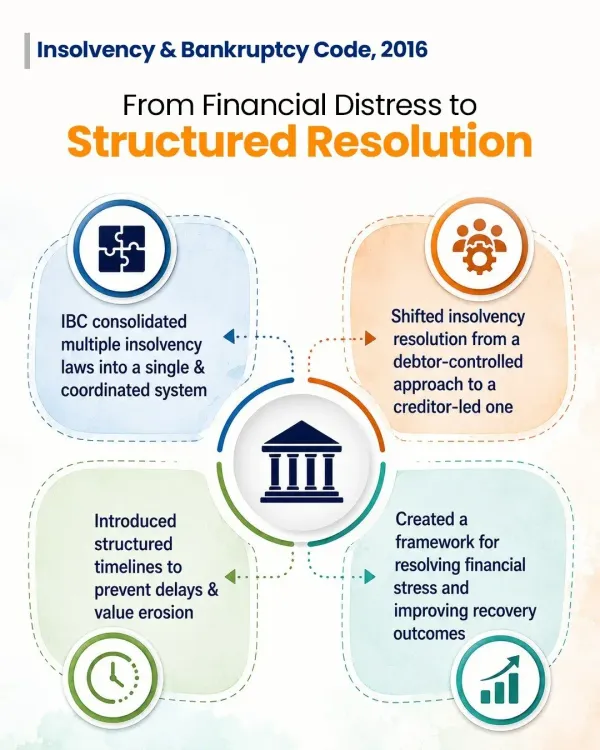
The Insolvency and Bankruptcy Code, 2016 replaced fragmented statutes including the Sick Industrial Companies (Special Provisions) Act, 1985 with a unified, time-bound framework.
The Code introduced a creditor-in-control model, replacing debtor-controlled proceedings that had led to prolonged delays and poor recovery outcomes.
The Insolvency and Bankruptcy Board of India (IBBI) was established as the statutory regulator under the Code to oversee professionals and processes.
India's performance on the World Bank resolving insolvency indicator improved following the IBC's enactment, aligning domestic processes with international standards.
Further amendments and IBBI regulations addressing admission delays and recovery outcomes are expected as the framework enters its second decade.
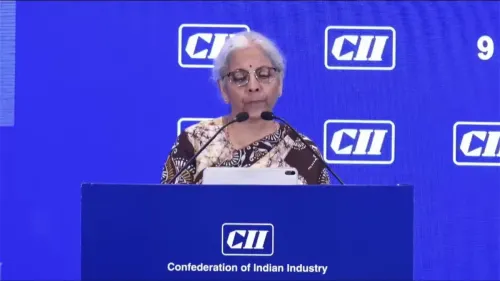
Union Finance Minister Nirmala Sitharaman on Thursday, 28 May 2026 marked the tenth anniversary of the Insolvency and Bankruptcy Code, 2016, describing the landmark legislation as a decisive shift from a fragmented, debtor-controlled process to a unified, creditor-driven and time-bound resolution framework.
Context
Sitharaman's post, carrying the hashtag #10YearsOfIBC, credited the Code with strengthening India's financial system and supporting the faster revival of distressed businesses. The statement comes as the insolvency framework completes a full decade since its enactment in 2016, a milestone that has prompted a broader official reckoning with how corporate stress resolution has evolved in the country.
Before the IBC, corporate insolvency was governed by a patchwork of statutes — most notably the Sick Industrial Companies (Special Provisions) Act, 1985 and provisions under the Companies Act — which were widely criticised for prolonged timelines and debtor-friendly outcomes that left creditors with limited recourse.
Policy Backdrop
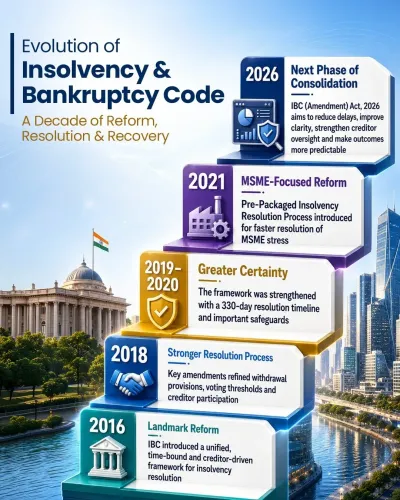
The IBC's origins lie in the Bankruptcy Law Reforms Committee report of 2015, which recommended consolidating India's insolvency laws into a single, modern framework. The Code was enacted the following year, establishing the Insolvency and Bankruptcy Board of India (IBBI) as its statutory regulator, overseeing insolvency professionals, information utilities and resolution agencies.
The legislation forms a central plank of post-2014 structural reforms aimed at cleaning up bank balance sheets and restoring credit discipline, following the Reserve Bank of India's asset quality review that exposed the scale of non-performing assets across the banking sector. India's performance on the World Bank resolving insolvency indicator improved in the years after the Code came into force, as domestic processes moved closer to international standards.
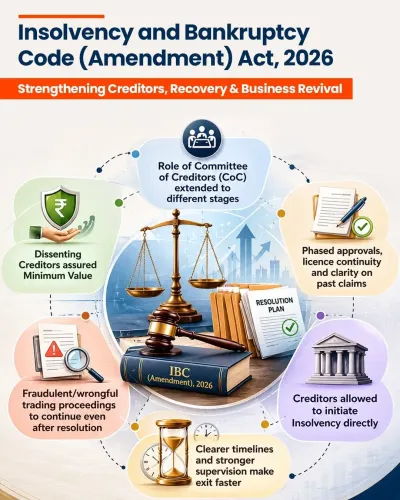
Successive amendments to the IBC have sought to address implementation gaps — including issues around case admission timelines and the treatment of personal guarantors — while preserving the core creditor-in-control architecture that distinguishes it from the earlier regime.
Stakeholders and Impact
The IBC's primary stakeholders include bank creditors, corporate debtors, resolution professionals and operational creditors such as vendors and employees. For the banking sector, the Code provided a structured, legally enforceable route to recover dues from defaulting companies, reducing reliance on one-off settlements or prolonged litigation.
For distressed businesses, the resolution process — designed to be completed within 180 days, extendable to 330 days — introduced the concept of a resolution applicant stepping in with a revival plan, preserving the enterprise as a going concern rather than liquidating assets piecemeal. This creditor-in-control model represented a philosophical departure from earlier frameworks that often left promoters in charge of companies even as they defaulted.
What's Next
The IBBI and the government are expected to continue reviewing the Code's implementation, with attention on reducing delays at the admission stage and improving recovery outcomes for creditors. Further legislative amendments or new IBBI regulations addressing these gaps remain a live policy conversation as the framework enters its second decade.
As the IBC turns ten, the Finance Minister's remarks signal that the government views the Code as a settled and successful pillar of India's financial architecture — one whose refinement, rather than replacement, will define the next phase of insolvency reform.
Point of View
Alongside GST and the RBI's asset quality review, in a narrative of fiscal discipline and creditor rights. The timing, a round-number milestone, gives the government a platform to reinforce that narrative ahead of any legislative or regulatory moves on insolvency reform. The framing — 'decisive shift' from debtor-controlled to creditor-driven — also implicitly contrasts the post-2014 era with earlier regimes. Sustained scrutiny of case resolution timelines and haircuts absorbed by creditors will, however, test how far that narrative holds in the Code's second decade.
NationPress
20 Sept 2026
Frequently Asked Questions
What is the Insolvency and Bankruptcy Code 2016?
The Insolvency and Bankruptcy Code, 2016 is a central legislation that consolidated India's insolvency and bankruptcy laws into a single, time-bound, creditor-driven framework, replacing earlier fragmented statutes such as the Sick Industrial Companies (Special Provisions) Act, 1985.
Why is IBC important for India's banking system?
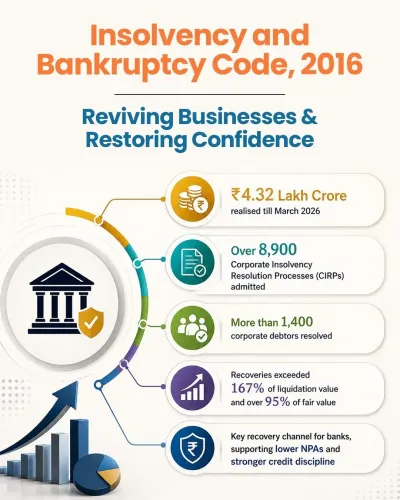
The IBC gave bank creditors a structured, legally enforceable route to resolve defaults by corporate borrowers, reducing reliance on prolonged litigation and helping clean up non-performing assets on bank balance sheets.
What did Nirmala Sitharaman say about IBC's 10th anniversary?
Finance Minister Nirmala Sitharaman described the IBC as a decisive shift from a fragmented, debtor-controlled process to a unified, creditor-driven and time-bound resolution framework, and credited it with strengthening India's financial system and supporting faster revival of distressed businesses.
How long does the IBC resolution process take?
The IBC mandates a resolution process completed within 180 days, extendable up to 330 days, though implementation delays at the admission and resolution stages have been a subject of ongoing reform efforts.