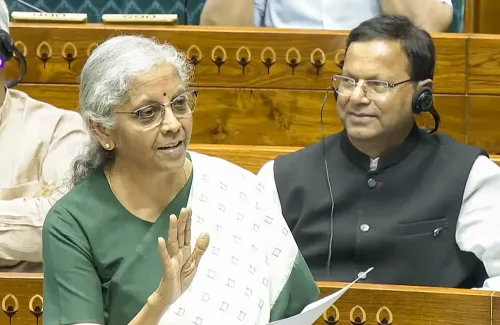
Sitharaman hails IBC Amendment Act 2026 as boost for creditors
Synopsis
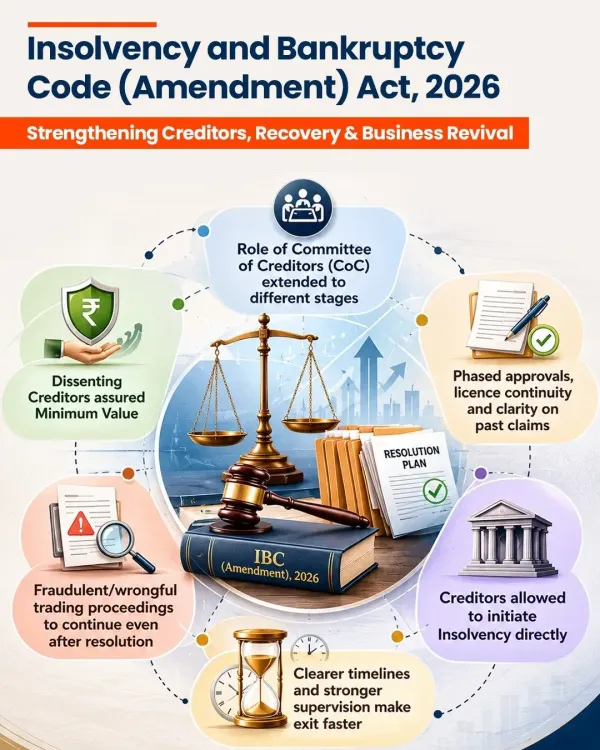
Union Finance Minister Nirmala Sitharaman on 28 May 2026 hailed the Insolvency and Bankruptcy Code (Amendment) Act, 2026 as a landmark step improving resolution timelines, creditor rights and business revival — marking ten years of the IBC framework.
Key Takeaways
Union Finance Minister Nirmala Sitharaman endorsed the Insolvency and Bankruptcy Code (Amendment) Act, 2026 on 28 May 2026 .
The amendment aims to improve resolution timelines, enhance legal certainty and support business revival.
The post was made under the hashtag #10YearsOfIBC , marking a decade since the original Code was enacted in May 2016 .
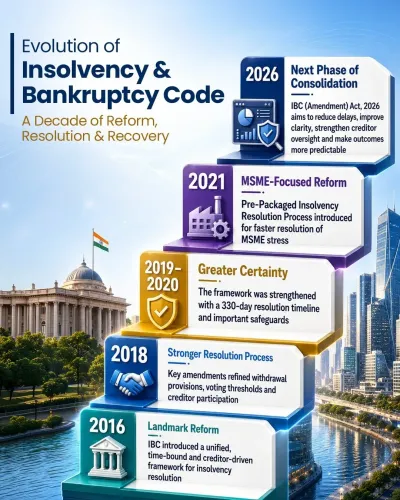
The 2026 amendment follows earlier revisions in 2019 , 2020 and 2021 that progressively refined creditor rights and resolution processes.
The IBBI is expected to notify implementing regulations, while NCLT disposal rates will be a key metric of real-world impact.
Union Finance Minister Nirmala Sitharaman on Thursday, 28 May 2026 welcomed the Insolvency and Bankruptcy Code (Amendment) Act, 2026, calling it a major step towards faster resolution, stronger creditor rights and greater business confidence in India.
Context
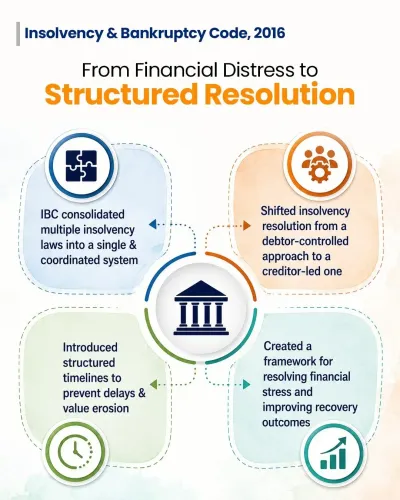
Posting on X under the hashtag #10YearsOfIBC, Sitharaman said the reforms would 'improve timelines, enhance certainty and support business revival,' and would 'further strengthen India's investment climate and economic resilience.' The post marks a decade since the original Insolvency and Bankruptcy Code was enacted in May 2016, consolidating fragmented insolvency laws into a single, time-bound resolution framework.
The Insolvency and Bankruptcy Board of India (IBBI) and the National Company Law Tribunal (NCLT) are the two pillars of that framework — the former as regulator, the latter as adjudicating authority for corporate insolvency cases.
Policy Backdrop
The 2026 amendment is the latest in a series of iterative refinements to the Code. The 2019 amendment recognised homebuyers as financial creditors and strengthened the Committee of Creditors. The 2020 amendment introduced a pre-packaged insolvency resolution process for MSMEs during the COVID-19 disruption. The 2021 amendment laid groundwork for cross-border and group insolvency frameworks.
Each successive revision has sought to balance the interests of financial creditors — banks and institutional lenders — with the broader goal of keeping viable businesses alive and attracting fresh investment. Sitharaman, who has held the Finance and Corporate Affairs portfolios since 2019, has consistently framed IBC reforms as central to reducing non-performing assets and improving India's contract-enforcement environment.
Stakeholders and Impact
Financial creditors, including banks and asset reconstruction companies, stand to benefit most directly from tighter timelines and clearer rights under the amended Code. Corporate debtors and MSMEs are expected to gain from provisions supporting business revival rather than pure liquidation. Insolvency professionals licensed by the IBBI will operate under the revised procedural framework once implementing regulations are notified.
India's broader investment climate has been a recurring concern for foreign institutional investors and multilateral lenders, who track creditor-protection scores in global ease-of-doing-business assessments. Stronger insolvency infrastructure is widely seen as a signal of legal predictability for long-term capital allocation.
What's Next
Attention will now shift to the IBBI, which is expected to notify fresh rules and regulations giving operational effect to the amendment. Analysts and creditors will watch NCLT case-disposal rates and average resolution timelines closely in the months ahead as a measure of whether the legislative changes translate into on-the-ground efficiency gains.
With the ten-year milestone of the IBC as backdrop, the government's messaging signals continued commitment to refining India's insolvency ecosystem — an agenda that is likely to feature in upcoming investor forums and Budget-cycle consultations.
Point of View
However, lies in NCLT throughput: if case-disposal rates do not improve, the legislative optics will outpace ground reality. Coming ahead of likely investor-outreach events, the timing suggests the amendment is also being deployed as a soft diplomatic instrument to reinforce India's ease-of-doing-business credentials.
NationPress
11 Oct 2026
Frequently Asked Questions
What is the Insolvency and Bankruptcy Code Amendment Act 2026?
The Insolvency and Bankruptcy Code (Amendment) Act, 2026 is the latest legislative revision to India's unified insolvency framework, aimed at improving resolution timelines, strengthening creditor rights and supporting business revival. Finance Minister Nirmala Sitharaman described it as a major step towards greater business confidence and a stronger investment climate.
What is the significance of #10YearsOfIBC?
The hashtag marks ten years since the original Insolvency and Bankruptcy Code was enacted in May 2016. The Code replaced a fragmented set of insolvency laws with a single, time-bound resolution framework administered by the NCLT and regulated by the IBBI.
How has the IBC been amended over the years?
The IBC has seen several amendments since 2016. The 2019 amendment recognised homebuyers as financial creditors; the 2020 amendment introduced pre-packaged insolvency for MSMEs during COVID-19; the 2021 amendment addressed cross-border and group insolvency. The 2026 amendment continues this iterative refinement.
Who benefits from the IBC Amendment Act 2026?
Financial creditors such as banks and institutional lenders benefit from stronger rights and clearer timelines. Corporate debtors and MSMEs gain from provisions that favour business revival over liquidation. Insolvency professionals will operate under the updated procedural rules once the IBBI notifies fresh regulations.
What happens after the IBC Amendment Act 2026 is passed?
The IBBI is expected to notify implementing rules and regulations to give the amendment operational effect. Observers will monitor NCLT case-disposal rates and average resolution timelines to assess whether the legislative changes deliver measurable efficiency improvements.