Will IBC Amendments Enhance Recovery Rates for Banks?

Synopsis
New amendments to the IBC could transform recovery rates for banks, addressing long-standing issues caused by protracted processes. However, real estate reforms remain absent, highlighting the need for focused action in that sector.
Key Takeaways
Proposed IBC amendments aim to improve recovery rates for banks.
Group and cross-border insolvency are key features of the proposed changes.
The real estate sector requires specific reforms, which are currently absent.
Longer recovery timelines pose challenges for lenders.
The government is focusing on protecting homebuyers and resolving stalled projects.
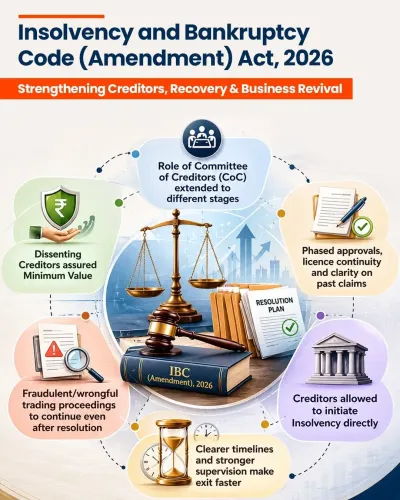
New Delhi, Dec 29 (NationPress) A report released on Monday highlights the potential of proposed changes to the Insolvency and Bankruptcy Code (IBC). These changes include the introduction of group insolvency, cross-border insolvency, and creditor-initiated insolvency, which could significantly enhance recovery rates that have remained low due to lengthy resolution processes.
The bolstering of NCLT and NCLAT resources, along with various legal reforms, is anticipated to alleviate the strain on the judiciary, according to the ICRA report.
The report suggests that the amendments to the IBC, presented in Parliament alongside reforms proposed by the Ministry of Corporate Affairs (MCA) and the Insolvency and Bankruptcy Board of India (IBBI), are likely to shorten recovery timelines and enhance recovery rates for lenders, particularly in non-real estate sector cases.
However, the report points out that reforms specific to the real estate sector have not been addressed in the current proposals, despite this sector holding the second-largest share of cases in the ongoing corporate insolvency resolution process (CIRP)
The ICRA report emphasizes the need for structural reforms in the real estate sector, particularly to protect homebuyers and resolve stalled housing projects, which have become a government focus.
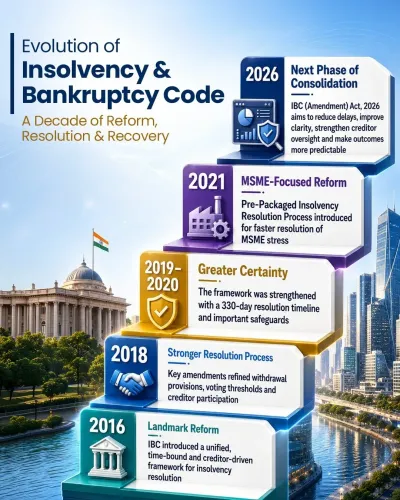
Since its inception in October 2016, the IBC has provided better recovery outcomes for creditors compared to other recovery methods, achieving total recoveries of approximately Rs. 4 lakh crore despite its limitations. As of September 2025, a total of 8,658 corporate debtors have been admitted, with 63 percent of cases resolved through successful resolution plans, withdrawals, or liquidations, according to the report.
Nevertheless, lenders have faced significant haircuts, with a mere 32 percent recovery rate through successful resolution plans. In light of these losses and prolonged recovery periods, the seventh amendment to the IBC is being considered, with the Amendment Bill, 2025 introduced in the Lok Sabha in August 2025. Although initially expected to pass during the winter session, it is now anticipated to be addressed in the upcoming Budget session.
Manushree Saggar, Senior Vice President and Group Head of Structured Finance Ratings at ICRA, stated: “While recovery rates had improved until Q4 FY2025, there has been a downturn in H1 FY2026. Furthermore, data up to September 30, 2025, shows that nearly three-fourths of ongoing CIRP cases have exceeded 270 days post-admission by the NCLT. If the recommendations of the SCLB are approved, they are expected to enhance recovery rates and cut down timelines for the CIRP process under the IBC.”
Although the proposed amendments are promising, ICRA notes that delays at the NCLT have not been directly addressed. As of March 2025, over 30,000 IBC cases were pending before the NCLT, and based on its current capacity, it may take more than a decade to resolve these cases. While the influx of new cases to the NCLT has declined, there has been limited progress in the approval of resolution plans, with only 105 RPs approved in H1 FY2026 compared to 124 in H1 FY2025.
The report indicates that while the MCA is seeking to increase the number of NCLT and NCLAT benches to gain meaningful traction, this will be crucial in reducing the timelines for the CIRP process, which currently exceeds 700 days, more than double the mandated 330-day timeline.
Point of View
It is crucial to recognize the potential impact of the proposed IBC amendments on recovery rates for banks. While the initiatives are promising, we must also address the lack of focus on the real estate sector, which is vital for broader economic recovery. Nation always strives to present a balanced view, highlighting both progress and areas needing attention.
NationPress
20 Sept 2026
Frequently Asked Questions
What are the proposed amendments to the IBC?
The proposed amendments include group insolvency, cross-border insolvency, and creditor-initiated insolvency aimed at improving recovery rates.
What is the current state of recovery rates for banks?
Recovery rates have been persistently low, with only 32% recorded through successful resolution plans, necessitating these amendments.
When was the IBC first implemented?
The IBC was implemented in October 2016, marking a significant shift in India's insolvency framework.
How has the real estate sector been affected by IBC?
The report indicates that reforms specific to the real estate sector have not been included in the proposed amendments, despite its significant share in ongoing insolvency cases.
What is the expected timeline for the proposed amendments?
The amendments are anticipated to be discussed in the upcoming Budget session after being introduced in August 2025.