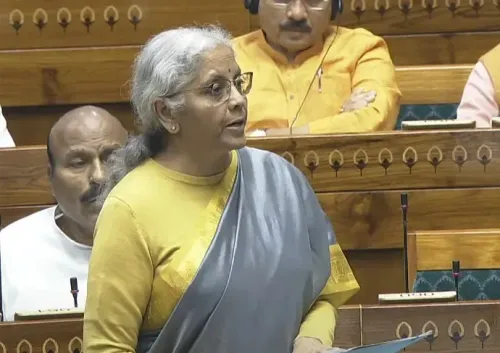
Sitharaman Replies to Taxation Amendment Bill Debate in Rajya Sabha

Synopsis
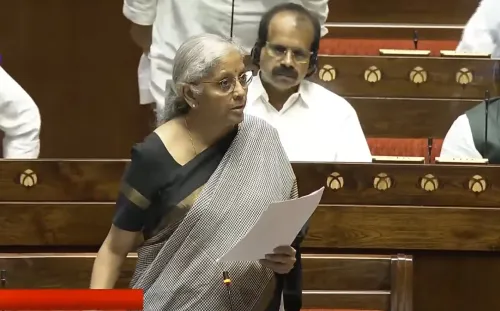
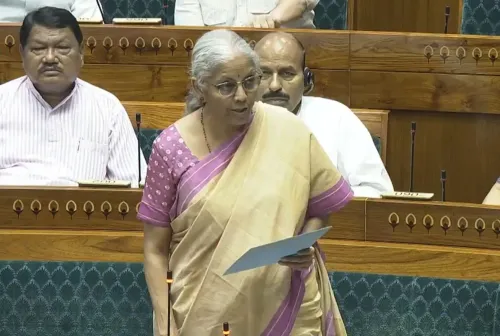
Union Finance Minister Nirmala Sitharaman addressed Rajya Sabha on August 10, 2026, delivering her full reply to the discussion on the Taxation and Other Laws (Amendment) Bill, 2026. The Finance Ministry shared the complete recording, marking a key step in the bill's parliamentary passage.
Key Takeaways
Nirmala Sitharaman delivered her full reply to the Rajya Sabha debate on the Taxation and Other Laws (Amendment) Bill, 2026 on August 10, 2026 .
The Finance Ministry released a recording of the complete parliamentary address for public viewing.
The bill follows a long lineage of amendments to India's foundational tax statutes, including the Income Tax Act, 1961 .
The Rajya Sabha reply is a critical juncture — it places the government's policy rationale formally on the legislative record.
The bill now moves toward a vote in the upper house, followed by potential presidential assent.
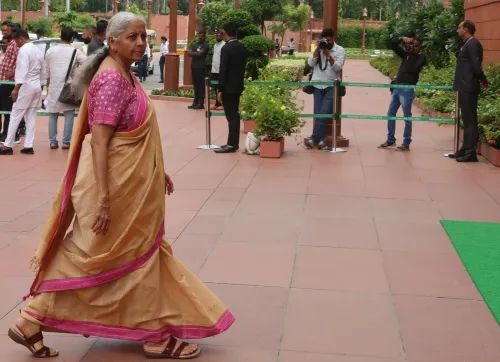
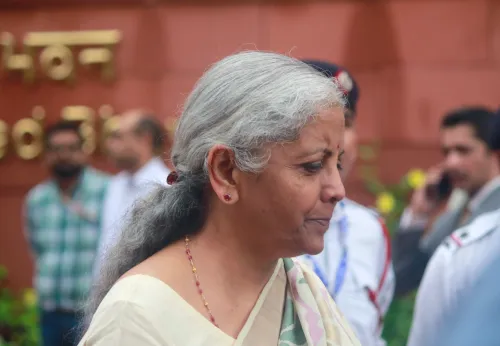
Union Finance Minister Nirmala Sitharaman took the floor of Rajya Sabha on Monday, August 10, 2026, delivering her full reply to the discussion on The Taxation and Other Laws (Amendment) Bill, 2026 — a legislative moment that signals where India's tax policy is headed next.
The Finance Ministry shared a recording of Sitharaman's complete reply, inviting the public to watch her address the upper house's deliberations on the bill. Parliamentary debates on taxation legislation are among the most scrutinised exchanges in India's legislative calendar — every word from the Finance Minister carries weight for taxpayers, the corporate sector, and markets alike.
A Bill in the Long Line of Tax Law Overhauls
India has a well-worn track of periodically amending its foundational tax statutes. The Income Tax Act, 1961 has been revisited dozens of times across governments — for simplification, compliance tightening, and revenue alignment. The Taxation Laws (Amendment) Act, 2019 was a landmark in that lineage, specifically addressing the contentious issue of retrospective taxation that had shadowed India's investment climate for years. The Taxation and Other Laws (Amendment) Bill, 2026 follows in that tradition. While the specifics of this bill's provisions are subject to the parliamentary record, the Finance Minister's reply in Rajya Sabha is the definitive moment where the government defends its choices, responds to opposition concerns, and signals implementation intent.Why the Rajya Sabha Reply Matters
In India's bicameral system, the upper house is where legislation gets its sharpest scrutiny. Finance bills in particular attract detailed questioning from members representing every shade of economic interest — industry, agriculture, salaried classes, small business. A Finance Minister's reply is not a formality. It is effectively a policy statement on the record. Sitharaman, who has presented six consecutive Union Budgets and steered several tax reform measures through Parliament, is no stranger to the chamber's demands. Her replies routinely address both the technical architecture of proposed changes and their broader economic rationale.What Comes Next for the Bill
With the Rajya Sabha discussion now concluded and the Finance Minister's reply on the record, the bill moves toward a vote in the upper house. Depending on the outcome, it would then proceed for any further consideration before presidential assent converts it into law — at which point its provisions become binding for taxpayers and the corporate sector. India's tax policy architecture is being actively reshaped. The Finance Minister just laid out the government's case. The vote will tell the rest of the story.Point of View
2026 fits a deliberate pattern of using parliamentary floor time to anchor tax reform narratives — not just pass legislation but shape public and market understanding of it. Coming after the landmark 2019 retrospective tax rollback, any fresh amendment bill carries outsized signal value for foreign investors and domestic industry alike. The Finance Minister's willingness to go on record with a full reply, shared publicly, suggests the government is confident in the bill's provisions and wants that confidence on display. Watch the vote outcome and any dissent from opposition benches for clues on how contentious the specifics actually are.
NationPress
11 Aug 2026
Frequently Asked Questions
What is the Taxation and Other Laws (Amendment) Bill, 2026?
It is a parliamentary bill introduced to amend India's existing taxation and related laws, debated in Rajya Sabha in August 2026, with Finance Minister Nirmala Sitharaman delivering the government's reply to the discussion.
What did Nirmala Sitharaman say in her Rajya Sabha reply on the taxation bill?
The Finance Ministry shared a full recording of Sitharaman's reply to the Rajya Sabha discussion on the Taxation and Other Laws (Amendment) Bill, 2026 on August 10, 2026. The complete address is available via the official recording released by the ministry.
What happens after the Finance Minister's reply in Rajya Sabha?
After the Finance Minister's reply concludes the discussion, the bill proceeds to a vote in Rajya Sabha. If passed, it moves for any further legislative steps before receiving presidential assent and becoming law.
Why does the Finance Minister reply to tax bill debates in Rajya Sabha?
In India's parliamentary process, the Finance Minister is responsible for piloting taxation legislation. The reply to a Rajya Sabha discussion is the government's formal opportunity to respond to members' concerns, clarify provisions, and place the policy rationale on the legislative record.
What was the Taxation Laws (Amendment) Act, 2019?
The Taxation Laws (Amendment) Act, 2019 was a significant earlier amendment that addressed India's retrospective taxation disputes, which had created uncertainty for foreign investors. The 2026 bill follows in that tradition of periodic updates to India's tax statutes.