Will Lawmakers Finally Tackle Pollution Concerns?
Click to start listening
Synopsis
New Delhi is under the shadow of pollution, but lawmakers are starting to pay attention. From smoking incidents in Parliament to the urgent need for cleaner air strategies, the health of citizens is at stake. Can these discussions lead to real solutions for the air quality crisis?
Key Takeaways
- Lawmakers are urged to address air quality issues.
- Public health is at risk due to pollution.
- Immediate measures are necessary to combat air pollution.
- Collaboration between government and citizens is crucial.
- Long-term strategies must focus on sustainability.
New Delhi, December 12 (NationPress) From a faint wisp of smoke within the Parliament to a more pronounced haze at its entrance, and an even thicker layer of smog jeopardizing the health of citizens, lawmakers may at last confront health concerns that have been, whether intentionally or not, overlooked.
A concern raised about the smoke could lead to a broader discussion aimed at addressing extensive health issues both within Parliament and beyond.
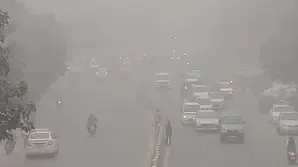
Numerous cities in India are grappling with a persistent air quality crisis exacerbated by seasonal crop burning, emissions from vehicles and industries, construction dust, and deteriorating weather conditions.
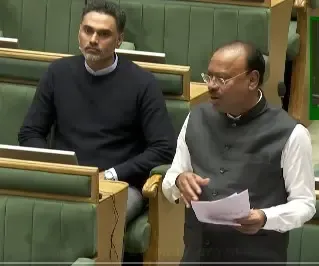
During a parliamentary session on Thursday, BJP MP Anurag Thakur drew the attention of Lok Sabha Speaker Om Birla to a Trinamool Congress MP using an e-cigarette.
Notably, this practice is prohibited in India under legislation that bans the production, sale, distribution, and advertisement of e-cigarettes due to the associated nicotine risks and health dangers.
Colleagues and journalists have mentioned that the aforementioned Trinamool MP had previously been warned by peers but persistently continued to vape.
Many were anticipating an official reprimand or even disciplinary action.
In another incident, the MP's senior party colleague, Saugata Roy, a retired Physics professor, was observed smoking a traditional cigarette near the Parliament's Makar Dwar.
A video shared by a journalist on Facebook shows Saugata Roy accompanied by media personnel while smoking, confronted by Union Ministers Giriraj Singh and Gajendra Singh Shekhawat.
The BJP representatives expressed concerns regarding public health and the integrity of the House, while Saugata Roy defended his actions, claiming he was smoking in an open area.
The 78-year-old veteran, a five-time Lok Sabha member, was first elected to the sixth Lok Sabha (1977-80) as a Congress candidate and has faced scrutiny for smoking within Parliament premises, with a photo of him with a cigarette appearing in newspapers years ago.
Reports suggest that the Trinamool leadership is aware of this dual controversy and is reportedly embarrassed by such behavior.
The actions of these two lawmakers raise significant questions about their responsibilities as leaders and representatives of the public.
A silver lining emerged in this smoking controversy when Congress member Manickam Tagore highlighted Delhi's air pollution, urging the Union government to implement a clean air emergency strategy to tackle the issue.
The plea was echoed by Opposition Leader Rahul Gandhi, with the Treasury agreeing to facilitate a constructive discussion in the House.
The health impacts of pollution include increasing respiratory, cardiovascular, and developmental issues.
Despite the existence of various government programs, experts argue that enforcement gaps and limited industrial focus have compromised effectiveness.
Air pollution is associated with asthma, chronic obstructive pulmonary disease (COPD), heart disease, strokes, low birth weight, inadequate lung development in children, and emerging evidence of reproductive harms.
Public health organizations have alerted about a significant cardiovascular burden linked to ambient air pollution.
The visible effects are clear from hospitals treating victims during severe pollution events, school closures, and lost workdays.
However, many long-term, often unseen damages to public health and productivity remain unnoticed.
The Union government initiated the National Clean Air Programme (NCAP) in 2019 to target 130 non-attaining cities with city-specific action plans, monitoring expansion, and sectoral interventions.
This program coordinates central and state schemes and utilizes urban missions for financial support.
Cities have adopted short-term emergency measures, including alternating the operation of odd and even numbered vehicles, halting construction activities, and imposing temporary restrictions on industries.
Meanwhile, states conduct anti-burning initiatives and provide subsidies for machinery to farmers.
Independent evaluations and expert reviews indicate mixed outcomes, with some reductions in visible stubble fires and localized air quality index improvements, but persistent high PM2.5 levels and evidence that farmers and polluters sometimes adjust the timing or location of emissions instead of eliminating them.
As parliamentarians seek solutions through dialogue, citizens might anticipate comparatively cleaner air and healthier lungs.
Point of View
It is crucial for lawmakers to lead by example. The recent incidents of smoking in Parliament underscore a larger issue that demands attention. We must prioritize public health and advocate for effective measures to combat air pollution, ensuring a safer environment for all.
NationPress
12/12/2025
Frequently Asked Questions
What are the main causes of air pollution in India?
Major causes include seasonal crop burning, vehicle and industrial emissions, and construction dust. These factors contribute to a chronic air quality crisis in many Indian cities.
What health issues are linked to air pollution?
Air pollution is associated with respiratory diseases, heart diseases, strokes, and developmental issues in children. It poses significant health risks to the population.
What is the National Clean Air Programme?
Launched in 2019, the National Clean Air Programme aims to address air pollution in 130 non-attainment cities through action plans and sectoral interventions.
What steps are being taken to combat pollution?
Measures include vehicle restrictions, construction bans, and anti-burning initiatives. However, enforcement remains a challenge.
How can citizens contribute to cleaner air?
Citizens can support initiatives aimed at reducing emissions and advocate for stricter policies on air quality and pollution control.