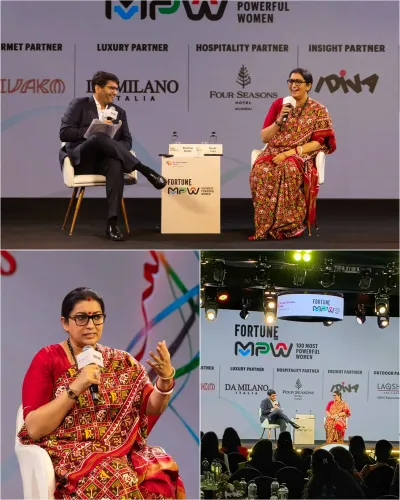
Smriti Irani calls motherhood an economic institution at MomPower Conference
Synopsis
At the #MomPowerConference2026, BJP leader Smriti Irani argued that caregiving and motherhood must be recognised as economic institutions driving productivity, workforce participation, and human capital — pushing for care-economy thinking to enter mainstream policy and official economic accounting.
Key Takeaways
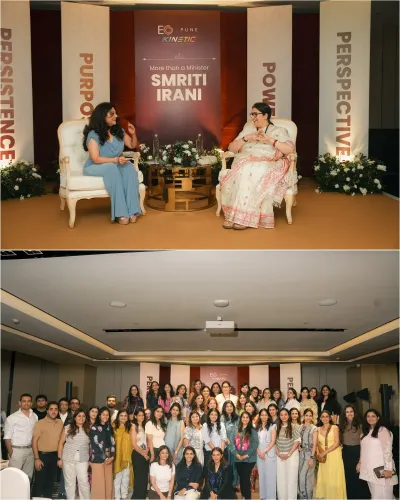
BJP leader Smriti Irani spoke at the #MomPowerConference2026 on August 1, 2026 , addressing the theme of the Motherhood Economy.
She argued caregiving is 'one of the greatest contributors to productivity, growth and human capital' despite being absent from mainstream economic conversations.
Irani framed motherhood as 'an economic institution' — not merely a social identity — shaping workforce participation, entrepreneurship, and intergenerational opportunity.
India's 2017 Maternity Benefit Act amendment extended paid leave to 26 weeks , a step toward recognising maternal economic contribution legislatively.
Successive Economic Surveys have linked India's low female labour force participation to the unaccounted burden of unpaid care work.
Irani called the Motherhood Economy 'a conversation about the future of growth itself,' signalling a push to move care-economy metrics into official policy frameworks.
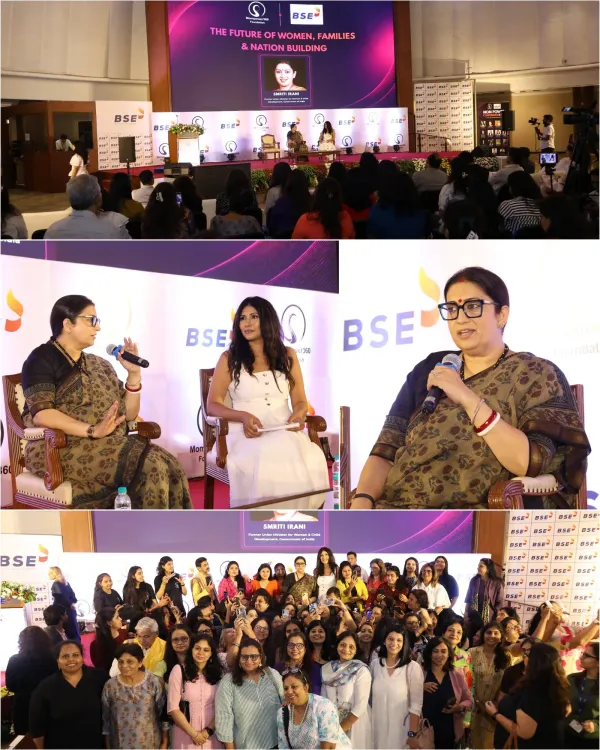
Caregiving has long been the invisible engine of economic growth — unaccounted for in GDP, undervalued in policy, and absent from boardroom conversations. BJP leader and former Union Minister Smriti Irani stepped into that gap on Saturday, August 1, 2026, joining policymakers, business leaders, and entrepreneurs at the #MomPowerConference2026 to make a pointed case: motherhood is not a social category — it is an economic institution.
Reframing care as capital
Irani's argument cuts to a structural blind spot in how India — and most economies — measure productivity. 'Caregiving is often absent from economic conversations, yet it is one of the greatest contributors to productivity, growth and human capital,' she wrote, framing the Motherhood Economy not as a niche advocacy cause but as 'a conversation about the future of growth itself.'
The logic tracks with a well-documented policy gap. Successive Economic Surveys have flagged India's persistently low female labour force participation rate, linking it in part to the disproportionate burden of unpaid care work shouldered by women. When that care work goes unrecognised, the economic cost is borne silently — by families, by the workforce, and ultimately by national output.
From maternity leave to a care economy framework
India has taken incremental steps. The 2017 amendment to the Maternity Benefit Act extended paid maternity leave to 26 weeks — one of the most generous provisions in Asia — signalling legislative recognition that supporting mothers is inseparable from supporting workforce participation. But advocates argue the policy architecture has not kept pace with the ambition.
Irani's framing at the conference pushes further: institutions that value care, she argued, 'strengthen families, build resilient economies and invest in a nation's future.' That positions caregiving support not as a welfare expenditure but as a growth investment — a reframe with significant implications for how budgets are written and how economic surveys are designed.
Five years of MomPower360 and where the conversation goes next
Irani offered her compliments to MomPower360 for 'creating a platform that has elevated this important conversation over the past five years' — acknowledging the organisation's role in sustaining a discourse that mainstream economic forums have historically sidelined. The conference brought together changemakers across entrepreneurship, leadership, and intergenerational opportunity, reflecting a broadening coalition around care-economy thinking.
The sharper question now is whether the conversation translates into measurement. Integrating unpaid care work into official economic accounting — a move recommended by international bodies — would be a concrete next step. Whether India's next Economic Survey takes that step will be the real test of how seriously policymakers are listening.
Point of View
She aligns with a global shift toward quantifying unpaid care work in national accounts — a move that could reshape how India designs labour, budget, and welfare policy. For the BJP, it also represents an opportunity to position women's economic empowerment as a growth argument rather than an equity one, broadening its political appeal. The real policy test will be whether this rhetoric finds expression in the next Economic Survey's methodology or in expansions of childcare and maternity support infrastructure. Until care work is measured, it will continue to be managed as an afterthought.
NationPress
1 Aug 2026
Frequently Asked Questions
What did Smriti Irani say at the MomPower Conference 2026?
Smriti Irani argued that caregiving and motherhood must be recognised as economic institutions, saying they are among the greatest contributors to productivity, growth, and human capital — and that the Motherhood Economy is 'a conversation about the future of growth itself.'
What is the Motherhood Economy?
The Motherhood Economy is a framework that treats caregiving and motherhood not as purely social roles but as economic drivers that shape workforce participation, entrepreneurship, leadership, and intergenerational wealth — arguing that valuing care strengthens families and builds resilient economies.
How does India's Maternity Benefit Act relate to the care economy debate?
India's 2017 amendment to the Maternity Benefit Act extended paid maternity leave to 26 weeks, one of the most generous provisions in Asia, recognising that supporting mothers is linked to workforce participation — though advocates say broader care-economy policy has not kept pace.
Why is female labour force participation low in India?
Economic Surveys have repeatedly highlighted that India's low female labour force participation is partly driven by the disproportionate burden of unpaid care work on women, which goes unaccounted in GDP and unaddressed in mainstream economic policy.
What is MomPower360?
MomPower360 is the organisation behind the MomPowerConference, which Smriti Irani credited with elevating conversations around the Motherhood Economy over the past five years, bringing together policymakers, entrepreneurs, and changemakers.