Smriti Irani Hails 50 Crore MUDRA Loans, UPI Milestone
Synopsis
BJP leader Smriti Irani credited India's trader community and PM Modi's digital finance push with crossing 50 crore MUDRA loans, calling it a new record of success for small businesses and MSME entrepreneurs powered by UPI and targeted micro-credit.
Key Takeaways
BJP leader Smriti Irani posted on 12 August 2026 celebrating a major milestone in India's MSME credit and digital payments ecosystem.
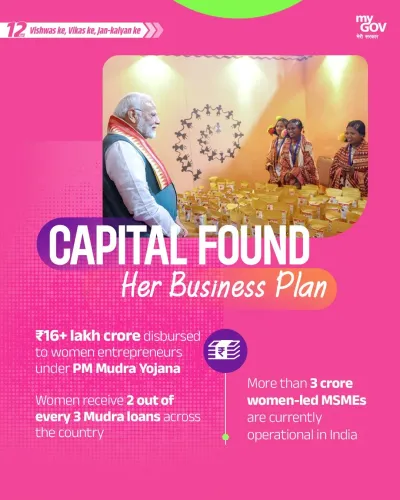
Over 50 crore MUDRA loans have been cited as disbursed to small traders, MSMEs, and first-generation entrepreneurs.
The Pradhan Mantri MUDRA Yojana was launched in April 2015 to channel formal credit to micro and small enterprises.
UPI , launched in August 2016 , is highlighted alongside MUDRA as a complementary tool enabling digital financial inclusion for small businesses.
Irani framed the achievement as a joint success of grassroots traders and PM Narendra Modi's policy architecture.
Official cumulative MUDRA sanction figures are expected to be confirmed in the next quarterly release by the Ministry of Finance or RBI.
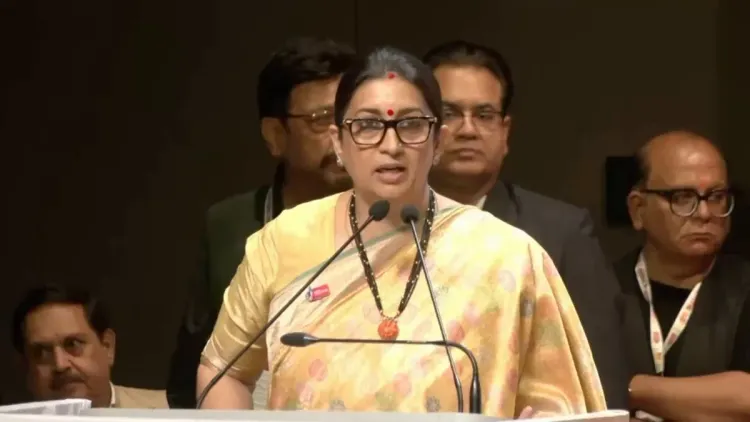
India's small traders and micro-entrepreneurs have quietly scripted one of the country's most consequential economic stories — and BJP leader Smriti Irani is making sure it gets its moment. On Wednesday, 12 August 2026, Irani took to X to credit the nation's trader community and Prime Minister Narendra Modi's push for digital financial infrastructure with achieving a landmark: over 50 crore MUDRA loans disbursed to small businesses, MSMEs, and first-generation entrepreneurs across India.
In her post, Irani wrote — 'देश के व्यापारियों ने तटस्थ रहकर... सफलता का नया कीर्तिमान स्थापित किया है' ['The traders of the country, remaining steadfast, have established a new record of success'] — framing the achievement as a joint triumph of grassroots enterprise and government policy design.
MUDRA at Scale: A Decade of Micro-Credit in Motion
Launched in April 2015 under the Pradhan Mantri MUDRA Yojana, the scheme was designed to do one precise thing: push formal credit down to the last rung of the economic ladder — street vendors, small manufacturers, first-time entrepreneurs who had never seen a bank loan. The premise was simple but radical: formalise the informal, and growth follows. Over 50 crore loans later — a figure Irani cites and which, if accurate, would represent one of the largest micro-credit mobilisations in history — the scheme's cumulative reach has stretched deep into the MSME ecosystem, with SME-stage businesses singled out as key beneficiaries. The Ministry of Finance and the RBI's next quarterly data release will be closely watched to confirm the precise cumulative sanction figure.UPI as the Backbone: Traders Who Went Digital
Irani's post deliberately pairs MUDRA with UPI — the Unified Payments Interface launched in August 2016 by the National Payments Corporation of India. That pairing is not accidental. The two instruments are the twin rails of the same formalisation drive: MUDRA brought credit in; UPI brought transactions into the light. For small traders, UPI did something no policy document could mandate — it made going digital frictionless enough to actually happen. The result is a payments ecosystem that now processes billions of transactions monthly, with micro and small businesses embedded in it as both senders and receivers of funds. Irani's framing positions traders not as passive recipients of policy but as active agents — 'siddhi tak pahunchane wale' ['those who carried it to fruition'] — a rhetorical choice that places the credit squarely with the ground-level entrepreneur even while honouring the government's architecture.The Formalisation Arc India Has Been Running Since 2014
The broader pattern here is consistent and deliberate. Since 2014, successive central government interventions — MUDRA, UPI, Jan Dhan accounts, GST registration drives — have all pointed in the same direction: pulling India's vast informal economy into a documented, taxable, credit-accessible formal structure. MSMEs account for a significant share of India's GDP and employment. Getting them onto digital payment rails and into formal credit channels is not just a welfare story — it is a structural economic bet. Irani's post, arriving in mid-2026, reads as a progress report on that decade-long bet. The dreams of small-town entrepreneurs, as Irani puts it, have found 'a new flight' — 'नई उड़ान'. The next data drop will tell us exactly how high.Point of View
MUDRA and UPI, into a single arc of small-business empowerment. The framing of traders as active agents rather than policy beneficiaries is a deliberate political choice: it decentralises credit for the achievement while keeping PM Modi's vision as the enabling force. With the 2026 political calendar in view, amplifying MSME and digital-economy wins is consistent with the party's strategy of consolidating its base among small traders and first-generation entrepreneurs. The unverified scale of the 50-crore figure, however, means the claim will face scrutiny when official data is next published.
NationPress
12 Aug 2026
Frequently Asked Questions
What is the MUDRA loan scheme and who can apply?
The Pradhan Mantri MUDRA Yojana, launched in April 2015, provides collateral-free loans to micro and small enterprises, street vendors, artisans, and first-generation entrepreneurs through banks, NBFCs, and microfinance institutions. Any non-farm income-generating small business can apply.
How many MUDRA loans have been given in India so far?
BJP leader Smriti Irani cited over 50 crore MUDRA loans disbursed to small traders and MSMEs as of August 2026, though the precise cumulative figure is subject to official confirmation from the Ministry of Finance or RBI.
What is UPI and how does it help small traders?
UPI, or Unified Payments Interface, is a real-time digital payment system launched in August 2016 by the National Payments Corporation of India. It allows small traders to send and receive payments instantly via mobile, reducing dependence on cash and integrating them into the formal economy.
What did Smriti Irani say about MUDRA and UPI on X?
On 12 August 2026, Irani posted on X that India's traders, by remaining steadfast, have established a new record of success by fulfilling PM Modi's resolve to strengthen digital financial transactions and UPI, with over 50 crore MUDRA loans giving new wings to the dreams of small entrepreneurs.
What is the difference between MSME and SME in India?
MSMEs — Micro, Small and Medium Enterprises — is the broader government classification covering all three tiers. SMEs, or Small and Medium Enterprises, refer specifically to the small and medium sub-categories within that umbrella, typically with higher investment and turnover thresholds than micro units.