Smriti Irani Pays Tribute to Capt. Vikram Batra on Punyatithi
Synopsis
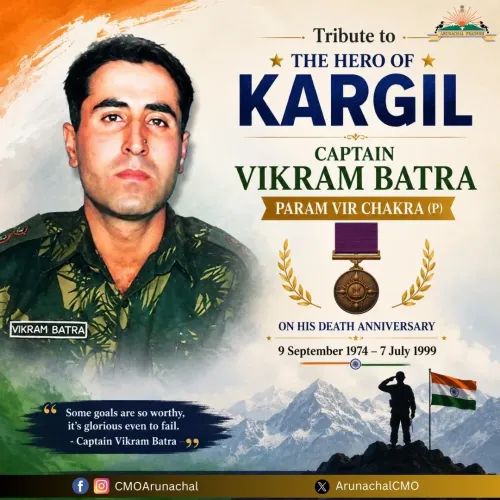
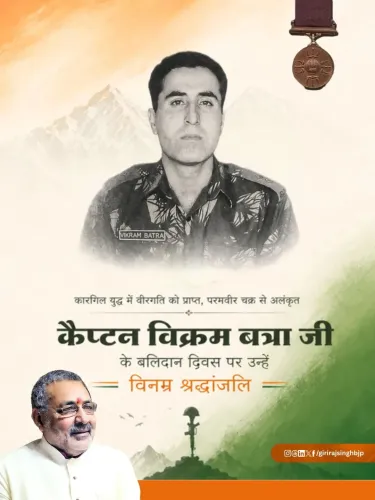
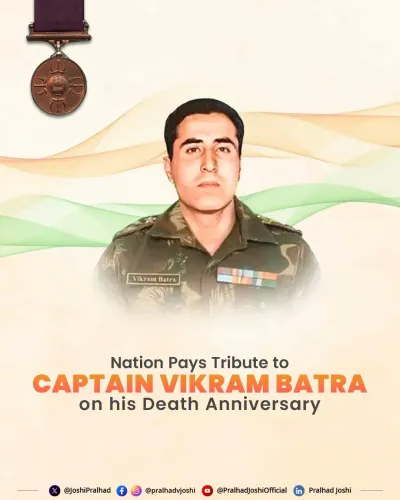
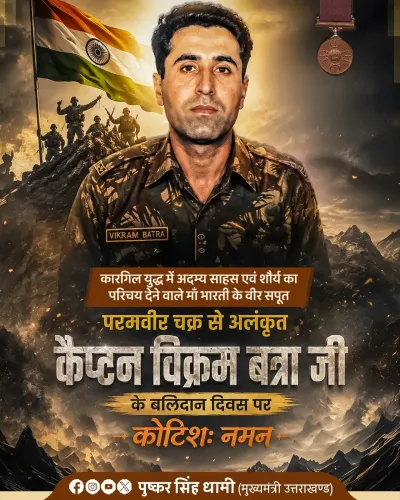
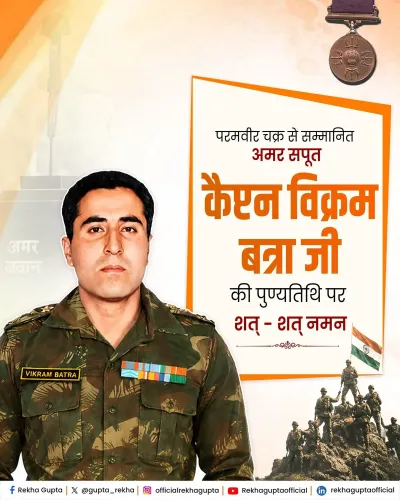
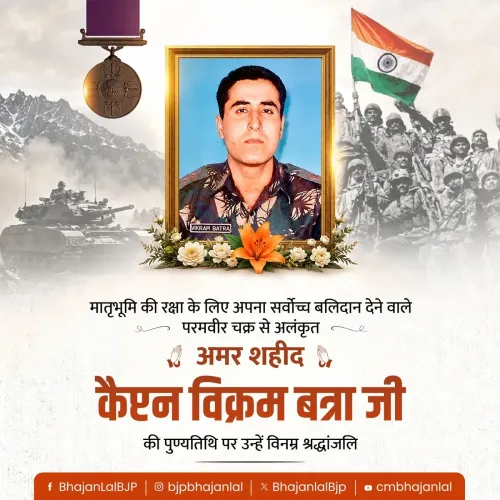
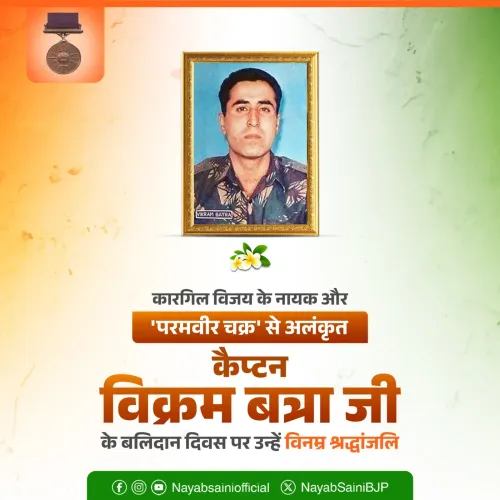
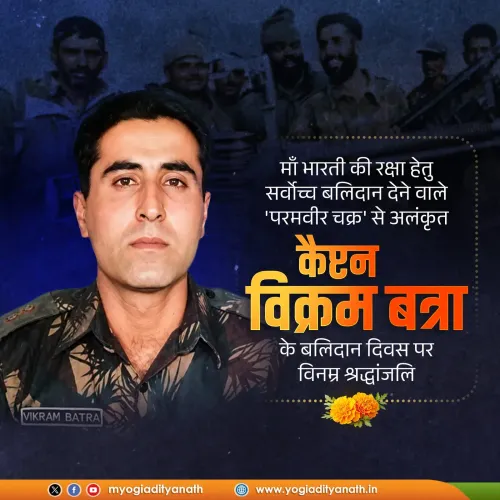
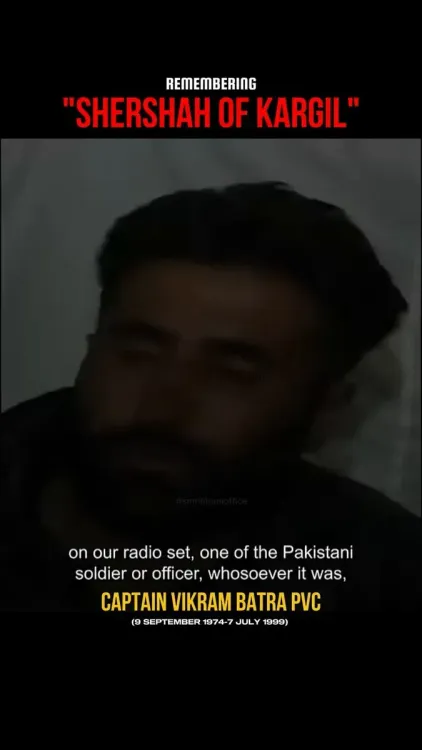
BJP leader Smriti Irani paid tribute to Captain Vikram Batra (PVC), the 'Shershah of Kargil', on his death anniversary, honouring the Param Vir Chakra recipient who was killed in action on 7 July 1999 during the Kargil War.
Key Takeaways
Smriti Irani , BJP leader and former Union Minister, posted a tribute to Capt.
Vikram Batra (PVC) on his Punyatithi , 7 July.
Captain Batra was killed in action on 7 July 1999 during the Kargil War in Jammu and Kashmir.
He was posthumously awarded the Param Vir Chakra , India's highest wartime gallantry honour.
Batra is widely remembered as the 'Shershah of Kargil' , a title that has entered popular national memory.
India observes Kargil Vijay Diwas on 26 July each year to commemorate the 1999 military victory.
The tribute is part of a sustained national pattern of honouring Kargil martyrs ahead of the annual 26 July commemoration.
BJP leader and former Union Minister Smriti Irani on Tuesday, 7 July paid tribute to Captain Vikram Batra (Param Vir Chakra), the celebrated Kargil War hero popularly known as the 'Shershah of Kargil', on his death anniversary, expressing 'profound respect and eternal gratitude' for the fallen officer.
Context
Irani's post recalled Batra with the words: 'Some heroes leave the battlefield, but never the hearts of a grateful nation.' The tribute was accompanied by the Indian flag and a video, marking his Punyatithi (death anniversary) with a tone of solemn national remembrance. Captain Vikram Batra was killed in action on 7 July 1999 during the Kargil War in the icy heights of Jammu and Kashmir.
Policy Backdrop
The Kargil War was a high-altitude armed conflict between India and Pakistan fought in the Kargil sector of Jammu and Kashmir in the summer of 1999. Captain Batra earned the nation's highest wartime gallantry honour, the Param Vir Chakra, posthumously for his extraordinary courage in recapturing strategic peaks from Pakistani intruders. His battlefield call sign 'Yeh Dil Maange More' became one of the most iconic phrases associated with the Kargil conflict.
India observes Kargil Vijay Diwas annually on 26 July — the date in 1999 when the Indian Army formally declared victory — to honour the soldiers who fought and fell in that campaign. Batra's name figures prominently in official and public commemorations each year.
Stakeholders and Impact
Tributes to Kargil martyrs resonate deeply with armed forces families, war veterans, and a broad cross-section of Indian citizens who regard the 1999 victory as a defining moment of post-independence national resolve. Captain Batra's story, widely popularised through biographical accounts and a major Hindi-language film, has made him a household name across generations.
Political leaders across party lines routinely issue public remembrances on the death anniversaries of Kargil martyrs, reflecting a sustained, bipartisan culture of honouring military sacrifice. Such statements also carry symbolic weight in the context of ongoing India-Pakistan security dynamics.
What's Next
With Kargil Vijay Diwas falling on 26 July, Irani's tribute is among the early commemorative gestures that typically precede the larger national observance. Ceremonial events at Dras War Memorial in Ladakh and parliamentary references to defence martyrs are expected as the anniversary approaches. The annual commemoration continues to serve as a focal point for reaffirming India's commitment to its armed forces and the memory of those who gave their lives in the 1999 conflict.
Point of View
A practice that reinforces the BJP's long-standing positioning on national security and military valour. The timing — nearly three weeks before Kargil Vijay Diwas on 26 July — places this gesture within a broader commemorative arc that builds toward the annual national observance. Captain Batra's enduring cultural prominence, amplified by popular media, makes tributes to him particularly resonant with a wide demographic. Such remembrances also carry an implicit strategic subtext, signalling continued political salience of the 1999 conflict in India's national security discourse.
NationPress
7 Jul 2026
Frequently Asked Questions
Who is Capt. Vikram Batra and why is he called Shershah of Kargil?
Captain Vikram Batra was an Indian Army officer who displayed extraordinary bravery in recapturing strategic peaks during the 1999 Kargil War. He was posthumously awarded the Param Vir Chakra, India's highest wartime gallantry honour, and is remembered as the 'Shershah of Kargil' — a title rooted in his fearless battlefield conduct.
When did Capt. Vikram Batra die?
Captain Vikram Batra was killed in action on 7 July 1999 during the Kargil War in the Kargil sector of Jammu and Kashmir.
What is Kargil Vijay Diwas and when is it observed?
Kargil Vijay Diwas is observed annually on 26 July to mark India's declaration of victory in the 1999 Kargil War and to honour the soldiers who fought and fell during the conflict.
What did Smriti Irani say about Capt. Vikram Batra?
Smriti Irani wrote that 'some heroes leave the battlefield, but never the hearts of a grateful nation,' paying tribute to Batra on his Punyatithi with 'profound respect and eternal gratitude.'
What is the Param Vir Chakra?
The Param Vir Chakra is India's highest military decoration, awarded for the most conspicuous acts of bravery or self-sacrifice in the presence of the enemy. Captain Vikram Batra received it posthumously for his actions in the 1999 Kargil War.