Smriti Irani Targets Rahul Gandhi Over 'Mobocracy' Remark

Synopsis
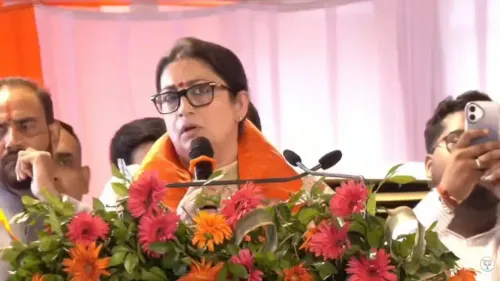
BJP leader Smriti Irani accused Leader of Opposition Rahul Gandhi of choosing 'mobocracy' over democratic institution-building on October 16, 2026, sharpening the ruling party's narrative against Congress ahead of the winter parliamentary session.
Key Takeaways
Smriti Irani posted on October 16, 2026 accusing the Leader of Opposition of preferring 'mobocracy' over democratic governance.
The target of her remark is Rahul Gandhi , who holds the Leader of Opposition post in the Lok Sabha following the 2024 general election .
The LoP post returned to Congress for the first time since 2014 after the party improved its seat count in 2024.
The BJP-led NDA retained power in 2024 but with a reduced majority, intensifying parliamentary friction with a emboldened opposition.
The exchange reflects a long-running structural argument over whether mass street mobilisation complements or undermines parliamentary democracy.
With the winter session approaching, the charge signals an escalating BJP strategy of framing Congress as institutionally illegitimate.
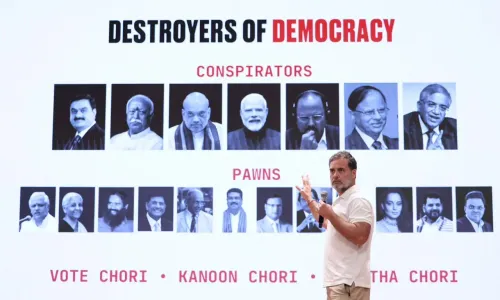
A four-word indictment, sharpened to a blade. BJP leader Smriti Irani fired a pointed broadside at the Leader of Opposition Rahul Gandhi on Friday, October 16, 2026, accusing him of favouring street-level mob pressure over democratic institution-building — a charge that cuts to the heart of a long-running battle over what legitimate political opposition looks like in India.
Irani's post stated bluntly: 'The Leader of Opposition, who cannot form a government democratically, thinks mobocracy is the way.' The line is short, but the target is unmistakable — Rahul Gandhi, who leads the Congress parliamentary bloc and holds the formal Leader of Opposition (LoP) post in the Lok Sabha, a position the party reclaimed after a decade's absence following its improved performance in the 2024 general election.
The 'Mobocracy' Charge and What It Signals
The word 'mobocracy' — the idea that mob sentiment, not votes or parliamentary procedure, drives political outcomes — is a deliberate escalation. Irani is not just criticising a specific protest or event; she is making a structural argument: that the opposition, having failed to win a governing majority at the ballot box, is attempting to govern from the streets instead.
This is a recurring fault line in Indian politics. The ruling coalition frames mass mobilisations led by opposition figures as an attempt to bypass the will of the electorate. The opposition, for its part, argues that street protest is a constitutionally protected form of democratic expression — especially when parliamentary time is limited or the ruling majority steamrolls debate.
The 2024 Backdrop: A Stronger Opposition, A Sharper BJP
The context matters. The 2024 Lok Sabha elections returned the BJP-led NDA to power, but with a reduced majority that forced greater dependence on coalition partners. Congress improved its seat count enough to formally claim the LoP post — its first since 2014. That restoration of the LoP role gave Rahul Gandhi a constitutionally recognised platform inside Parliament, and it has also made him a more direct target for ruling-party criticism.
Irani, a former Union Minister of Women and Child Development, has been one of the BJP's sharpest parliamentary voices, known for interventions that mix policy command with combative political messaging. Her choice to invoke 'mobocracy' rather than name a specific incident is itself strategic — it frames a broader pattern rather than a single grievance.
What the Exchange Reveals About India's Political Temperature
With winter session proceedings looming and state assembly contests on the horizon, both sides are calibrating their public postures. The BJP's message: the opposition lacks democratic legitimacy and compensates through disruption. The opposition's counter, likely to come swiftly: that dissent — in Parliament or on the street — is not mobocracy, it is democracy functioning as designed.
The battle over who gets to define 'legitimate opposition' is, ultimately, the battle over the next election's narrative — and both sides know it.
Point of View
' the BJP personalises the narrative around Rahul Gandhi's fitness for his constitutional role. The Congress counter-narrative — that protest is a democratic right, especially for a party denied adequate parliamentary time — is well-established, but Irani's framing forces them to relitigate it publicly at a moment of BJP's choosing. The real stakes are not this exchange but the voter perception it seeds: who defines 'democratic' behaviour in a political system where both the street and Parliament are legitimate arenas?
NationPress
16 Oct 2026
Frequently Asked Questions
What did Smriti Irani say about the Leader of Opposition?
Smriti Irani posted on X that 'The Leader of Opposition, who cannot form a government democratically, thinks mobocracy is the way,' directly targeting Rahul Gandhi's conduct as the official opposition leader.
Who is the Leader of Opposition in India in 2026?
Rahul Gandhi of the Indian National Congress holds the Leader of Opposition post in the Lok Sabha, a position Congress reclaimed after the 2024 general election following a decade's absence.
What does 'mobocracy' mean in Indian politics?
In Indian political discourse, 'mobocracy' refers to the alleged use of street protests and mass mobilisation to exert political pressure outside democratic institutions, bypassing electoral or parliamentary processes.
Why did BJP start targeting the Leader of Opposition more directly after 2024?
Congress's improved 2024 election result allowed it to formally claim the LoP post for the first time since 2014, making Rahul Gandhi a constitutionally recognised figure and a more direct target for ruling-party political messaging.
What is the BJP's broader argument against Congress street protests?
The BJP argues that an opposition unable to win a governing majority at the ballot box should work through parliamentary institutions rather than street mobilisation, which they characterise as an attempt to circumvent the democratic verdict.