Smriti Irani Extends Navroz Greetings to Parsi Community
Synopsis
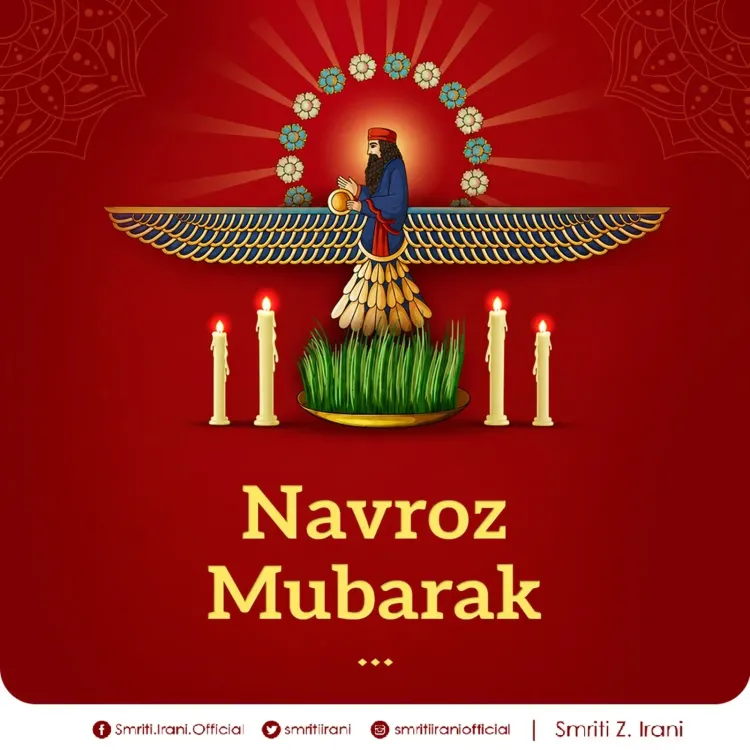
BJP leader Smriti Irani marked Navroz by extending greetings to India's Parsi community, explicitly citing the Zoroastrian ethical triad of Good Thoughts, Good Words, and Good Deeds — a gesture that fits a broader pattern of political minority outreach in India.
Key Takeaways
Smriti Irani , senior BJP leader and former Union Minister, posted Navroz greetings on 15 August 2026 .
She specifically cited the Zoroastrian triad Humata, Hukhta, Hvarshta — Good Thoughts, Good Words, Good Deeds.
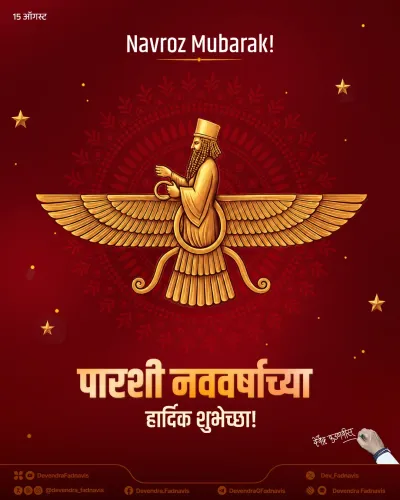
Navroz is the New Year celebration of India's Parsi community , observed on the Shahenshahi calendar.
The message aligns with a long-standing pattern of BJP leaders issuing minority-community festival greetings as part of public outreach.
The Parsi community holds notable cultural and economic significance in cities like Mumbai and Surat .
The ancient Zoroastrian triad of Good Thoughts, Good Words, Good Deeds found a fresh political echo as BJP leader Smriti Irani extended Navroz greetings to the Parsi community on 15 August 2026, invoking the festival's core ethical philosophy in a public message.
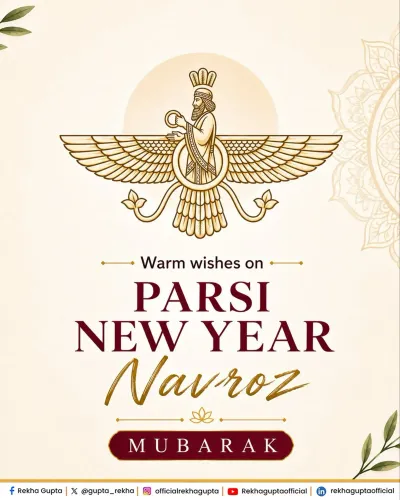
Irani wrote: 'Navroz Mubarak! As we celebrate new beginnings, may the timeless values of Humata, Hukhta, Hvarshta — Good Thoughts, Good Words, Good Deeds — continue to guide and inspire our lives. Wishing everyone a blessed New Year!'
Humata, Hukhta, Hvarshta — The Zoroastrian Triad at the Centre of the Message
The three Avestan words Irani cited are foundational to Zoroastrian ethics and sit at the heart of the faith practised by India's Parsi community. Navroz — meaning 'new day' in Persian — marks the New Year on the Shahenshahi calendar followed by Parsis in India, and is observed with prayers, family gatherings, and community feasts. By naming the triad explicitly rather than offering a generic greeting, the message signals a degree of cultural familiarity with the community's traditions.BJP's Minority Outreach and the Festival Greeting Pattern
Irani's post fits a well-established pattern in Indian political communication: senior leaders from across the spectrum issue greetings on festivals observed by minority communities, using shared ethical language to signal inclusion. For the BJP, such messaging has been a consistent feature of public outreach over multiple years, with Navroz greetings forming a recognisable part of that calendar. The Parsi community, though small in number, holds significant cultural and economic weight in cities such as Mumbai and Surat, making such gestures politically as well as symbolically meaningful. As Navroz observances continue, the broader question is whether public greetings translate into sustained policy attention for one of India's smallest and most storied minority communities.Point of View
High-visibility signal of cultural inclusion that BJP leaders have deployed consistently across minority calendars. Citing the Zoroastrian triad by name rather than offering a generic 'happy new year' adds a layer of specificity that distinguishes the message from boilerplate. For a party that faces persistent scrutiny over its minority outreach record, these gestures serve a dual purpose: they speak directly to the community in question and project a broader image of civilisational pluralism. Whether such messaging is backed by substantive policy engagement with the Parsi community remains the harder, unanswered question.
NationPress
29 Sept 2026
Frequently Asked Questions
What is Navroz and why do Parsis celebrate it?
Navroz is the Zoroastrian New Year, meaning 'new day' in Persian. India's Parsi community observes it according to the Shahenshahi calendar, marking the occasion with prayers, family gatherings, and community feasts.
What are Humata, Hukhta, and Hvarshta?
These are three Avestan words central to Zoroastrian ethics, translating to Good Thoughts, Good Words, and Good Deeds respectively. They form the foundational moral code of the Zoroastrian faith.
Why did Smriti Irani post Navroz greetings?
Irani extended greetings to mark Navroz for India's Parsi community, a practice consistent with BJP leaders publicly acknowledging festivals observed by minority communities.
Is Navroz a public holiday in India?
Navroz is not a national public holiday in India, but it is a significant cultural and religious observance for the Parsi community, particularly in Maharashtra and Gujarat.
Which cities have the largest Parsi communities in India?
Mumbai and Surat have the largest concentrations of Parsis in India, and the community holds considerable cultural and economic influence in both cities.