Did Snowfall in J&K Tourist Spots Bring Joy to New Year Celebrators While Plains Missed Out?
Synopsis
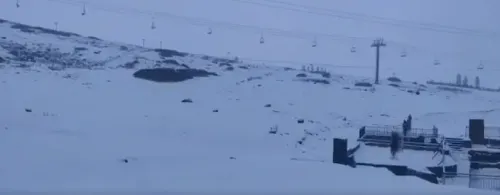
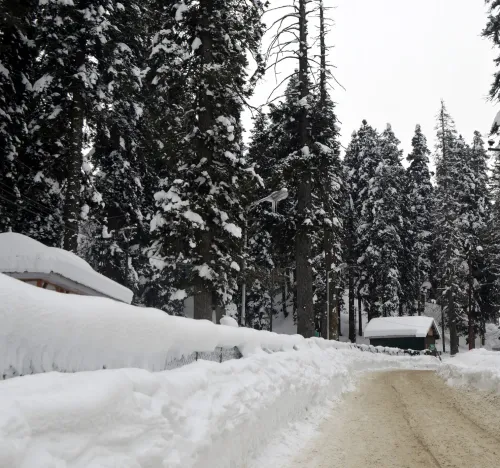
As the New Year unfolds, light snowfall in the higher reaches of Kashmir Valley brings delight to tourists in Gulmarg, Sonamarg, and Pahalgam. However, the plains are left with only rain, disappointing locals who were hoping for a traditional snowy celebration. With hopes for a prosperous 2026, the community prays for substantial snowfall during the crucial Chillai Kalan period.
Key Takeaways
Light snowfall occurred in the higher reaches of Kashmir valley.
Tourist spots like Gulmarg and Pahalgam were bustling with activity.
Accommodations are fully booked, showing a positive trend in tourism.
The winter period known as Chillai Kalan is crucial for water resources.
Residents are hoping for more snowfall to support agriculture and water supply.
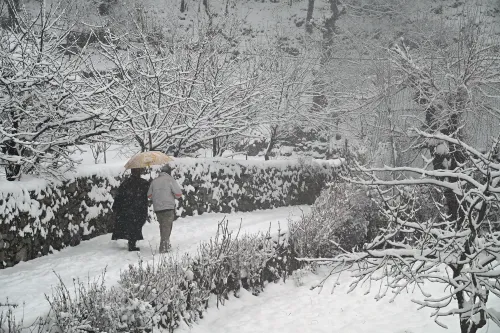
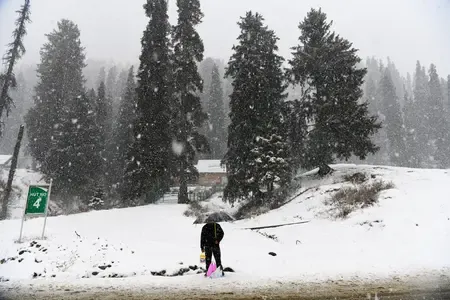
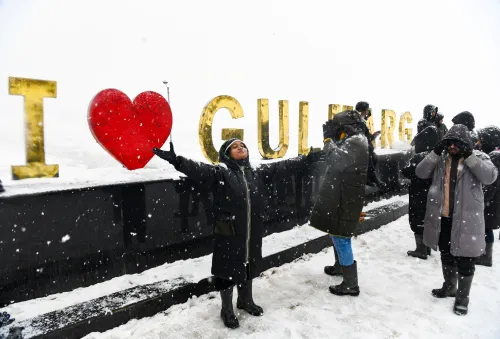
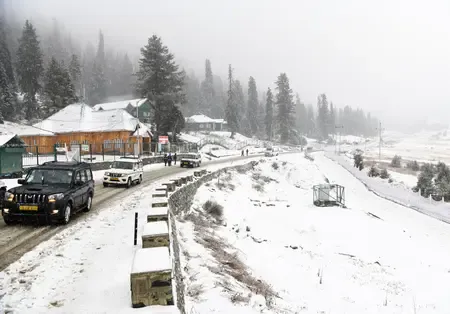
Srinagar, Jan 1 (NationPress) Light snowfall graced the elevated regions of the Kashmir Valley over the past 12 hours, while the plains were subjected to rainfall on Thursday. Tourists enjoyed their time in the popular resorts of Gulmarg, Sonamarg, and Pahalgam, where snow fell on New Year's Eve. Many visitors were seen singing and dancing to celebrate the turn of the year.
A large number of tourists also converged at Lal Chowk in Srinagar, braving the cold to welcome the new year.
This year, accommodations such as hotels, lodges, and guesthouses in the Valley are fully booked, instilling hope among countless locals connected to the tourism sector that 2026 will be filled with peace and prosperity. The inflow of tourists had significantly declined after the tragic terror attack in Pahalgam on April 22, 2025. Now, with winter tourism gradually picking up, residents are hoping for increased snowfall.
Unfortunately, residents of Srinagar and other areas in Kashmir did not experience the customary snowfall on New Year's Eve, leaving many children disappointed as they had anticipated indulging in snow-related sports and festivities.
The recorded temperatures were 2.2 degrees Celsius in Srinagar, minus 5.5 in Gulmarg, and 0.4 in Pahalgam.
In Jammu, the temperatures were 10.7 degrees Celsius, Katra at 8.7, Batote at 5.7, Banihal at 3.9, and Bhaderwah at one degree.
The 40-day period of harsh winter, known locally as ‘Chillai Kalan’, commenced on December 21, 2025, and will conclude on January 30, 2026.
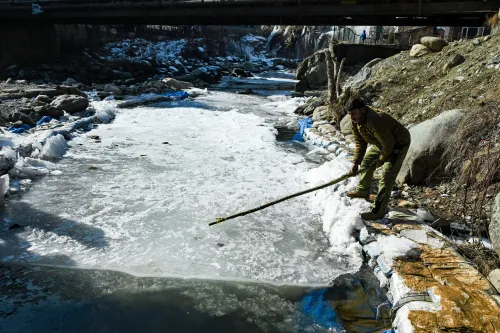
Should J&K miss out on heavy snowfall during this critical 40-day stretch, it could lead to severe challenges in irrigation for agriculture, horticulture, and even drinking water availability. Substantial snowfall during Chillai Kalan is essential for replenishing the perennial water reservoirs in the mountains, which are crucial for sustaining Jammu and Kashmir's water resources throughout the summer. Currently, various rivers, streams, springs, wells, and lakes are experiencing their lowest levels due to insufficient rain and snow this winter, with December 2025 recording a 28% deficit in precipitation.
Point of View
It is crucial to emphasize the resilience of the tourism industry in Jammu and Kashmir. The light snowfall has rekindled hope among local businesses, fostering optimism for a prosperous year ahead. While the absence of traditional snowfall on New Year's Eve is unfortunate, the region's recovery from past adversities showcases its enduring spirit.
NationPress
15 Oct 2026
Frequently Asked Questions
What is the significance of Chillai Kalan?
Chillai Kalan is a critical 40-day period of intense winter in Kashmir, essential for replenishing water reservoirs that support agriculture and drinking water supplies.
How does snowfall affect tourism in Kashmir?
Snowfall in Kashmir attracts tourists, boosting the local economy and providing livelihood opportunities for many residents dependent on the tourism sector.
What were the recorded temperatures in Kashmir during this time?
Temperatures in Srinagar were 2.2°C, Gulmarg at -5.5°C, and Pahalgam at 0.4°C.
Why is there concern over the lack of snowfall?
A lack of snowfall can lead to irrigation challenges for agriculture and lower water resources in summer, impacting both local farmers and residents.
What is the current status of tourism in J&K?
Tourist accommodations are fully booked, indicating a revival in the tourism sector, which had suffered due to past events.