Sonia Gandhi reveals fear of Indira, calls youth to enter politics
Synopsis
Sonia Gandhi was once too frightened to address Indira Gandhi directly — now, decades later, she has committed that private world to print. Her memoir 'Belonging: A Journey of Love' is as much an act of reclaiming a distorted family narrative as it is a personal chronicle, and her call for youth to enter politics adds a fresh dimension to the Congress's generational push.
Key Takeaways
Sonia Gandhi admitted she was initially 'terrified' of Indira Gandhi and avoided addressing her directly in her early years in the household.
Her perspective on Indira changed after the births of Rahul Gandhi and Priyanka Gandhi Vadra .
She entered public life after the assassination of Rajiv Gandhi and overcame critics who said she did not belong, gaining acceptance after the 2004 electoral victory.
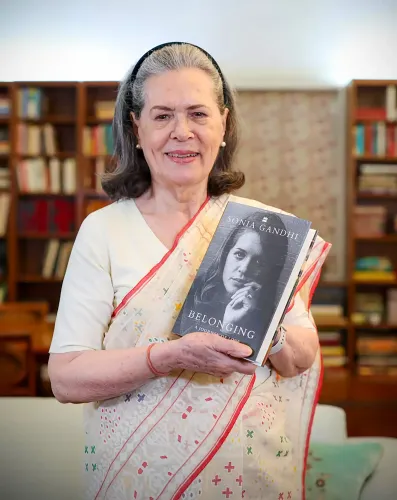
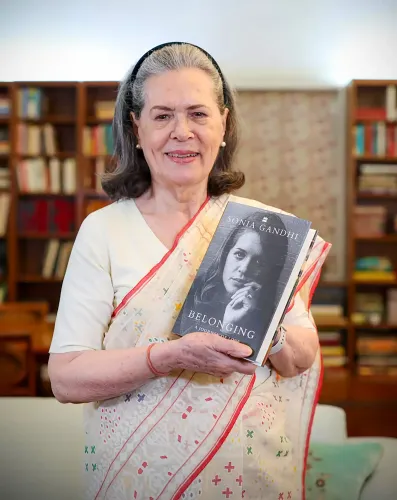
The memoir Belonging: A Journey of Love was written to counter a 'vast amount of narrative' about her family that was 'far removed from reality,' encouraged by Rahul Gandhi , Priyanka Gandhi Vadra , and friend Manjulika Dubey .
Sonia called on more young people to enter Indian politics, describing them as the country's true future.
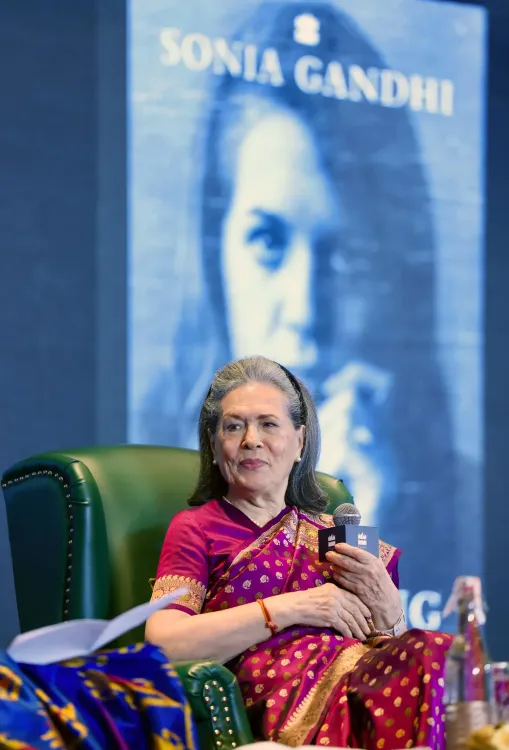
Congress leader Sonia Gandhi opened up about her deeply personal journey — from her initial fear of former Prime Minister Indira Gandhi to the motivations behind her new memoir Belonging: A Journey of Love — while making a strong pitch for India's youth to step into public life. The candid conversation, held in New Delhi on 16 November 2026, offered rare glimpses into the private world of one of India's most prominent political families.
A Daughter-in-Law's Early Fears
Speaking about her earliest days in the Gandhi household, Sonia Gandhi admitted she was initially 'terrified of Mrs Gandhi senior.' She recalled struggling to address Indira Gandhi as 'Ma' or 'Mummy,' explaining that for her, there was only one mother — her own, back in Italy. To navigate daily interactions, she would find ways to communicate without directly addressing her mother-in-law at all.
That equation changed gradually, particularly after the births of Rahul Gandhi and Priyanka Gandhi Vadra. Sonia recalled that while Indira could occasionally display a fiery temper — prompting Rajiv Gandhi and Sanjay Gandhi to quietly wait out the storm — her demeanour transformed entirely in the presence of her grandchildren.
From Grief to Public Life
Sonia also reflected on her entry into politics following the assassination of her husband, former Prime Minister Rajiv Gandhi. She noted that critics initially sought to dismiss her, insisting she did not belong and knew nothing of Indian political life. It was only after securing a significant electoral victory in 2004 that public opinion began to shift meaningfully in her favour.
This comes amid a broader debate within Indian politics about the role of political dynasties and the barriers facing those entering public life without inherited networks. Sonia's experience of overcoming institutional scepticism as a foreign-born political figure remains a singular chapter in modern Indian political history.
Why She Finally Wrote the Memoir
By temperament a private person, Sonia said she was naturally hesitant to put her inner feelings on public record. She credited the encouragement of Rahul Gandhi, Priyanka Gandhi Vadra, and close friend Manjulika Dubey for finally persuading her to commit to the project.
A key motivation, she explained, was the volume of narrative surrounding her family that had strayed far from reality. Writing the memoir became, in her view, an act of reclaiming her own story. The book moves between profound grief — including the assassinations of Indira Gandhi and Rajiv Gandhi — and lighter, intimate moments such as her first meeting with her husband and the births of her children.
Among the anecdotes she shared was her puzzlement, as a young bride unfamiliar with Indian traditions, over why a priest was required to name Rahul Gandhi at birth.
Call for Youth in Politics
Strongly advocating for greater youth participation, Sonia said more young people must come forward and enter politics, describing them as the true future of the country whose voices must be heard. The appeal carries particular resonance given the Indian National Congress's (INC) ongoing generational renewal efforts under Rahul Gandhi's leadership.
Receptions and Reactions
Expressing gratitude for the public response, Sonia said she was deeply moved by the love, book purchases, and reader feedback the memoir had received. On critics, she was measured: some, she said, can be 'a bit harsh or unkind,' while others are 'refreshingly honest, saying precisely what they feel needs to be said.'
As Belonging: A Journey of Love continues to draw attention across India, the memoir is expected to reignite discussions about the Gandhi family's legacy, the partition between personal grief and political duty, and the place of foreign-origin leaders in Indian public life.
Point of View
Yet its identity remains inseparable from a dynastic past marked by assassination and grief. Her candid admission of being 'terrified' of Indira is striking, but the more politically significant move is her framing of the book as a corrective to distorted narratives — a signal that she believes the public record has been shaped against her family. The call for youth participation is well-timed but risks sounding hollow unless the Congress can demonstrate it offers pathways to leadership beyond the Gandhi inner circle. The memoir's reception will test whether personal vulnerability translates into renewed political capital for a party still searching for its footing.
NationPress
16 Nov 2026
Frequently Asked Questions
What is Sonia Gandhi's new memoir 'Belonging: A Journey of Love' about?
'Belonging: A Journey of Love' is Sonia Gandhi's personal memoir covering her journey from Italy to the Gandhi household, her relationship with Indira Gandhi, and the grief of losing Rajiv Gandhi to assassination. It also includes lighter moments such as meeting her husband and the birth of her children.
Why was Sonia Gandhi initially afraid of Indira Gandhi?
Sonia Gandhi has said she was 'terrified of Mrs Gandhi senior' in her early days and struggled to address her as 'Ma' or 'Mummy' because, for her, only her own mother back in Italy held that place. Her relationship with Indira gradually warmed, especially after the births of Rahul and Priyanka.
Why did Sonia Gandhi decide to write the memoir?
Sonia has explained that a large amount of narrative about her family had strayed far from reality, prompting her to set the record straight in her own words. She was encouraged to write by Rahul Gandhi, Priyanka Gandhi Vadra, and close friend Manjulika Dubey.
What did Sonia Gandhi say about youth entering politics?
Sonia Gandhi strongly urged more young people to come forward and enter politics, saying they represent the true future of the country and must make their voices heard. The appeal aligns with the Congress party's ongoing generational renewal efforts.
How did public opinion about Sonia Gandhi change after she entered politics?
Sonia Gandhi has said that critics initially dismissed her, telling her she did not belong and knew nothing of Indian political life. It was only after the Congress-led alliance secured a significant electoral victory in 2004 that public opinion began to shift in her favour.