Sonia Gandhi's 2004 PM refusal: Rahul, Priyanka's fears and her inner voice
Synopsis
Sonia Gandhi's forthcoming memoir breaks new ground on one of modern India's most consequential political decisions. For the first time in her own words, she describes how both her children begged her not to accept the PM's post, how a casual 'Theek hai' was misread as acceptance, and why she ultimately concluded that her 'foreign origin' would become a weapon that could wound the country she loves.
Key Takeaways
Sonia Gandhi reveals in her memoir 'Belonging: A Journey of Love' (HarperCollins India) that she had privately resolved not to become Prime Minister well before the 2004 general elections.
Both Rahul Gandhi and Priyanka Gandhi Vadra opposed the idea, citing the assassinations of their grandmother Indira Gandhi and father Rajiv Gandhi .
UPA alliance leaders momentarily took her phrase 'Theek hai' as acceptance of the PM post, triggering a brief but intense family confrontation.
Sonia Gandhi cites her concern that the BJP would weaponise her Italian origin to 'stir up emotions and create havoc' as a key reason for her refusal.
She subsequently named Dr Manmohan Singh as leader of the Congress Parliamentary Party, a decision met with applause — including from Rahul and Priyanka.
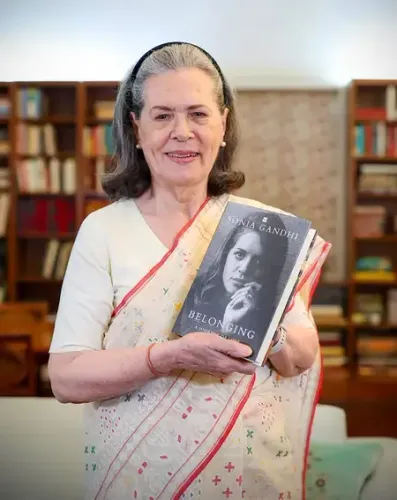
Congress Parliamentary Party (CPP) Chairperson Sonia Gandhi has revealed the intense emotional conflict she navigated before declining the post of Prime Minister following the Congress-led United Progressive Alliance (UPA)'s victory in the 2004 general elections — including the strong opposition of her children Rahul Gandhi and Priyanka Gandhi Vadra, who feared for her safety. The disclosures appear in an exclusive excerpt from her upcoming memoir, 'Belonging: A Journey of Love', published by HarperCollins India and shared with The Indian Express.
Children's Opposition Rooted in Family Trauma
Sonia Gandhi writes that months before the 2004 elections, she had already told her children categorically that she would not accept the Prime Minister's post if the party won. 'Absolutely not! I'd said, almost indignantly,' she recalls in the memoir. Both Rahul and Priyanka, she writes, shared that view — shaped by the assassinations of their grandmother, former Prime Minister Indira Gandhi, and their father, former Prime Minister Rajiv Gandhi. 'In their minds, holding that office was intrinsically linked with heightened danger,' she writes.
Yet when the UPA's unexpected victory arrived, the pressure from alliance leaders proved overwhelming. Sonia Gandhi recalls being 'overpowered' by their insistence and responding with the words 'Theek hai' — which the assembled leaders immediately took as acceptance, triggering congratulations before she could clarify. It was at this point that Rahul and Priyanka, learning of the apparent agreement, approached her with visible alarm.
The Moment of Decision
Sonia Gandhi describes the emotional whipsaw of those hours: 'My emotions were changing, moment to moment. One minute I was clear, the next, I was torn.' She writes that she had consciously withheld her views even from her closest colleagues during the campaign, believing that allowing a leadership contest to surface would fracture the party's unity. Her instinct, she says, pointed consistently toward someone with long governmental experience and an unimpeachable record of integrity — a description that would eventually fit Dr Manmohan Singh.
Addressing Congress MPs who repeatedly implored her to reconsider, she delivered what has since become one of the more cited passages in Indian political memory: 'Throughout these past six years that I have been in politics, one thing has been clear to me. And that is, as I have often stated, that the post of prime minister is not my aim. I was always certain that if ever I found myself in the position that I am in today, I would follow my own inner voice. Today, that voice tells me I must humbly decline this post.'
The 'Foreign Origin' Factor and the Fear of Divisive Politics
Sonia Gandhi also addresses directly the political calculation around her Italian origin, writing that she was acutely aware that the Bharatiya Janata Party (BJP) and its allies would use her background to 'stir up emotions and create havoc' that would overshadow any governance agenda. She frames this not as a personal concession but as a protective impulse toward the country she says she loves.
'How could I agree to holding the office of prime minister knowing it could wound my country, the country that I loved? No, never!' she writes. This passage is among the memoir's most explicit statements on the intersection of identity politics and her political calculus in 2004.
Naming Dr Manmohan Singh
After the Congress Parliamentary Party gathering gradually accepted her refusal, Sonia Gandhi sought members' approval to nominate a successor and named Dr Manmohan Singh as the leader of the Congressional Parliamentary Party. She recalls the room erupting in applause, with several MPs standing, raising slogans, and becoming emotional. Notably, she observed that both Rahul and Priyanka had risen to applaud — a moment she appears to regard as one of quiet mutual understanding after the turbulence of the preceding hours.
Significance of the Memoir
The excerpt arrives at a moment when the Congress is once again navigating questions of dynastic leadership, with Rahul Gandhi having led the party through successive electoral cycles. The memoir's candid account of a defining 2004 pivot — and the family dynamics that shaped it — adds rare first-person texture to a decision that had, until now, been reconstructed almost entirely through secondary sources. 'Belonging: A Journey of Love' is set to offer what is likely the most detailed account yet of Sonia Gandhi's two-decade political career from her own perspective.
Point of View
Dynastic caution, and strategic calculation that is rarely documented in Indian political memoirs. The 'foreign origin' passage is the most candid acknowledgement yet that her decision was partly defensive — an admission that identity politics had real power to constrain governance even before a government was formed. What the excerpt does not resolve is whether the decision ultimately served the Congress Party's long-term interests: the two UPA terms that followed are today remembered as much for their governance failures as their achievements. The memoir risks reinvigorating debate on whether a more politically accountable prime minister — rather than the arrangement of a powerful party president and a consensus PM — would have produced different outcomes.
NationPress
10 Nov 2026
Frequently Asked Questions
Why did Sonia Gandhi refuse the Prime Minister's post in 2004?
Sonia Gandhi writes in her memoir that she declined the PM post due to a combination of personal conviction, family opposition, and concern that her Italian origin would be weaponised by political opponents to create national strife. She says she followed her 'inner voice', which told her the post was not her aim.
How did Rahul Gandhi and Priyanka Gandhi Vadra react to the possibility of Sonia becoming PM?
Both children opposed the idea strongly, rooted in the trauma of witnessing the assassinations of their grandmother Indira Gandhi and their father Rajiv Gandhi. They saw holding the PM's office as intrinsically linked to heightened personal danger.
What is Sonia Gandhi's memoir 'Belonging: A Journey of Love'?
It is an upcoming memoir by Congress Parliamentary Party Chairperson Sonia Gandhi, published by HarperCollins India, in which she reflects on her political career, including her decision to decline the Prime Minister's post in 2004. An excerpt was shared with The Indian Express ahead of publication.
How did Dr Manmohan Singh come to be named Prime Minister in 2004?
After Sonia Gandhi firmly declined the post at the Congress Parliamentary Party meeting, she sought members' approval to nominate a successor and named Dr Manmohan Singh as the leader of the CPP. The announcement was met with applause from the assembled MPs.
What did Sonia Gandhi say about power and her political goals?
She stated that power and position were never her objectives. She wrote that her aim was always to defend the secular foundation of India and advocate for the poor — values she attributed to both Indira Gandhi and Rajiv Gandhi.