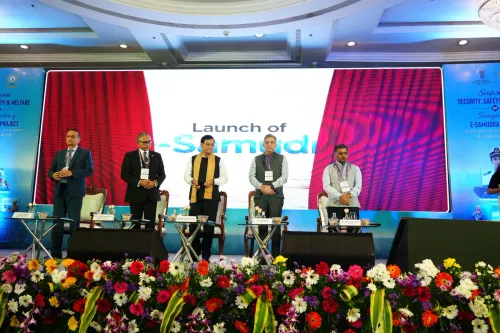
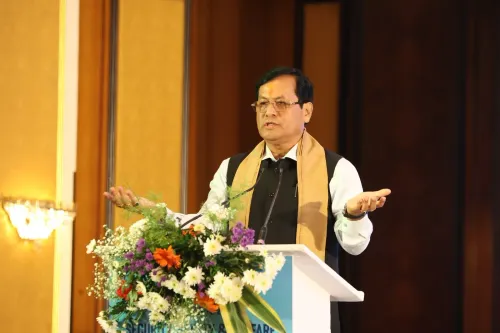
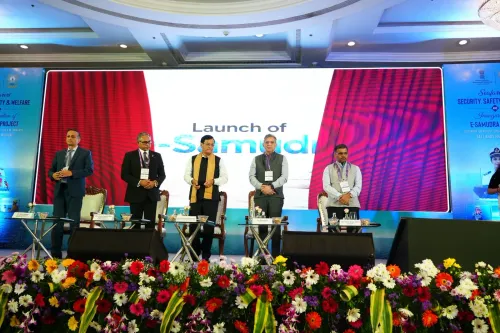
Sonowal Launches e-NAVIK Grievance Portal for Seafarers
Synopsis
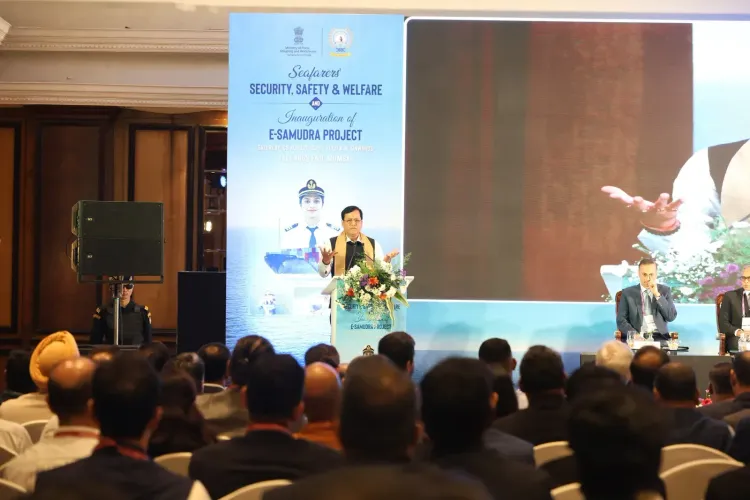
Union Minister Sarbananda Sonowal announced the e-NAVIK 24x7 grievance redressal portal and eSamudra digital platform on 8 August 2026, extending India's 'SeafarerFirst' welfare push under the Maritime India Vision 2030 and Digital India frameworks.
Key Takeaways
e-NAVIK is a newly launched 24x7 digital grievance redressal system for Indian seafarers, announced by Union Minister Sarbananda Sonowal on 8 August 2026 .
The companion platform eSamudra advances 'Digital First and Faceless Governance' for maritime services including crew documentation and licensing.
Both initiatives operate within the Maritime India Vision 2030 roadmap and the broader Digital India framework.
The policy push responds partly to vulnerabilities exposed during the COVID-19 crew-change crisis , which left thousands of Indian seafarers stranded beyond contract.
India's obligations under the ILO Maritime Labour Convention require accessible, functional grievance mechanisms — a standard the new portal is designed to meet.
Utilisation statistics and resolution rates for e-NAVIK will be the key metric for assessing real-world impact.
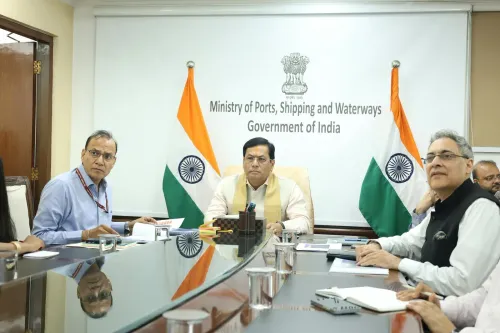
India's maritime workforce got a direct line to the government on Saturday, 8 August 2026, as Union Minister of Ports, Shipping and Waterways Sarbananda Sonowal announced the launch of the e-NAVIK 24x7 grievance redressal system — a round-the-clock digital portal designed to address complaints and welfare needs of the country's seafarers without physical interface.
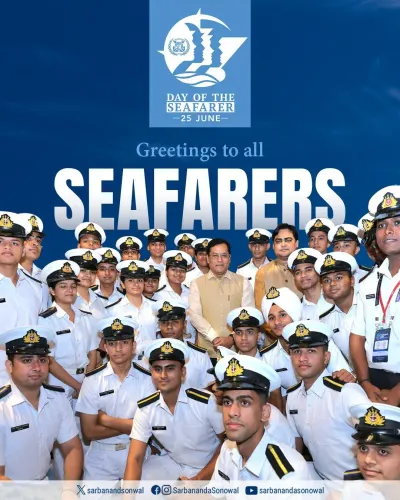
Posting on X, Sonowal framed the initiative around a clear governing philosophy: 'SeafarerFirst'. 'Our mantra is #SeafarerFirst. We are strengthening support with the newly launched e-NAVIK 24x7 grievance redressal system and enhanced welfare measures,' he wrote, adding that the #eSamudra platform drives 'Digital First and Faceless Governance, ensuring Ease of Living for our maritime heroes.'
What e-NAVIK and eSamudra are designed to do
The e-NAVIK portal positions itself as an always-on grievance channel for seafarers — a category of workers uniquely exposed to long absences at sea, contractual disputes, and limited access to consular or administrative support while aboard vessels. The companion platform eSamudra extends the ministry's broader digitalisation push, moving crew documentation, licensing, and welfare services toward a faceless, paperless model. Together, the two systems sit within the ministry's ongoing effort to reduce the physical friction that has historically plagued seafarer administration in India.
The policy lineage behind the push
Neither initiative emerged in isolation. The Sagarmala Project, launched in 2015, first signalled India's intent to modernise its port and coastal shipping ecosystem. Maritime India Vision 2030, unveiled in 2021 under Sonowal's tenure, made seafarer welfare and digital governance explicit commitments — setting the architecture within which e-NAVIK and eSamudra now operate. The broader Digital India framework has pushed every major ministry toward faceless service delivery, and the shipping sector — long dependent on paper-heavy processes — has been a deliberate focus of that drive.
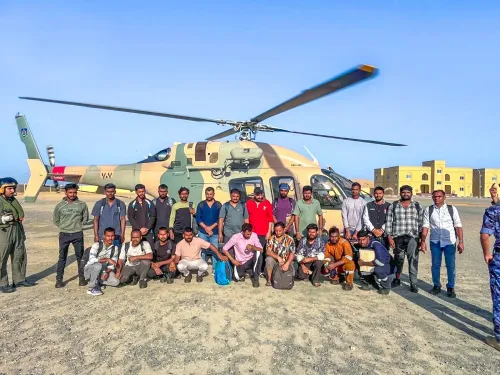
The urgency has real-world roots. The COVID-19 crew-change crisis left tens of thousands of Indian seafarers stranded aboard vessels for months beyond their contracts, exposing the absence of fast, accessible welfare channels. India is also a signatory to the ILO Maritime Labour Convention, which sets binding standards for seafarer welfare, grievance mechanisms, and repatriation — standards that a 24x7 digital portal directly addresses.
India's seafarers: the scale of the stake
India is among the world's top suppliers of maritime officers and ratings, with hundreds of thousands of seafarers serving on vessels globally at any given time. A functional, accessible grievance system is not a bureaucratic nicety — for a sailor mid-voyage in the South China Sea or the Gulf of Aden, it can be the difference between resolution and abandonment. The ministry's 'Ease of Living' framing deliberately mirrors the 'Ease of Doing Business' language that has governed India's regulatory reform agenda, applying the same logic to human welfare rather than commercial compliance.
Whether utilisation rates and resolution timelines bear out the portal's promise will be the real test — and one that parliamentary oversight committees are well-placed to track.
Point of View
Positioning the BJP government as responsive to a workforce that is economically significant but often invisible in domestic policy debates. The faceless-governance angle also aligns with a cross-ministry pattern of reducing rent-seeking at physical counters, which carries both administrative and anti-corruption value. The harder question — whether a 24x7 portal translates into measurable resolution outcomes for sailors mid-voyage — is one the ministry has yet to answer with data.
NationPress
8 Aug 2026
Frequently Asked Questions
What is the e-NAVIK portal launched by Sarbananda Sonowal?
e-NAVIK is a 24x7 digital grievance redressal system launched by the Ministry of Ports, Shipping and Waterways to allow Indian seafarers to raise and resolve complaints and welfare issues at any time without physical interface.
What is eSamudra and how does it help seafarers?
eSamudra is a digital governance platform under the Ministry of Ports, Shipping and Waterways that enables faceless, paperless processing of maritime services such as crew documentation, licensing, and welfare applications under the 'Digital First' mandate.
What is Maritime India Vision 2030?
Maritime India Vision 2030 is a roadmap released in 2021 by the Ministry of Ports, Shipping and Waterways outlining goals for port infrastructure, coastal shipping, digitalisation, and seafarer welfare through the year 2030.
Why does India need a dedicated seafarer grievance system?
Indian seafarers serving on international vessels often face contractual disputes, welfare shortfalls, and limited access to administrative support while at sea. The COVID-19 crew-change crisis highlighted these gaps, and India's obligations under the ILO Maritime Labour Convention require functional grievance mechanisms.
What is the Sagarmala Project and how is it related to these initiatives?
The Sagarmala Project, launched in 2015, is India's flagship programme for port modernisation and port-led development. It established the foundational infrastructure and policy intent within which later digital initiatives like eSamudra and e-NAVIK have been built.