Indian seafarers' safety top priority, Centre tells officials amid geopolitical tensions
Synopsis
With Indian seafarers increasingly exposed to conflict-zone risks at sea, the Centre has moved beyond crisis response — ordering round-the-clock grievance support, structured pre-departure briefings, and, for the first time, mandatory mental health counselling as part of the national seafarer welfare framework.
Key Takeaways
Union Minister Sarbananda Sonowal on 29 July directed all agencies to treat Indian seafarers' safety as the foremost priority amid geopolitical tensions.
The Directorate General of Shipping's Seafarer Grievance and Assistance Cell is operational 24/7 , providing helplines and grievance redressal for seafarers and families.
Recruitment and Placement Service Licensees (RPSLs) are being engaged to run structured pre-departure orientation programmes covering security protocols and geopolitical risks.
Mental health counselling for seafarers and their families is to be formally integrated into India's seafarer welfare framework.
Officials have been directed to maintain close coordination with Indian Missions abroad , shipping companies, and maritime authorities for a proactive response mechanism.
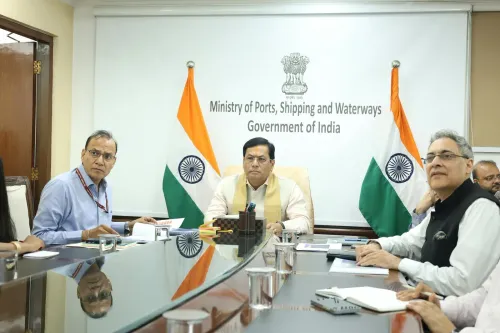
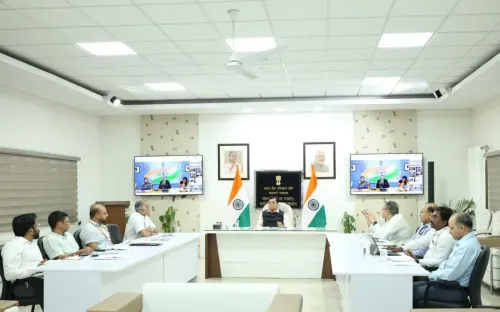
Union Minister Sarbananda Sonowal on 29 July directed officials to maintain constant, integrated coordination across all agencies to safeguard Indian seafarers serving aboard merchant vessels in conflict-sensitive regions. The Centre underscored that the safety and welfare of every Indian mariner must remain the foremost priority amid rising geopolitical tensions at sea.
Key Directives from the Review
Sonowal undertook a comprehensive review of the current safety framework for Indian seafarers and reaffirmed the government's commitment to their protection. He directed officials to maintain close coordination with Indian Missions abroad, shipping companies, maritime authorities, and all relevant stakeholders to ensure India's response mechanism remains proactive and capable of acting swiftly.
'No Indian seafarer should find himself caught in the crossfire of geopolitical conflict. Every possible measure must be taken to safeguard our seafarers, support their families and ensure timely assistance wherever required,' Sonowal said.
Grievance Cell and Round-the-Clock Support
The Directorate General of Shipping informed the minister that its Seafarer Grievance and Assistance Cell is fully operational, offering round-the-clock support to Indian seafarers and their families through dedicated helplines, information services, and grievance redressal mechanisms. This institutional infrastructure is central to the government's real-time response capability.
Pre-Departure Orientation and Awareness Drives
Recruitment and Placement Service Licensees (RPSLs) are being engaged to conduct structured pre-departure orientation programmes. These sessions are designed to help seafarers better understand operational conditions, security protocols, and evolving geopolitical risks in regions where they may be deployed, according to an official statement.
Mental Health and Transparent Communication
Sonowal also directed that mental health support be formally integrated into India's seafarer welfare framework. He called for structured counselling services for both seafarers and their families, and stressed that transparent communication on operational risks must become a mandatory part of pre-deployment preparation.
'Our responsibility extends beyond ensuring physical safety. Seafarers and their families deserve timely information, emotional support and complete transparency regarding the challenges they may face while serving at sea,' Sonowal said.
This review comes as several conflict zones — including the Red Sea and parts of the Gulf of Aden — have seen heightened risk for commercial shipping, with Indian crew members aboard vessels that have faced threats or attacks in recent months. The government's stepped-up posture signals a shift toward more proactive, institutionalised protection rather than reactive crisis management.
Point of View
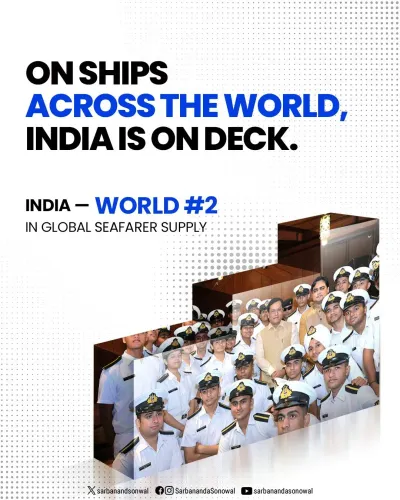
But the real test is institutionalisation. India has roughly 2 lakh seafarers serving globally — one of the largest pools in the world — yet welfare frameworks have historically lagged behind the scale of exposure. Directing RPSLs to conduct pre-departure briefings is sensible, but voluntary compliance has been the norm; without mandatory audits and penalties, orientation programmes risk becoming paperwork. The inclusion of mental health support is a genuine policy advance — one that has been demanded by seafarer unions for years. Whether it receives dedicated funding or remains an unfunded directive will determine its impact.
NationPress
28 Oct 2026
Frequently Asked Questions
Why is the Indian government reviewing seafarer safety now?
The review comes amid heightened geopolitical tensions in conflict-sensitive maritime regions, including the Red Sea and Gulf of Aden, where commercial vessels with Indian crew have faced elevated risks. The Centre wants a proactive, integrated response mechanism rather than reactive crisis management.
What is the Seafarer Grievance and Assistance Cell?
It is a unit under the Directorate General of Shipping that operates round-the-clock, providing dedicated helplines, information services, and grievance redressal for Indian seafarers and their families. The cell was confirmed as fully operational during Minister Sonowal's review on 29 July.
What are the new pre-departure orientation programmes for seafarers?
Recruitment and Placement Service Licensees (RPSLs) are being engaged to conduct structured briefings before seafarers are deployed. These sessions cover operational conditions, security protocols, and evolving geopolitical risks in the regions where they will serve.
Will mental health support now be mandatory for Indian seafarers?
Minister Sonowal has directed that mental health counselling be formally integrated into India's seafarer welfare framework, covering both seafarers and their families. The directive includes structured counselling services and transparent communication on operational risks as part of pre-deployment preparation.
Who is responsible for coordinating India's response for seafarers in conflict zones?
The Centre has directed officials to coordinate across all agencies, including Indian Missions abroad, shipping companies, and maritime authorities. The Directorate General of Shipping is the nodal body, with the Seafarer Grievance and Assistance Cell as the primary point of contact.