Sonowal Meets Australia Consul-General in Guwahati
Synopsis
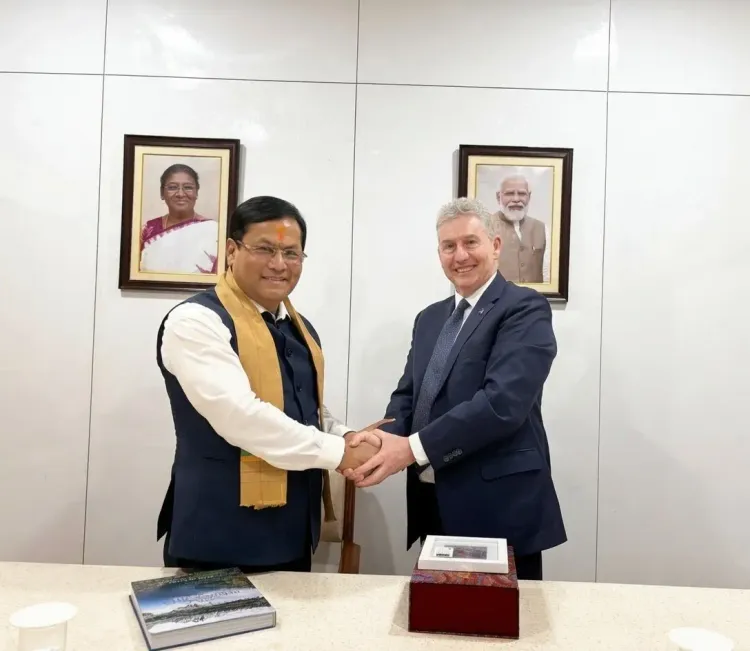
Union Ports Minister Sarbananda Sonowal met Australia's Consul-General Bernard Lynch in Guwahati on 14 June 2026, discussing expanded maritime cooperation and connectivity across the Indo-Pacific under the framework of the India-Australia Comprehensive Strategic Partnership.
Key Takeaways
Union Minister Sarbananda Sonowal met Australian Consul-General Bernard Lynch in Guwahati on 14 June 2026 .
Discussions focused on deepening India-Australia ties and enhancing cooperation in the maritime sector across the Indo-Pacific.
The meeting builds on the 2020 Comprehensive Strategic Partnership and the 2022 ECTA trade agreement between the two nations.
Both countries are Quad members, sharing priorities on maritime domain awareness, infrastructure and rules-based trade routes.
The AUSINDEX bilateral naval exercise series, running since 2015 , underpins growing defence and maritime interoperability.
Outcomes may feed into India-Australia maritime working groups and future bilateral summit agendas.
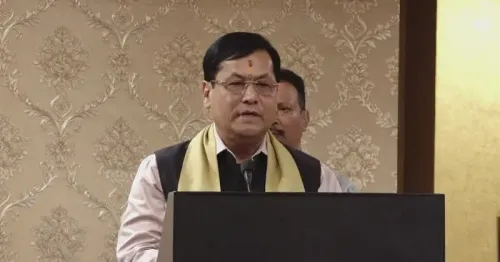
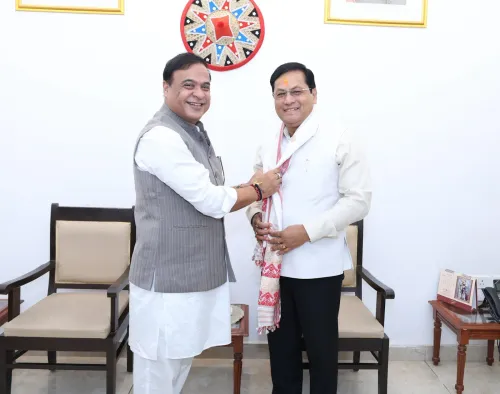
Union Minister of Ports, Shipping and Waterways Sarbananda Sonowal met Mr. Bernard Lynch, Australia's Consul-General in Kolkata, in Guwahati on the evening of Sunday, 14 June 2026, for discussions focused on expanding bilateral maritime cooperation. The meeting, which Sonowal described as 'fruitful', centred on deepening India-Australia ties and identifying new avenues for collaboration across the Indo-Pacific.
Context
Sonowal, who also served as Chief Minister of Assam, shared the meeting details on X (formerly Twitter) on 15 June 2026, noting that the two sides 'explored avenues for enhanced cooperation in the maritime sector for a prosperous and connected Indo-Pacific.' The choice of Guwahati — the commercial capital of Assam and a gateway to India's northeast — as the venue underscores the region's growing strategic relevance to India's Act East Policy.
Lynch, who heads the Australian consulate covering eastern India, represents a key diplomatic node for bilateral engagement in a region that borders Bangladesh, Bhutan, Myanmar and China.
Policy Backdrop
The meeting builds on a deepening bilateral architecture. In 2020, India and Australia elevated their relationship to a Comprehensive Strategic Partnership, which included explicit maritime cooperation clauses. Two years later, in 2022, both nations signed the India-Australia Economic Cooperation and Trade Agreement (ECTA), aimed at expanding two-way trade across goods and services.
Defence and maritime interoperability have advanced in parallel through the AUSINDEX bilateral naval exercise series, conducted since 2015. India's broader SAGAR doctrine — Security and Growth for All in the Region — and its Act East Policy frame the strategic logic behind strengthening port connectivity and supply-chain resilience with partners such as Australia across the Indo-Pacific.
Both nations are also members of the Quad grouping alongside the United States and Japan, which has placed maritime domain awareness, infrastructure investment, and rules-based trade routes at the centre of its agenda.
Stakeholders and Impact
The most immediate stakeholders are Indian and Australian port authorities and shipping firms seeking clearer bilateral frameworks for investment and operations. India's northeast, long seen as a logistics bottleneck, stands to benefit from any new connectivity initiatives that emerge from such diplomatic engagements, particularly those linking inland waterways to international shipping lanes.
For Guwahati and the wider northeast, enhanced maritime cooperation could translate into improved multimodal logistics — connecting the region's rivers and roads to Indian Ocean trade routes — a priority that Sonowal, as both the Ports Minister and a prominent political figure from Assam, has consistently championed.
What's Next
Concrete outcomes, if any, from this bilateral conversation are expected to feed into the agenda of India-Australia maritime working groups, which periodically review port connectivity, shipping lane security, and joint infrastructure proposals. Any formal project announcements would likely surface at the next high-level bilateral summit between the two governments. Observers will watch for follow-up signals from the Ministry of Ports, Shipping and Waterways or the Australian High Commission in New Delhi on whether the Guwahati discussions advance into a structured cooperation framework.
Point of View
Not merely a domestic development corridor. This fits a pattern in which the Ministry of Ports, Shipping and Waterways has increasingly used bilateral maritime conversations to advance the SAGAR doctrine and Act East Policy simultaneously. For Australia, deepening engagement with a minister who holds both Quad-aligned portfolio responsibilities and strong political roots in a sensitive border state reflects a maturing, multi-layered bilateral relationship. The meeting's timing — amid growing Quad-level focus on supply-chain resilience — suggests both sides are keen to move beyond framework agreements toward operational maritime cooperation.
NationPress
15 Sept 2026
Frequently Asked Questions
Why did Sarbananda Sonowal meet Australia's Consul-General in Guwahati?
Sonowal met Australian Consul-General Bernard Lynch to discuss deepening India-Australia ties and exploring new avenues for cooperation in the maritime sector across the Indo-Pacific, as stated in his post on 15 June 2026.
What is the India-Australia Comprehensive Strategic Partnership?
The Comprehensive Strategic Partnership was established in 2020 and elevated the bilateral relationship, including maritime cooperation clauses, forming the policy backbone for defence, trade and connectivity collaboration between the two nations.
What is the ECTA agreement between India and Australia?
The India-Australia Economic Cooperation and Trade Agreement, signed in 2022, aims to expand two-way trade in goods and services and provides a framework for deeper economic engagement including in the maritime and logistics sectors.
What is India's SAGAR doctrine and how does it relate to Australia?
SAGAR stands for Security and Growth for All in the Region and is India's maritime policy framework for the Indo-Pacific. It aligns with Australia's own Indo-Pacific priorities and underpins cooperation on port connectivity, maritime security and supply-chain resilience.
What is the AUSINDEX naval exercise?
AUSINDEX is a bilateral naval exercise series between India and Australia conducted since 2015, designed to improve maritime interoperability and defence coordination between the two Quad member nations.