Sonowal: Port Security Is a Shared National Responsibility
Synopsis
Union Minister Sarbananda Sonowal declared port security a shared national responsibility, signalling a call for stronger coordination across India's multi-agency coastal security framework covering its 7,500-km coastline and 12 major ports.
Key Takeaways
Union Minister Sarbananda Sonowal posted on August 6, 2026 that 'Security of our Ports is a shared National Responsibility.' India has over 7,500 km of coastline and 12 major ports , making coordinated security a complex, multi-agency challenge.
Port security involves the CISF, Indian Coast Guard, Navy, state marine police , and the Ministry of Ports, Shipping and Waterways .
Sonowal's framing signals accountability must be distributed across all stakeholders, not siloed within a single agency.
The statement aligns with the government's broader Sagarmala Programme , which links port development directly to national economic and strategic goals.
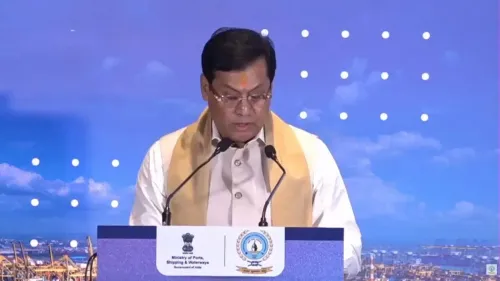
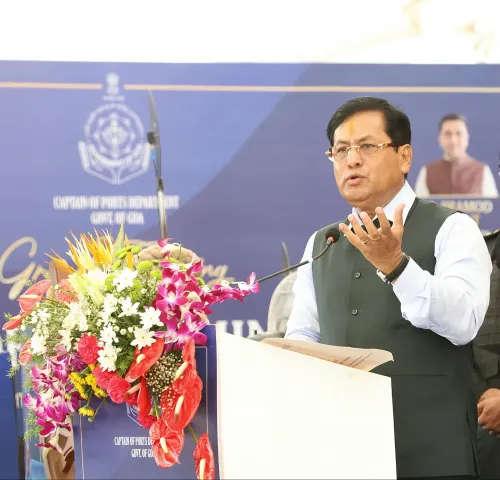
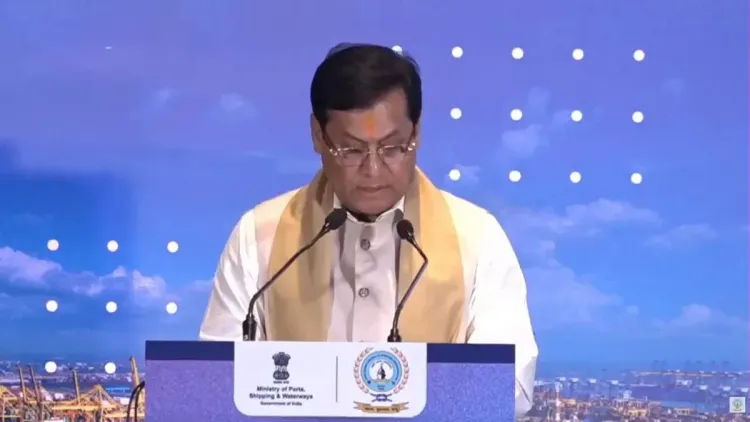
India's coastline is not just an economic artery — it is a strategic frontier. Union Minister of Ports, Shipping and Waterways Sarbananda Sonowal underscored that reality on Thursday, August 6, 2026, with a pointed message: the security of the country's ports belongs to every stakeholder, not any single agency.
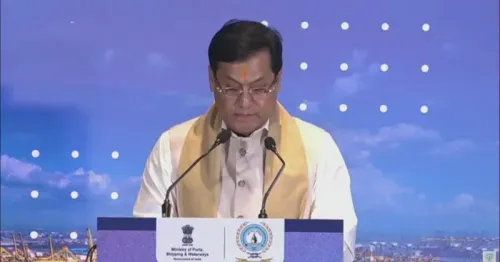
Posting on X, Sonowal stated plainly: 'Security of our Ports is a shared National Responsibility.' The brevity was deliberate. No caveats, no bureaucratic hedging — just a direct assertion of collective ownership over critical maritime infrastructure.
Why India's ports sit at the centre of national security
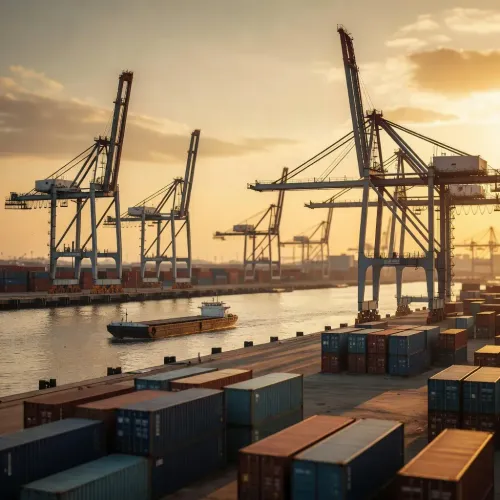
India operates one of the world's most expansive coastlines — stretching over 7,500 kilometres — dotted with 12 major ports and hundreds of minor ones that together handle the bulk of the country's trade by volume. That scale makes them a high-value target and a complex security challenge. Responsibility is currently distributed across a web of agencies: the Central Industrial Security Force (CISF), state marine police, the Indian Coast Guard, the Navy, port trusts, and the Ministry of Ports, Shipping and Waterways itself. Coordination between these layers is the perennial pressure point. Sonowal's framing — 'shared national responsibility' — is a direct signal to that multi-agency ecosystem. It pushes back against the tendency to silo accountability and places the obligation squarely on every actor in the chain, from dock-level security personnel to senior ministry officials.The political weight behind the message
Sonowal, a senior BJP leader and former Chief Minister of Assam, has consistently positioned the ports ministry as a pillar of India's maritime ambition under the government's Sagarmala Programme — the flagship port-led development initiative. Security and commerce are two sides of the same coin in that vision: a port that cannot be secured cannot be trusted as a trade gateway. His post arrives as India deepens its engagement with global shipping lanes and as coastal security remains a standing priority for defence planners. The post was accompanied by a video, though no specific incident, drill, or policy review was cited — keeping the statement at the level of principle rather than operational announcement. When a minister with Sonowal's seniority frames port security as a 'national' — not merely a ministerial — responsibility, the message is aimed as much at state governments and local authorities as it is at central agencies. Shared ownership, in Indian federal politics, is a call to action that cuts across jurisdictional lines. Watch for follow-up directives or inter-agency reviews from the ministry in the days ahead.Point of View
Not a routine ministerial post. By invoking 'national responsibility,' he is deliberately pushing port security up the federal priority ladder — nudging state governments, local port authorities, and central agencies alike to treat coastal infrastructure as a shared strategic asset rather than a bureaucratic turf. This fits a broader pattern under the current government of centralising the narrative around maritime security while operationally relying on a fragmented multi-agency structure — a tension the ministry has yet to fully resolve. If follow-up directives or inter-agency reviews materialise, this post will look like the opening move of a policy push; if not, it remains a statement of intent.
NationPress
6 Aug 2026
Frequently Asked Questions
What did Sarbananda Sonowal say about port security?
Sonowal stated that 'Security of our Ports is a shared National Responsibility,' calling on all stakeholders — central agencies, state governments, and port authorities — to collectively own the task of securing India's maritime infrastructure.
Which agencies are responsible for port security in India?
Port security in India is handled by a multi-agency framework including the CISF , the Indian Coast Guard , the Indian Navy , state marine police forces, and the Ministry of Ports, Shipping and Waterways .
What is the Sagarmala Programme?
The Sagarmala Programme is the Indian government's flagship port-led development initiative, aimed at modernising ports, improving coastal connectivity, and integrating maritime infrastructure with the broader economy.
How many major ports does India have?
India has 12 major ports and hundreds of minor ones, spread across a coastline of over 7,500 kilometres .
Why is coastal security important for India?
India's coastline serves as a critical trade and strategic frontier. Securing it requires coordinated action across multiple agencies and levels of government to prevent threats to both economic and national security.