Sonowal Visits Seoul's Deoksugung Palace on Korea Trip
Synopsis
Union Minister Sarbananda Sonowal visited Seoul's Deoksugung Palace during an overseas trip, reflecting on Emperor Gojong's 1897 proclamation of the Korean Empire and praising the site's blend of traditional and Western architecture.
Key Takeaways
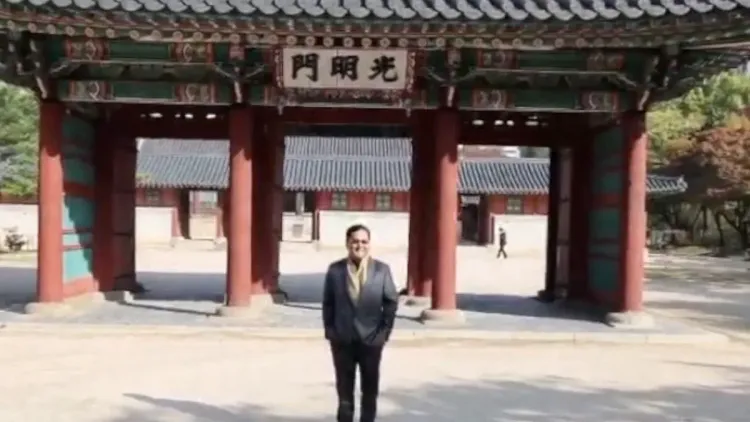
Union Minister Sarbananda Sonowal visited Deoksugung Palace in Seoul on October 30, 2026 during an overseas trip.
Deoksugung is one of the Five Grand Palaces of the Joseon Dynasty and is notable for blending traditional Korean and Western architectural styles.
Emperor Gojong proclaimed the Korean Empire at Deoksugung in 1897 , the same year the Joseon Dynasty formally ended after more than 500 years of rule.
Sonowal described the visit as 'a profound reminder of Korea's resilience and its transformative journey of modernisation.' No official bilateral agenda or ministry outcomes from the Seoul trip have been announced yet.
History has a way of stopping even the busiest ministers in their tracks. Union Minister of Ports, Shipping and Waterways Sarbananda Sonowal paused from official engagements in Seoul on Friday, October 30, 2026, to walk the storied grounds of Deoksugung Palace — one of the five grand palaces of the Joseon Dynasty — and shared his impressions with a video posted on X.
Sonowal described the palace as a place that 'beautifully harmonises traditional Korean architecture with Western influences,' calling the experience 'wonderful.' At the heart of his reflection was the weight of a specific historical moment: it was here, in 1897, that Emperor Gojong proclaimed the Korean Empire, an act of sovereign assertion by a dynasty determined to modernise and survive on its own terms.
A Palace That Carries the Weight of 1897
Deoksugung is unusual even among Seoul's royal palaces. While most of the Joseon-era grand palaces are studies in pure East Asian architectural tradition, Deoksugung absorbed Western neoclassical influences in its later buildings — a physical record of the late-19th-century collision between Korea's ancient court culture and the modernising pressures of the era. Emperor Gojong, the last king of the Joseon Dynasty (which ruled from 1392 to 1897) and the first emperor of the short-lived Korean Empire, used this palace as his seat as he sought to signal independence and parity with other world powers.
Sonowal called walking those grounds 'a profound reminder of Korea's resilience and its transformative journey of modernisation' — a framing that speaks as much to South Korea's current standing as a global economic and cultural powerhouse as it does to the dynasty that once ruled from those courtyards.
Ministers, Monuments, and People-to-People Ties
Senior Indian ministers visiting heritage sites during overseas trips is a well-established diplomatic gesture — one that signals respect for the host nation's civilisational depth beyond the conference table. India and South Korea maintain longstanding cultural and people-to-people ties alongside a substantive bilateral relationship. The ministry has not yet detailed the official agenda behind Sonowal's Seoul visit, and no bilateral outcomes have been announced.
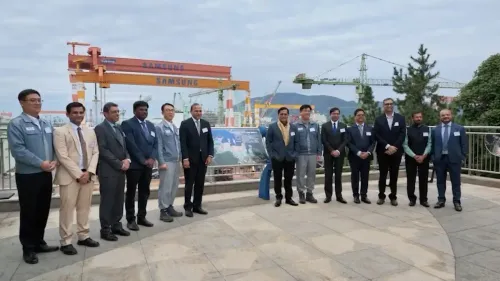
Still, a ports and shipping minister in one of Asia's busiest maritime capitals is rarely there purely for the palace views. The full purpose of the trip is expected to become clearer through follow-up ministry statements.
Point of View
The post functions as a people-to-people signal in the absence of hard diplomatic news. Expect the ministry to fill in the official picture shortly.
NationPress
30 Oct 2026
Frequently Asked Questions
Why did Sarbananda Sonowal visit Seoul?
Sonowal visited Seoul for an official trip, the full details of which have not yet been disclosed by his ministry. He shared a visit to Deoksugung Palace as part of the trip.
What is Deoksugung Palace?
Deoksugung is one of the Five Grand Palaces of the Joseon Dynasty in Seoul, South Korea, known for its unique combination of traditional Korean and Western neoclassical architecture. It was Emperor Gojong's residence when he proclaimed the Korean Empire in 1897.
Who was Emperor Gojong and why is he significant?
Emperor Gojong was the last king of the Joseon Dynasty and the first emperor of the Korean Empire, which he proclaimed in 1897 as part of efforts to modernise Korea and assert its sovereignty amid growing foreign pressures.
What are the Five Grand Palaces of the Joseon Dynasty?
The Five Grand Palaces are Gyeongbokgung, Changdeokgung, Changgyeonggung, Gyeonghuigung, and Deoksugung — all located in Seoul and built during the Joseon Dynasty, which ruled Korea from 1392 to 1897.
What are India-South Korea relations like?
India and South Korea maintain strong bilateral ties encompassing trade, defence, culture, and people-to-people exchanges. The two countries have a Special Strategic Partnership and cooperate across several sectors including shipbuilding, which is directly relevant to Sonowal's ministry portfolio.