Hemant Soren Reviews Industries Dept, Pushes Davos and Textile Plans
Synopsis
Jharkhand Chief Minister Hemant Soren chaired a review of the state Industries Department, directing officials on Davos investment progress, the bicycle and textile sectors, industrial corridors, JharCraft and the Mati Kala Board, as Ranchi pushes diversification beyond minerals into labour-intensive manufacturing and artisan-led clusters.
Key Takeaways
Hemant Soren chaired an Industries Department review on 3 June 2026 .
Directions covered Davos outreach progress and follow-up on investment leads.
Focus areas included the bicycle and textile industries in Jharkhand.
Various industrial corridors were flagged for monitoring.
JharCraft and the Mati Kala Board were reviewed alongside mainstream industry.
Signals continued push to diversify Jharkhand's economy beyond mining.
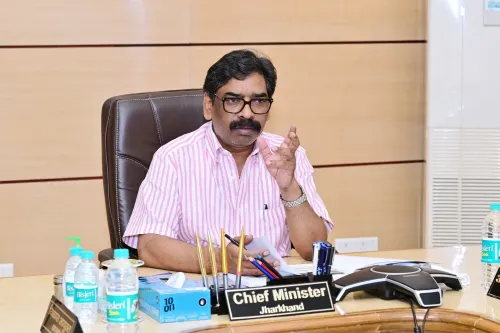
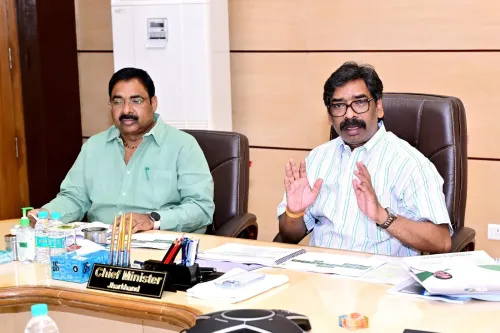
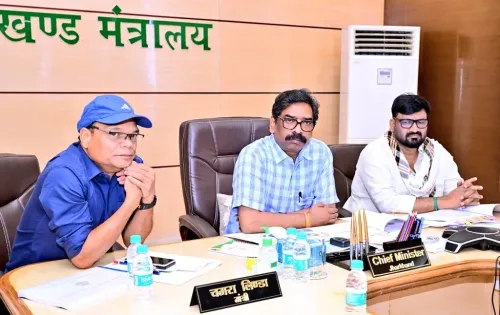
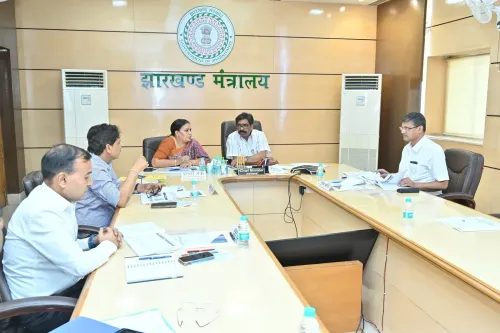
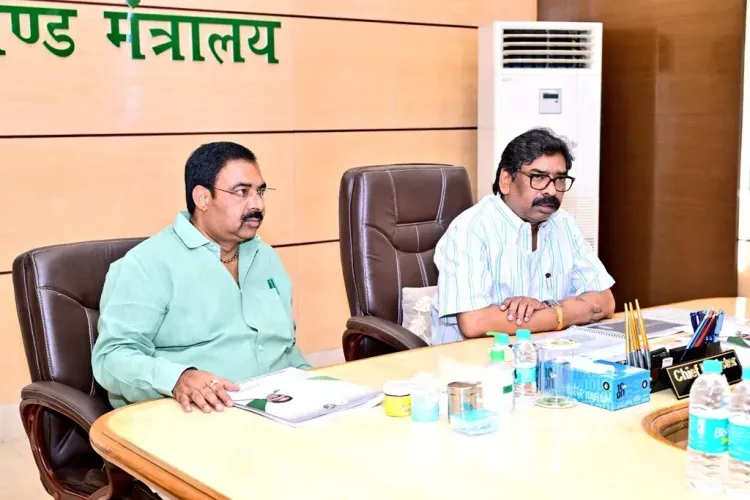
Jharkhand Chief Minister Hemant Soren on 3 June 2026 chaired a review meeting of the state's Department of Industries in Ranchi, issuing directions on the state's Davos outreach, bicycle and textile manufacturing, industrial corridors, JharCraft and the Mati Kala Board. Posting on X after the meeting, the Chief Minister said officials had been briefed on progress across each of these tracks and given fresh instructions to accelerate implementation.
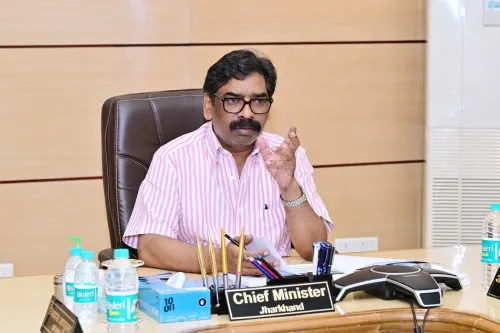
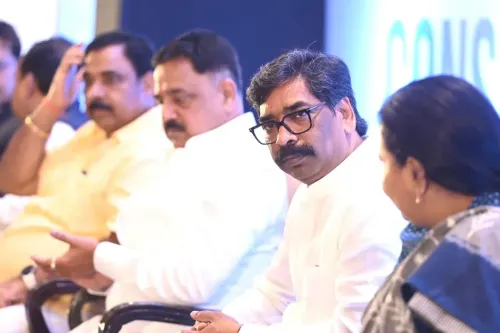
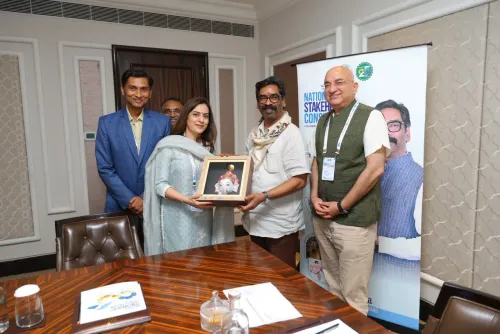
In his post, Soren wrote that in the day's review meeting of the Industries Department, officials present were given 'several directions regarding Davos progress, the cycle and textile industry in the state, various industrial corridors, JharCraft, the Mati Kala Board, and more.' The post was accompanied by four images from the meeting.
Context
The review brings together strands of Jharkhand's economic agenda that the Soren government has been pushing in parallel — global investment pitches at the World Economic Forum in Davos, labour-intensive light manufacturing such as bicycles and textiles, and state-supported artisan ecosystems through JharCraft and the Mati Kala Board.
Jharkhand has used its Davos presence in recent years to court investors in manufacturing, electronics and infrastructure, seeking to broaden a growth story long dominated by minerals and metals. The Chief Minister's instruction to officials to track 'Davos progress' suggests an internal stocktake of memoranda of understanding and follow-up engagements from those roadshows.
Policy backdrop
The Jharkhand Industrial and Investment Promotion Policy 2021 set out sector-specific incentives for textiles, engineering goods and micro, small and medium enterprises, with an emphasis on employment generation. The bicycle and textile sectors, both highlighted in the Chief Minister's post, fit squarely within that framework as job-rich industries that can absorb semi-skilled labour from rural districts.
JharCraft, housed under the Department of Industries, has been the state's vehicle for scaling handlooms, tussar silk and tribal handicrafts, while the Mati Kala Board supports potters and clay-craft clusters. Bringing both bodies into the same review signals an attempt to align traditional artisan livelihoods with the wider industrial push rather than treating them as welfare silos.
Industrial corridors — including segments linked to the broader eastern manufacturing belt — have been a recurring talking point in Ranchi's investment pitches, with the state seeking to position itself as a logistics-friendly node between the mineral belts and ports on the eastern coast.
Stakeholders and impact
The directions touch a wide stakeholder base. Bicycle and textile manufacturers stand to benefit if promised incentives and land allotments along industrial corridors are operationalised faster. Artisans linked to JharCraft and the Mati Kala Board depend on state procurement, design support and market linkages that typically need sustained administrative push to scale.
For investors tracking the state's Davos pipeline, an internal review by the Chief Minister himself is significant: it indicates that proposals signed abroad are being mapped to on-the-ground clearances, a stage at which many such commitments have historically stalled in Indian states.
Tribal artisan clusters, often concentrated in districts such as Dumka, West Singhbhum and Khunti, also have a stake in how aggressively the Mati Kala Board and JharCraft are resourced over the coming quarters.
What's next
The immediate watch is on conversion of Davos-era investment interest into concrete project filings and groundbreakings, particularly in the textile and bicycle segments where Jharkhand has been trying to build clusters. Tendering and land-acquisition timelines on notified industrial corridors will be a second indicator of follow-through.
For the Soren administration, the review meeting frames a familiar political message: that the state's industrial diversification — beyond coal, iron ore and steel — is being personally tracked from the Chief Minister's office, with traditional craft economies stitched into the same strategy as global investment outreach.
Point of View
Textiles, industrial corridors and artisan bodies like JharCraft and the Mati Kala Board into a single review, the Chief Minister is signalling that diversification from a mining-dependent economy is being managed as one continuum, not parallel silos. The political bet is that visible follow-through on Davos commitments, rather than the announcements themselves, will define the government's economic record.
NationPress
21 Oct 2026
Frequently Asked Questions
What did Hemant Soren review on 3 June 2026?
Hemant Soren chaired a review meeting of Jharkhand's Department of Industries, taking stock of Davos investment outreach, the bicycle and textile sectors, industrial corridors, JharCraft and the Mati Kala Board, and issuing directions to the officials present.
What is JharCraft in Jharkhand?
JharCraft is a Jharkhand government body under the Department of Industries that promotes handicrafts, handlooms and artisan enterprises, including tussar silk and tribal crafts, and works on design, training and market linkages for artisans across the state.
What is the Mati Kala Board?
The Mati Kala Board is a Jharkhand state board that supports pottery and clay-craft artisans, focusing on traditional 'matikala' clusters, livelihood support and market access for potters and related craftspeople.
Why is Jharkhand focusing on Davos?
Jharkhand has been using the World Economic Forum's annual meeting in Davos to pitch the state to global investors in manufacturing, infrastructure and industrial corridors, as part of an effort to diversify the economy beyond minerals and metals.
Which industries is Jharkhand prioritising under its industrial policy?
Under the Jharkhand Industrial and Investment Promotion Policy 2021, the state is prioritising labour-intensive sectors such as textiles, bicycles and light engineering, along with MSMEs and traditional crafts, supported by industrial corridors and sector-specific incentives.