UP polls: SP names 5 candidates, Akhilesh seeks PDA pact
Synopsis
The Samajwadi Party has named five Uttar Pradesh Assembly candidates while Akhilesh Yadav seeks further talks with Congress and proposes joint nominees under the INDIA or PDA banner. He says 26 seats have already been discussed.
Key Takeaways
The Samajwadi Party has announced its first five candidates for the upcoming Uttar Pradesh Assembly elections .
Sitting MLA Nahid Hasan has been fielded from Kairana .
Akhilesh Yadav said 26 seats had already been discussed based on Congress priorities.
Yadav proposed presenting joint nominees under the INDIA alliance or the PDA banner.
For complex seats, Yadav suggested considering at least two prospective candidates and selecting one by consensus.
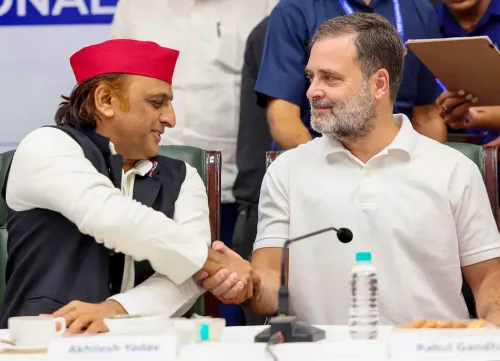
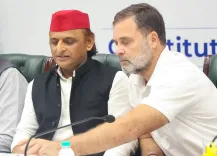
The Samajwadi Party (SP) has named its first five candidates for the upcoming Uttar Pradesh Assembly elections, as party chief Akhilesh Yadav called for extensive alliance talks with the Indian National Congress (Congress). In an X post, Yadav proposed that the parties consider presenting joint nominees under the INDIA alliance or the PDA banner, with the focus on winning constituencies rather than dividing seats.
The announcement, reported on 24 November, covers constituencies in western and southern Uttar Pradesh. Yadav also called for discussions with Congress on cooperation in other states.
Five candidates on the SP list
The SP has fielded sitting MLA Nahid Hasan from Kairana. Its other nominees are Umar Ali Khan from Behat in Saharanpur, Ashu Malik from Saharanpur, Mehboob Ali from Amroha and Jyoti Lodhi from Lalitpur.
The first list was released alongside Yadav’s appeal for further talks with Congress. His proposal leaves open how the parties might agree on nominees across other constituencies.
Akhilesh Yadav’s alliance proposal
Yadav described the moment as a “historic opportunity” for the two parties to work together against the Bharatiya Janata Party (BJP) and its allies. He urged both sides to consider public expectations and local conditions when assessing where they could win.
According to the SP chief, 26 seats have already been discussed on the basis of priorities identified by Congress. He asked the party to share additional potential constituencies so both sides could assess their prospects and possible candidates together.
Yadav said he was also prepared to suggest seats that Congress might not previously have considered, based on its own assessments. He proposed presenting candidates as representatives of the INDIA alliance or, preferably, as “PDA (Pichhde, Dalit, Alpsankhyak) candidates”, rather than identifying them solely with either party.
Consensus and vote transfer
The SP chief favoured the term “seat adjustment” over “division” and rejected an “us versus you” approach. For constituencies with complicated electoral equations, he suggested jointly considering at least two prospective candidates and choosing the stronger contender by consensus.
Yadav cautioned against imposing candidates and said both organisations should work together to help transfer votes to the agreed nominee. He identified forming a government as the parties’ shared objective.
He also acknowledged that changing political equations could require adjustments for people who had previously been promised tickets. Prospective candidates who do not receive their preferred seats should not be disheartened, he said, adding that they would be accorded respect if a government is formed.
Lok Sabha cooperation and the road ahead
Yadav recalled cooperation from the Congress organisation during the Lok Sabha elections, which he said contributed to a crushing defeat of the BJP. He expressed confidence that similar coordination could produce results in Uttar Pradesh and later at the national level.
He said ground-level surveys showed that the PDA message had reached cities, neighbourhoods, streets and villages, and asserted that marginalised communities had rallied against the BJP. Those survey findings were presented as part of his political argument.
Yadav also argued that the parties’ combined organisational strength amounted to a presence across 806 seats, and said groups including farmers, labourers, young people, women and business communities were looking to the alliance with hope. The next step he proposed is for Congress to identify further seats for joint evaluation, although no timetable was specified.
Point of View
But the first candidate list also makes the practical challenge visible: cooperation must be negotiated alongside individual parties’ preparations. A shared banner will matter less than transparent decisions on candidates and effective cooperation on the ground. The test for both parties is whether they can reconcile local ambitions with the alliance they seek to build.
NationPress
25 Nov 2026
Frequently Asked Questions
Who are the five SP candidates announced for the UP elections?
The SP has named Nahid Hasan from Kairana, Umar Ali Khan from Behat, Ashu Malik from Saharanpur, Mehboob Ali from Amroha and Jyoti Lodhi from Lalitpur. Hasan is a sitting MLA.
What has Akhilesh Yadav proposed to Congress for the UP polls?
Yadav has proposed further alliance talks and suggested that joint nominees be presented under the INDIA alliance or PDA banner. He wants both parties to assess constituencies and candidates together.
What does PDA mean in Akhilesh Yadav’s proposal?
PDA refers to Pichhde, Dalit and Alpsankhyak. Yadav suggested using the label for joint candidates rather than identifying them solely as SP or Congress nominees.
How many seats have SP and Congress discussed?
Yadav said 26 seats had already been discussed based on priorities identified by Congress. He asked Congress to share additional potential constituencies for joint evaluation.
What happens next in the SP-Congress seat talks?
Yadav has asked Congress to identify more seats for the parties to assess together. He did not specify a timetable for completing the discussions.