Stalin backs 'Faceless People' doc, pushes Sri Lankan Tamil citizenship
Synopsis
DMK president M. K. Stalin endorsed the documentary 'Faceless People' on Sri Lankan Tamil camp residents and reiterated party demands for Indian citizenship for around 25,000 eligible refugees, citing a Supreme Court petition, a January 2026 letter to the PM, and welfare steps taken under the Dravidian Model government.
Key Takeaways
Stalin publicly endorsed the documentary #FacelessPeople directed by journalist R.
Radhakrishnan , which advocates Indian citizenship for Sri Lankan Tamil camp residents.
Stalin wrote to the Prime Minister on 11 January 2026 urging citizenship for Sri Lankan Tamils living in rehabilitation camps in Tamil Nadu.
The DMK has filed a petition in the Supreme Court of India asserting the legal citizenship rights of eligible Sri Lankan Tamils.
Under the DMK-led Dravidian Model government, over 7,000 new houses were built for camp residents, along with monthly aid, scholarships and skill-training programmes.
10 camp-dwelling Sri Lankan Tamils obtained Indian citizenship through court orders secured with DMK legal aid and voted in the last state assembly election.
Approximately 25,000 Sri Lankan Tamils in Tamil Nadu camps are estimated to be eligible for Indian citizenship, with DMK MPs pledging continued parliamentary advocacy.
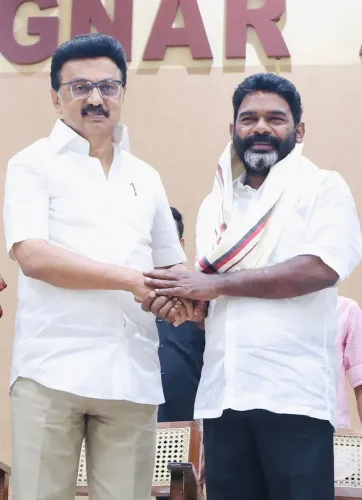
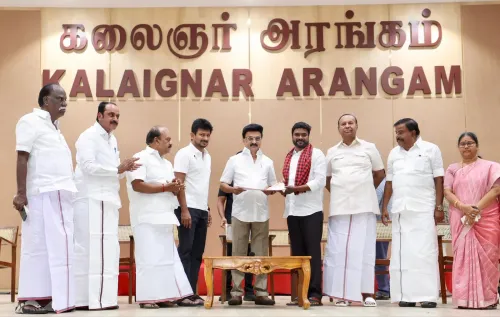
DMK president M. K. Stalin on Sunday, 21 June 2026, praised journalist-filmmaker R. K. Radhakrishnan's documentary Faceless People, which chronicles the lives of Sri Lankan Tamil refugees who have lived in rehabilitation camps in Tamil Nadu for over 30 years, and used the occasion to restate his party's demand for Indian citizenship for eligible camp residents.
Context
Writing on X, Stalin said he watched the documentary and was moved by it. He described Radhakrishnan — who has covered Sri Lankan Tamil suffering in journalism for over 20 years — as having directed the film 'with feeling and responsibility.' The documentary, tagged #FacelessPeople, specifically advocates Indian citizenship for Sri Lankan Tamils still living in camps.
Stalin noted that as Chief Minister he had written to the Prime Minister on 11 January 2026 urging that citizenship be granted to camp-dwelling Sri Lankan Tamils. He added that DMK MPs continue to raise the issue in Parliament, and that the party has filed a petition in the Supreme Court of India asserting the legal citizenship rights of eligible Sri Lankan Tamils.
Policy Backdrop
Sri Lankan Tamils began arriving in Tamil Nadu in large numbers following the 1983 anti-Tamil violence and the subsequent civil war. Successive Tamil Nadu governments have run welfare schemes for camp residents, but a durable legal pathway to citizenship has remained elusive for most. Tamil Nadu currently hosts tens of thousands of Sri Lankan Tamils across dozens of rehabilitation camps.
Stalin listed what he described as measures taken under the #DravidianModel administration: renaming facilities as 'rehabilitation camps,' constructing over 7,000 new houses, providing monthly cash assistance, clothing and utensils, and running education scholarships, employment drives and skill-development training. He also pointed out that 10 camp-dwelling Sri Lankan Tamils obtained Indian citizenship through court orders secured with legal aid under the DMK government, and subsequently voted in the last state assembly election.
Stakeholders and Impact
Stalin stated that approximately 25,000 Sri Lankan Tamils in camps are eligible for citizenship, and pledged that DMK MPs will continue to press the case in Parliament. The pending Supreme Court petition filed by the DMK seeks to establish the legal basis for granting citizenship to this group.
The post also carried an appeal to the current state government — implying a political transition — to continue without interruption the welfare schemes initiated under the Dravidian Model administration. This signals that the camps and their residents remain a live political and humanitarian concern regardless of which party holds office in Chennai.
What's Next
Further hearings in the DMK's Supreme Court petition on citizenship eligibility will be a key marker. Any response from the Central government in New Delhi to Stalin's January 2026 letter to the Prime Minister is also awaited. The documentary Faceless People is likely to amplify public and parliamentary attention on the issue in the weeks ahead.
For nearly 25,000 Sri Lankan Tamils who have spent decades in camps, the combination of judicial proceedings, parliamentary advocacy and growing cultural documentation through films like this one represents the most sustained push in years for a permanent resolution to their legal status in India.
Point of View
He simultaneously keeps the issue in public view and signals to the Central government that DMK's legal and parliamentary campaign is not winding down. The appeal to the current state government to sustain Dravidian Model welfare schemes hints at a post-election context where DMK may no longer control the Tamil Nadu administration, adding urgency to the demand. This fits a decades-long pattern in which Dravidian parties deploy refugee welfare as both a humanitarian cause and an ethnic-solidarity signal to Tamil voters. The Supreme Court petition, if it progresses, could force a Central government response that parliamentary questions alone have not achieved.
NationPress
21 Jun 2026
Frequently Asked Questions
What is the documentary 'Faceless People' about?
'Faceless People' is a documentary directed by journalist R. K. Radhakrishnan that documents the lives of Sri Lankan Tamil refugees who have lived in rehabilitation camps in Tamil Nadu for over 30 years, and advocates Indian citizenship for them.
How many Sri Lankan Tamils are eligible for Indian citizenship?
DMK president M. K. Stalin has stated that approximately 25,000 Sri Lankan Tamils living in Tamil Nadu camps are eligible for Indian citizenship.
What has the DMK done for Sri Lankan Tamil refugees in Tamil Nadu camps?
Under the DMK's Dravidian Model government, the party says it built over 7,000 new houses, provided monthly cash aid, clothing and utensils, ran education scholarships, employment camps and skill-training programmes, and helped 10 camp residents obtain Indian citizenship through court orders.
Has the DMK taken any legal steps on Sri Lankan Tamil citizenship?
Yes. The DMK has filed a petition in the Supreme Court of India asserting the legal citizenship rights of eligible Sri Lankan Tamils, and DMK MPs continue to raise the issue in Parliament.
Did M. K. Stalin write to the Prime Minister about Sri Lankan Tamil citizenship?
Yes. Stalin stated that he wrote to the Prime Minister on 11 January 2026, urging that Indian citizenship be granted to Sri Lankan Tamils living in rehabilitation camps in Tamil Nadu.