Stalin congratulates Jawahirullah on MMK-TMMK unified leadership
Synopsis
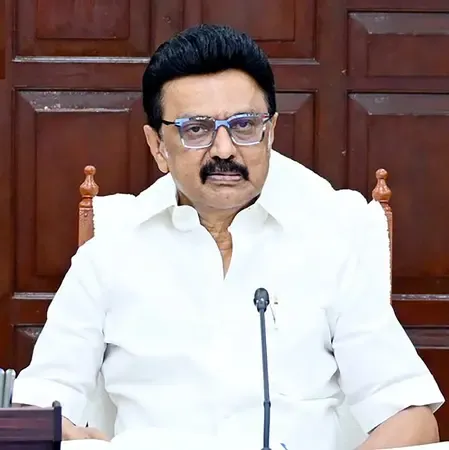
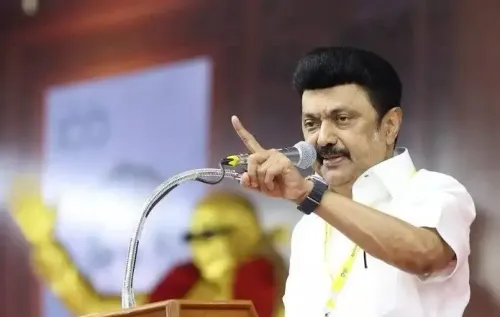
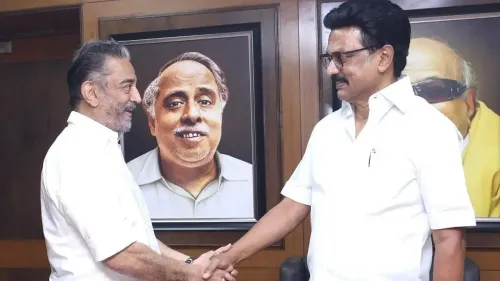
DMK president M. K. Stalin publicly congratulated Professor Jawahirullah on his election as unified president of Manithaneya Makkal Katchi and Tamil Nadu Muslim Munnetra Kazhagam, and Abdul Samad as MMK general secretary, reaffirming the DMK-led secular coalition's ties with Tamil Nadu's minority political outfits.
Key Takeaways
Jawahirullah has been elected unified president of both Manithaneya Makkal Katchi (MMK) and the Tamil Nadu Muslim Munnetra Kazhagam (TMMK) .
Abdul Samad has been elected general secretary of the Manithaneya Makkal Katchi.
Stalin publicly congratulated the new leadership on 18 October 2026 .
Stalin described the two organisations as a 'resolute voice against injustice' and a 'bridge of communal harmony.' Both MMK and TMMK are long-standing allies of the DMK-led secular front , including in the 2021 Tamil Nadu assembly elections .
The unified leadership consolidates minority political representation and signals continued cohesion within Tamil Nadu's Dravidian coalition.
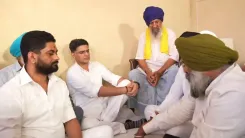
Tamil Nadu's secular coalition got a quiet but meaningful signal on Sunday, 18 October 2026, when DMK president M. K. Stalin extended warm congratulations to Professor M. H. Jawahirullah on his election as the unified president of Manithaneya Makkal Katchi (MMK) and the Tamil Nadu Muslim Munnetra Kazhagam (TMMK) — two of the state's most prominent minority-interest political outfits.
Stalin also greeted Mr. Abdul Samad, newly elected general secretary of the Manithaneya Makkal Katchi, along with all the office-bearers who were voted in during the internal party elections. In Tamil, Stalin wrote: 'உரிமைகள் மறுக்கப்படும் இடங்களிலும் - அநீதிக்கு எதிரான போராட்டங்களிலும் உறுதியான குரலாகவும்' — 'a resolute voice wherever rights are denied and in struggles against injustice.' He described the two organisations as a 'bridge of communal harmony' and expressed hope that their public service would grow stronger under the new leadership, helping build a society where social justice and equality flourish.
MMK and TMMK: voices for minority rights in Tamil Nadu
Manithaneya Makkal Katchi, led for years by Professor Jawahirullah, has carved out a distinct space in Tamil Nadu politics by amplifying Muslim and minority community concerns — from representation and civil liberties to anti-discrimination advocacy. The Tamil Nadu Muslim Munnetra Kazhagam operates in similar terrain, and the merger of their leadership under a single unified president marks a notable consolidation of minority political voice in the state.
Both outfits have been consistent partners in the DMK-led secular front, including in the 2021 Tamil Nadu assembly elections that swept Stalin to the chief ministership. For the DMK, these alliances are structural — they help knit together a broader coalition of Dravidian politics, backward communities, and minority groups against the threat of communal polarisation.
Coalition maintenance with a message
Stalin's public greeting is more than courtesy. In Tamil Nadu's alliance-heavy electoral arithmetic, a DMK president personally acknowledging a partner party's internal leadership transition is a visible act of solidarity — a reminder, broadcast to the wider coalition and the Muslim community, that these relationships hold. With local body elections remaining a live consideration on Tamil Nadu's political calendar, the timing of such gestures carries its own weight.
The new unified leadership of MMK and TMMK under Jawahirullah now faces the task of translating that consolidation into louder, more coordinated advocacy on minority rights — a mandate that aligns squarely with the social-justice plank that has long defined the DMK's governing identity.
Point of View
More unified bargaining position within the alliance. For Stalin, backing that consolidation publicly serves a dual purpose: it reinforces the secular, social-justice identity that has been central to the DMK brand since its Dravidian movement roots, and it signals continuity of alliance reliability ahead of future electoral contests. The broader arc here is one of Tamil Nadu's minority parties professionalising their organisational structures — a shift that could translate into more assertive policy demands from within the coalition.
NationPress
18 Oct 2026
Frequently Asked Questions
Who is Professor Jawahirullah and what is the MMK?
Professor M. H. Jawahirullah is a politician who leads the Manithaneya Makkal Katchi (MMK), a Tamil Nadu political party that advocates for Muslim and minority community rights. He has now been elected unified president of both MMK and the Tamil Nadu Muslim Munnetra Kazhagam (TMMK).
Why did M. K. Stalin congratulate Jawahirullah?
Stalin congratulated Jawahirullah following his election as the unified president of Manithaneya Makkal Katchi and Tamil Nadu Muslim Munnetra Kazhagam. Stalin also greeted Abdul Samad on his election as MMK general secretary, reaffirming the DMK's alliance with these minority parties.
What is the relationship between DMK and Manithaneya Makkal Katchi?
MMK is a long-standing electoral ally of the DMK-led secular front in Tamil Nadu. The two parties allied in the 2021 assembly elections, among others, as part of a broader coalition that includes minority and backward-community outfits united against communal polarisation.
What does the merger of MMK and TMMK leadership mean for Tamil Nadu politics?
The election of a single unified president over both MMK and TMMK consolidates minority political representation under one leadership, potentially giving these communities a stronger, more coordinated voice within the DMK-led alliance on issues of social justice and minority rights.
Who is Abdul Samad in Tamil Nadu politics?
Abdul Samad has been elected as the general secretary of the Manithaneya Makkal Katchi (MMK), a Tamil Nadu party focused on minority and Muslim community interests. M. K. Stalin specifically greeted him along with all newly elected office-bearers.