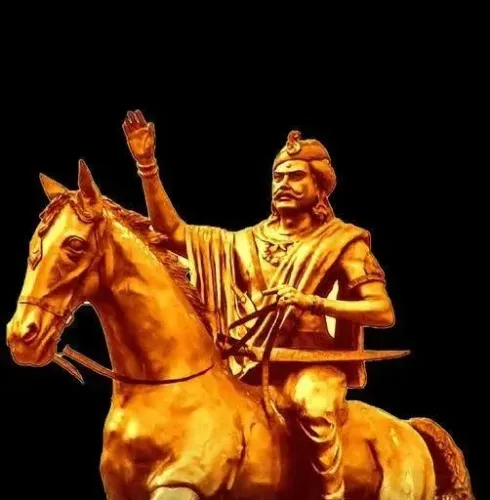
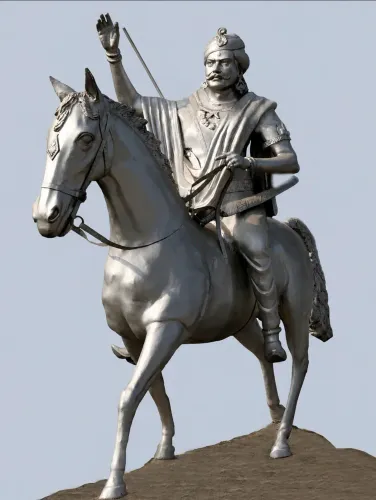
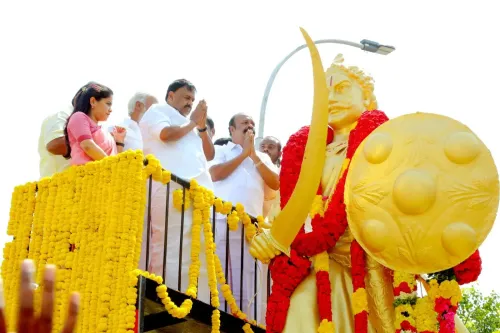
Stalin honours Dheeran Chinnamalai on death anniversary
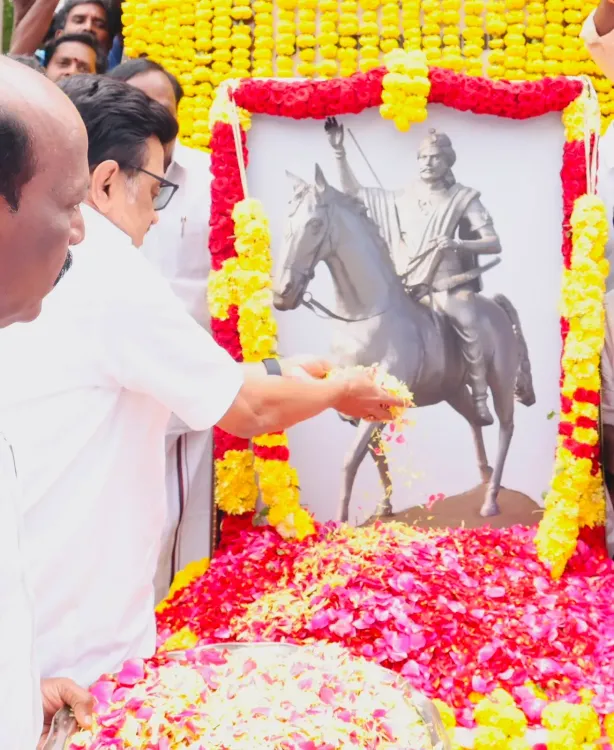
Synopsis
DMK president M. K. Stalin marked the death anniversary of Dheeran Chinnamalai on 3 August 2026, honouring the Kongu chieftain who allied with Tipu Sultan and led guerrilla resistance against the British East India Company before being hanged by colonial treachery.
Key Takeaways
Stalin posted a tribute to Dheeran Chinnamalai on his death anniversary, 3 August 2026 .
Dheeran Chinnamalai was a chieftain from the Kongu region of Tamil Nadu who waged sustained guerrilla warfare against the British East India Company .
He allied with Tipu Sultan of Mysore , forming a coordinated southern resistance to British expansion.
Unable to defeat him militarily, the British captured and hanged him through deception — a fact Stalin's tribute explicitly highlights.
DMK leaders have long commemorated pre-1857 Tamil warriors as part of a consistent effort to assert Dravidian cultural identity and regional historical pride.
The Kongu region , where Dheeran Chinnamalai is a revered icon, remains one of Tamil Nadu's most politically contested territories.
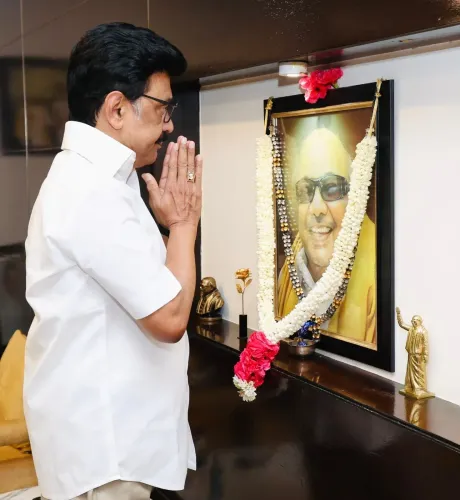
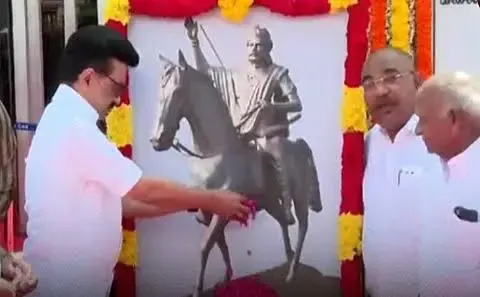
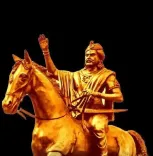
A warrior who humbled the British Empire repeatedly on the battlefield — only to be hanged by treachery — is remembered today by DMK president M. K. Stalin, who paid tribute to Dheeran Chinnamalai on the freedom fighter's death anniversary, Monday, 3 August 2026.
In his post, Stalin wrote: 'Eethanai murai eethaagu padaigalai kondu thaakiyum vetri kolla mudiyaatha peruveeranaga poraadiyavar Dheeran Chinnamalai' — 'No matter how many times and with what forces they attacked, Dheeran Chinnamalai fought as a great warrior they could not conquer.' He recalled the chieftain's alliance with Tipu Sultan against the British and noted that though enemies resorted to deceit to hang him, Tamil Nadu would forever cherish his glory.
The chieftain who made the British lose sleep
Dheeran Chinnamalai was a late 18th- and early 19th-century chieftain from the Kongu region of present-day Tamil Nadu. He waged a sustained guerrilla campaign against the British East India Company, inflicting repeated defeats on colonial forces that could not subdue him in open combat. His alliance with Tipu Sultan of Mysore made him part of a coordinated southern resistance that the Company found deeply threatening.
Unable to defeat him on the battlefield, the British eventually captured Dheeran Chinnamalai through stratagem and hanged him — a fate Stalin's tribute frames as the last resort of a cornered colonial power. The episode has long been cited in Tamil historical memory as proof that indigenous resistance predated the better-known 1857 uprising by decades.
Why DMK keeps this memory alive
The tribute follows a well-established pattern in Dravidian politics. DMK leaders have consistently commemorated pre-1857 Tamil warriors to underline that resistance to colonial rule was rooted in regional soil — not imported from the north. Elevating figures like Dheeran Chinnamalai alongside mainstream national heroes is a deliberate assertion of Tamil cultural identity and a reminder that the Kongu belt produced its own martyrs long before the independence movement took its familiar national form.
For Stalin, now heading both the party and the state's political imagination, such commemorations also carry a quiet electoral logic: the Kongu region, where Dheeran Chinnamalai is a revered local icon, is among Tamil Nadu's most fiercely contested political territories.
A hero the Empire could not break in life, and could not erase in death — that, Stalin's tribute suggests, is the truest measure of a freedom fighter's legacy.
Point of View
And predating, the pan-Indian nationalist narrative. By foregrounding the Kongu chieftain's alliance with Tipu Sultan, the tribute also implicitly signals cross-community solidarity in resistance, a recurring DMK rhetorical thread. The Kongu belt's electoral significance gives the commemoration an additional layer of political relevance that goes beyond historical remembrance. In a state where regional identity politics remain central, keeping such martyrs in public memory is both cultural assertion and quiet voter outreach.
NationPress
3 Aug 2026
Frequently Asked Questions
Who was Dheeran Chinnamalai?
Dheeran Chinnamalai was a late 18th- and early 19th-century chieftain from the Kongu region of Tamil Nadu who led guerrilla resistance against the British East India Company. He allied with Tipu Sultan of Mysore and was eventually captured and hanged by the British after they failed to defeat him militarily.
Why did M. K. Stalin pay tribute to Dheeran Chinnamalai?
Stalin marked Dheeran Chinnamalai's death anniversary on 3 August 2026, honouring him as a great Tamil freedom fighter. DMK leaders have long commemorated pre-1857 Tamil warriors to assert Dravidian cultural identity and highlight indigenous anti-colonial resistance.
What was Dheeran Chinnamalai's alliance with Tipu Sultan about?
Dheeran Chinnamalai and Tipu Sultan of Mysore formed a military alliance to resist British expansion in southern India. Together they posed a significant challenge to the British East India Company's ambitions in the region.
How did Dheeran Chinnamalai die?
Dheeran Chinnamalai was hanged by the British after they captured him through deceit, having repeatedly failed to defeat him on the battlefield. His execution is remembered in Tamil historical memory as a symbol of colonial treachery.
Why is Dheeran Chinnamalai important in Tamil Nadu politics?
Dheeran Chinnamalai is a revered icon in the Kongu region of Tamil Nadu, one of the state's most politically contested areas. His commemoration by DMK leaders reflects both cultural pride in regional resistance heroes and the political significance of the Kongu community.