Stalin marks Tamil Nadu Day, recalls Anna's 1967 renaming push
Synopsis
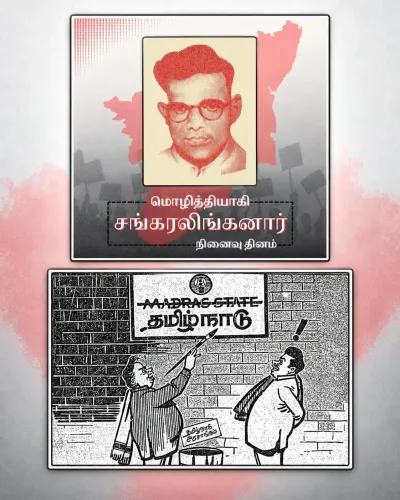
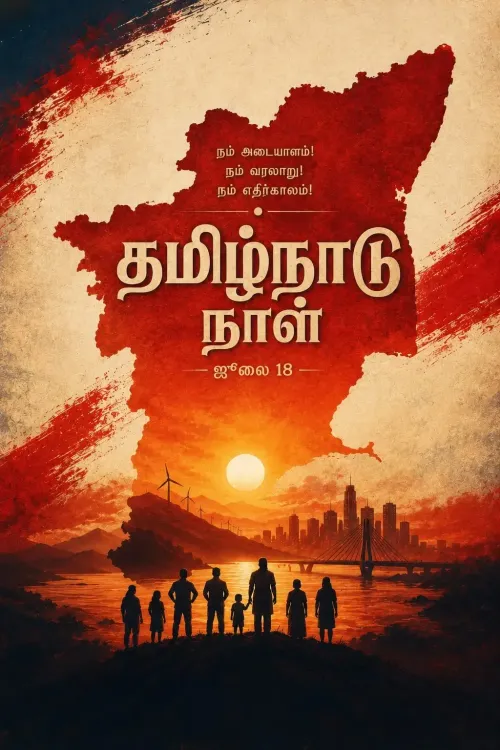
DMK president M. K. Stalin marked Tamil Nadu Day on 18 July 2026, recalling how C. N. Annadurai's 1967 assembly resolution renamed Madras State as Tamil Nadu after years of failed campaigns, calling it a golden moment in the state's history.
Key Takeaways
Stalin posted on 18 July 2026 to mark Tamil Nadu Day , honouring the 1967 assembly resolution.
The States Reorganisation Act of 1956 created states on linguistic lines but left the Tamil region named Madras State , despite sustained local agitation.
Annadurai became Chief Minister after the DMK's 1967 election victory , the first non-Congress government in the state.
The 18 July 1967 assembly resolution moved by Annadurai to rename the state Tamil Nadu was met with unanimous acclaim from members present.
The renaming formally took effect on 1 January 1969 , completing a decade-long campaign for linguistic recognition.
Stalin's post reinforces the DMK's identity as the custodian of Tamil linguistic and cultural self-respect within India's federal structure.
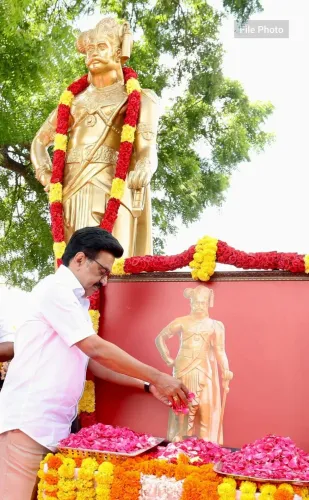
DMK president M. K. Stalin on Saturday, 18 July 2026, marked Tamil Nadu Day by recalling how Chief Minister C. N. Annadurai moved the landmark assembly resolution in 1967 to rename Madras State as Tamil Nadu, calling the occasion a golden chapter in the state's history.
Context
Stalin's post, written in Tamil, traces the arc from the States Reorganisation Act of 1956 — which redrew India's internal boundaries along linguistic lines yet left the Tamil region's name unchanged as Madras State — to the decisive moment a decade later. He notes that despite sustained efforts, resolutions, and public agitation over those years, the name did not change.
In his words: 'எத்தனையோ முயற்சிகள், தீர்மானங்கள், போராட்டங்கள் நிகழ்ந்தும் எதுவும் மாறவில்லை' ('Despite countless efforts, resolutions, and struggles, nothing changed'). The post underscores the emotional weight that the old name carried for Tamil speakers who felt their linguistic identity was not fully recognised.
Policy Backdrop
The DMK swept to power in the 1967 assembly elections, ending decades of Indian National Congress rule in the state. C. N. Annadurai — popularly called Anna (elder brother) — became the first non-Congress Chief Minister and the first from a Dravidian party. Stalin describes Annadurai as 'பேரறிஞர்' ('the great scholar'), a common honorific.
The DMK government moved an assembly resolution on 18 July 1967 demanding the renaming of Madras State to Tamil Nadu. According to Stalin's account, when Annadurai proclaimed the name 'Tamil Nadu' in the assembly, all members present responded with cries of 'வாழ்க' ('Long live'), reflecting the sentiment of the entire state. The renaming process was completed and formally took effect on 1 January 1969.
Stakeholders and Impact
Tamil Nadu Day — observed on 18 July — holds particular significance for the Dravidian political ecosystem. For the DMK and its supporters, the day represents the institutionalisation of Tamil linguistic self-respect within India's federal framework, a core pillar of the party's founding ideology.
Stalin's post connects the present party leadership directly to Annadurai's legacy, reinforcing the DMK's claim as the custodian of Tamil identity politics. Broader Tamil civil society and cultural organisations also observe the day as a marker of regional assertion against perceived cultural centralisation from New Delhi.
What's Next
State-level commemorations of 18 July are expected to include official government programmes, cultural events, and party-led public gatherings across Tamil Nadu. The DMK government is likely to use the occasion to advance ongoing campaigns around Tamil language rights, including its sustained opposition to the three-language formula in the National Education Policy. Stalin's post signals that the party intends to keep the historical narrative of the renaming central to its political messaging in the months ahead.
Point of View
Anchoring the present DMK leadership to Annadurai's foundational achievement at a time when Tamil linguistic rights are again contested through debates over the National Education Policy. By foregrounding the decade of failed struggles before 1967, Stalin implicitly frames the DMK as the only force capable of delivering on Tamil aspirations, a contrast with Congress's long incumbency. The post also signals that the party will continue to deploy the renaming narrative as a mobilising touchstone ahead of future electoral cycles in the state.
NationPress
16 Oct 2026
Frequently Asked Questions
Why is 18 July celebrated as Tamil Nadu Day?
18 July is observed as Tamil Nadu Day because on that date in 1967 , Chief Minister C. N. Annadurai moved an assembly resolution demanding the renaming of Madras State to Tamil Nadu, which was acclaimed by all members present.
Why was Tamil Nadu still called Madras State after 1956?
The States Reorganisation Act of 1956 reorganised Indian states on linguistic lines but did not change the name of the Tamil region, which continued to be called Madras State despite repeated local campaigns and resolutions demanding the name Tamil Nadu.
Who renamed Madras State to Tamil Nadu?
C. N. Annadurai , the DMK Chief Minister, moved the assembly resolution in 1967 to rename Madras State as Tamil Nadu . The name formally came into effect on 1 January 1969 .
What did MK Stalin post about Tamil Nadu Day?
DMK president M. K. Stalin posted in Tamil on 18 July 2026 , recalling the decade of failed efforts to rename Madras State and honouring C. N. Annadurai's 1967 assembly resolution as a golden moment in Tamil history.
When did the DMK first come to power in Tamil Nadu?
The DMK first came to power after the 1967 assembly elections , with C. N. Annadurai becoming Chief Minister — the first non-Congress and first Dravidian party leader to hold that office.