Stalin urges TN govt to file review plea on BC Muslim quota ruling

Synopsis
DMK president M. K. Stalin has demanded the Tamil Nadu government immediately file a review petition against a Supreme Court ruling that denies BC reservation benefits to backward-community Muslim converts, arguing caste-based backwardness persists regardless of religious conversion.
Key Takeaways
Stalin publicly demanded the Tamil Nadu government file a review petition against a Supreme Court judgment on October 15, 2026 .
The ruling in question holds that backward-class individuals who convert to Islam lose entitlement to BC reservation benefits.
Stalin's core argument: social backwardness is caste-derived and spans thousands of years — religious conversion does not erase it.
The previous DMK government passed a resolution urging a constitutional amendment to extend SC reservations to Dalit Christians ; Stalin wants that push continued alongside the new petition.
The demand places immediate pressure on the current DMK-led Tamil Nadu government and on INDIA bloc partners to act at both the judicial and parliamentary level.
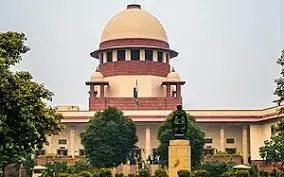
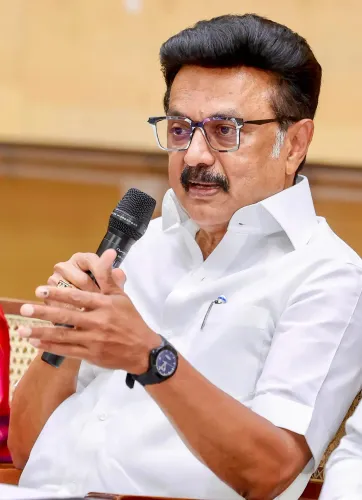
A Supreme Court ruling denying Other Backward Class (OBC) reservation benefits to backward-community Muslims has drawn sharp pushback from DMK president M. K. Stalin, who on Thursday, October 15, 2026 demanded that the Tamil Nadu government immediately file a review petition — framing the judgment as a direct assault on the principles of social justice.
Why Stalin calls the ruling a social-justice setback
In a pointed post in Tamil, Stalin argued that social backwardness is not the product of a single generation — it is the accumulated weight of a caste structure built over thousands of years. 'Social backwardness does not arise in a day or in one generation,' he wrote. 'It is the product of a social structure that has persisted for thousands of years. It does not disappear simply because one changes one's religion.'
That framing is the ideological core of the DMK's Dravidian model: caste oppression, not religious identity, is the qualifying criterion for affirmative action. The party has long held that denying reservations to a person because they converted to Islam — while their caste-linked backwardness remains structurally intact — amounts to penalising them for exercising religious freedom.
The Supreme Court judgment Stalin wants reviewed
The ruling Stalin references holds, in effect, that BC reservation entitlements do not follow backward-class Hindus or other communities when they convert to Islam. Stalin called the judgment 'contrary to social justice' and said the Tamil Nadu government must challenge it without delay to 'uphold the reservation rights of those from backward communities who embrace Islam.'
The research block notes that specific details of the Supreme Court judgment — including its exact date and bench composition — remain unverified; what is clear is that Stalin treats it as an active and urgent judicial threat to an existing social-justice framework.
The Dalit Christian precedent from the Dravidian Model era
Stalin did not stop at the immediate judicial remedy. He invoked a parallel cause that his own earlier government championed: during the previous #DravidianModel administration, the Tamil Nadu assembly passed a resolution pressing the Union government to amend the Constitution so that Dalit Christians who converted from Scheduled Caste communities would retain their SC reservation entitlements.
He called on the current Tamil Nadu government — led by his party — to carry both efforts forward simultaneously: file the review petition, and continue lobbying New Delhi for a constitutional amendment that closes religion as a disqualifying factor for reservation eligibility across BC, MBC, and SC categories.
A caste-first reading of affirmative action
The argument Stalin is pressing is one of India's most contested constitutional questions: should the unit of affirmative action be caste oppression alone, or does religious identity legitimately modify that entitlement? DMK's consistent answer has been the former. 'Denying that right by citing religion amounts to social injustice,' Stalin wrote — a line that signals the party intends to make this a live legislative and legal campaign, not just a rhetorical one.
With both a judicial review petition and a constitutional amendment push now on the table, the pressure lands squarely on Chief Minister M. K. Stalin's own government in Chennai — and, beyond it, on the INDIA bloc partners who would need to move any amendment through Parliament in New Delhi.
Point of View
He is building a unified 'religion-neutral' affirmative-action argument that could consolidate BC, MBC, and SC vote-banks across communities. The demand also tests the cohesion of the INDIA bloc: any constitutional amendment would require significant parliamentary support that only a coordinated opposition-and-ruling-ally strategy could deliver. How quickly the Tamil Nadu government responds will signal whether this is party-line pressure politics or a genuine legal offensive.
NationPress
15 Oct 2026
Frequently Asked Questions
What did M. K. Stalin say about BC Muslim reservations?
Stalin demanded that the Tamil Nadu government immediately file a review petition against a Supreme Court ruling that denies BC reservation benefits to backward-community Muslims who converted from Hindu castes, calling the judgment contrary to social justice.
Does converting to Islam remove OBC reservation rights in India?
The Supreme Court ruling Stalin references holds that BC reservation entitlements do not carry over when a backward-class person converts to Islam, a position DMK strongly contests, arguing caste-based backwardness persists regardless of religion.
What is the DMK's position on reservation for religious converts?
DMK holds that caste oppression — not religious identity — is the qualifying criterion for affirmative action, meaning converts from backward communities should retain their reservation rights irrespective of the religion they adopt.
Did the Tamil Nadu government pass a resolution on Dalit Christian reservations?
Yes. During a previous DMK government, the Tamil Nadu assembly passed a resolution urging the Union government to amend the Constitution so that Dalit Christians who converted from Scheduled Caste communities would retain their SC reservation entitlements.
What constitutional amendment is DMK pushing for converted communities?
DMK has been pressing the Union government to amend the Constitution to extend SC reservation benefits to Dalit Christians, and Stalin has now called for that effort to be continued alongside a fresh review petition on BC Muslim reservations.