CM Sukhu backs Congress's nationwide stir over ECI, SIR lapses
Synopsis
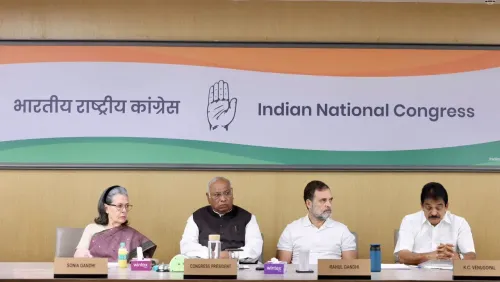
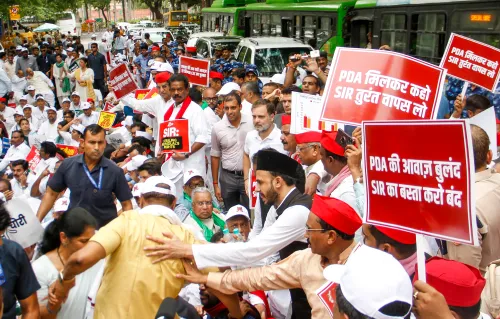
HP CM Sukhvinder Singh Sukhu has publicly backed Congress's nationwide agitation against alleged irregularities in the Election Commission's functioning and the Special Intensive Revision process, calling the protest a democratic right guided by Rahul Gandhi.
Key Takeaways
CM Sukhvinder Singh Sukhu endorsed Congress's nationwide protest movement on October 10, 2026 .
The agitation targets alleged irregularities in the Special Intensive Revision (SIR) process and the functioning of the Election Commission of India .
Sukhu credited Rahul Gandhi as the guiding force behind the movement, framing it as democracy-protection.
Congress frames the protests as a constitutionally guaranteed, peaceful democratic right.
The party is conducting the agitation at a nationwide scale , coordinating across states.
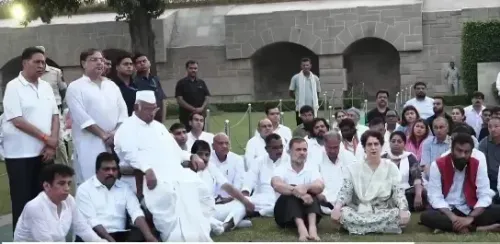
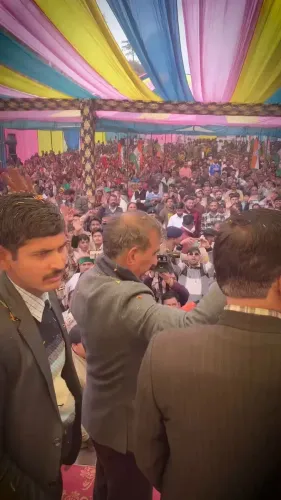
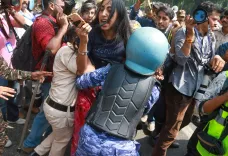
A nationwide protest movement is taking shape under Congress's banner, and Himachal Pradesh Chief Minister Sukhvinder Singh Sukhu has put his full weight behind it — framing the agitation as nothing less than a democratic duty. Posting on X on October 10, 2026, Sukhu declared that the party's street-level resistance to alleged irregularities in the Special Intensive Revision (SIR) process and the functioning of the Election Commission of India (ECI) is a constitutionally grounded right.
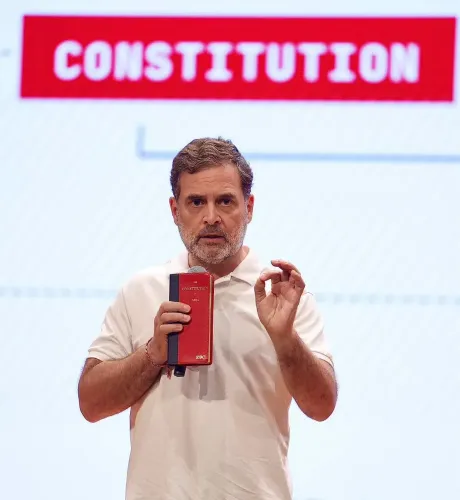
In his post, the Chief Minister wrote: 'Leader of Opposition Rahul Gandhi has long been raising questions about the working of the Election Commission and irregularities in the SIR. Congress considers it a democratic right to raise its voice against wrongdoing and to carry out peaceful protests. Under Rahul Gandhi's guidance, the party is fighting through a nationwide movement against these irregularities to protect democracy.'
What is the SIR controversy at the heart of this protest?
The Special Intensive Revision is a periodic exercise conducted by the Election Commission to update electoral rolls — verifying, adding, and removing voter entries. Congress has alleged that recent rounds of this process have been marked by irregularities: deletions of legitimate voters, opaque procedures, and outcomes that the party contends distort the democratic playing field before elections. These concerns have been the centrepiece of Rahul Gandhi's sustained criticism of the ECI's operations.
Rahul Gandhi's role as the movement's guiding force
Sukhu's post is explicit: the agitation is being run 'under Rahul Gandhi's guidance.' This framing positions the Leader of Opposition not merely as a critic but as the operational architect of a coordinated, multi-state pressure campaign. For state-level Congress leaders like Sukhu — who leads a Congress government in Himachal Pradesh — publicly anchoring local party activity to Gandhi's national direction reinforces party unity and centralises the political narrative ahead of any upcoming electoral cycles.
Congress frames dissent as a democratic safeguard
The language Sukhu deploys is deliberate: 'peaceful movement,' 'democratic right,' 'protecting democracy.' By invoking constitutional legitimacy rather than partisan grievance, the Congress is attempting to broaden the protest's appeal beyond its own base — presenting the agitation as a civic intervention rather than electoral manoeuvring. Whether that framing gains traction on the ground will depend on how visibly the irregularities can be documented and communicated to voters.
The party has drawn a clear battle line: if the Election Commission's neutrality is in question, so is the integrity of every result it oversees. That argument, Sukhu signals, will be pressed loudly and persistently — on the streets and in the political arena.
Point of View
The party signals vertical discipline from state leadership to the national Opposition leader. The SIR controversy also gives Congress a concrete, procedural grievance — voter-roll integrity — that is harder to dismiss as political spin than a generalised anti-government narrative. How the ECI responds, and whether other Opposition parties join the chorus, will determine whether this agitation builds into a sustained accountability campaign or remains a Congress-specific mobilisation.
NationPress
10 Oct 2026
Frequently Asked Questions
What is the Special Intensive Revision (SIR) that Congress is protesting against?
The Special Intensive Revision is an Election Commission of India exercise to update electoral rolls by verifying, adding, or removing voter entries. Congress alleges the recent SIR rounds involved irregular deletions of legitimate voters and lacked transparency.
Why is Rahul Gandhi criticising the Election Commission of India?
Rahul Gandhi, as Leader of the Opposition, has raised sustained concerns about the ECI's working methods and alleged procedural irregularities in voter-roll revisions, arguing these undermine free and fair elections.
What is Congress's nationwide agitation about in October 2026?
Congress is running a countrywide protest movement against what it describes as irregularities in the Election Commission's functioning and the SIR process, framing it as a peaceful democratic exercise to protect electoral integrity.
What did HP CM Sukhu say about the Congress protest?
CM Sukhu said the Congress considers raising its voice against wrongdoing and conducting peaceful protests a democratic right, and that the party is fighting to protect democracy through a nationwide movement under Rahul Gandhi's guidance.
Is this Congress agitation happening across all states?
According to CM Sukhu's post, the protest is being organised as a nationwide movement, coordinated under Rahul Gandhi's direction, though the specific states and scale of individual demonstrations were not detailed in the post.