CM Sukhu Opens 2,500 Police Jobs, Hits Out at Agniveer
Synopsis
Chief Minister Sukhvinder Singh Sukhu has attacked the central Agniveer scheme for limiting army careers in Himachal's soldier-belt districts and announced 1,800 new police posts and 700 Home Guard vacancies — the state's first Home Guard intake in roughly 15 years — as a compensatory employment push.
Key Takeaways
CM Sukhu publicly blamed the central government's Agniveer scheme for dampening employment prospects for Himachal's youth.
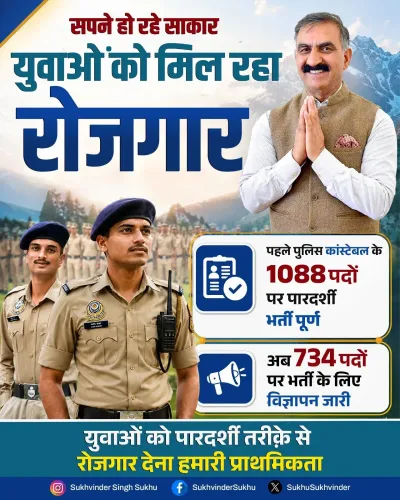
1,000 Himachal Pradesh Police posts have already been filled in a recently completed recruitment round.
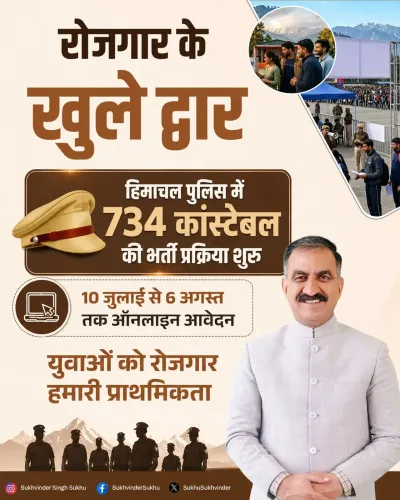
An additional 800 police posts are currently under active recruitment.
700 Home Guard vacancies will be filled — the first Home Guard intake in approximately 15 years .
Districts of Hamirpur, Una, Kangra and Bilaspur were specifically cited as historically high army-recruitment zones bearing the brunt of the scheme's impact.
The state drive positions Himachal Pradesh Police and Home Guards as alternative employment channels for army aspirants.
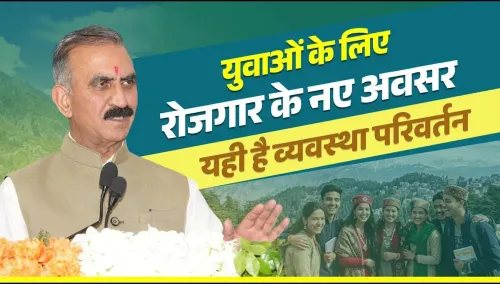
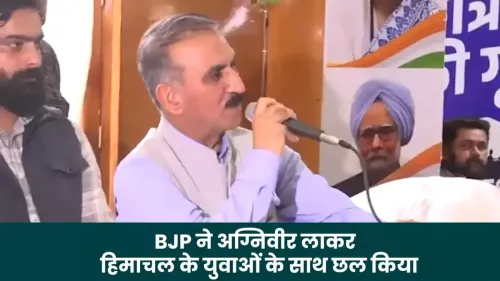
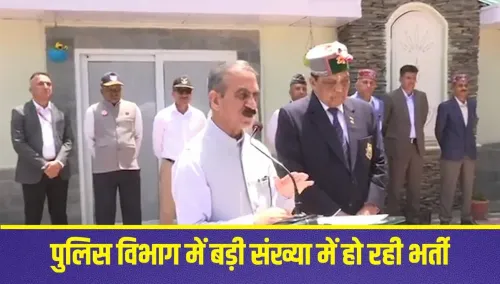
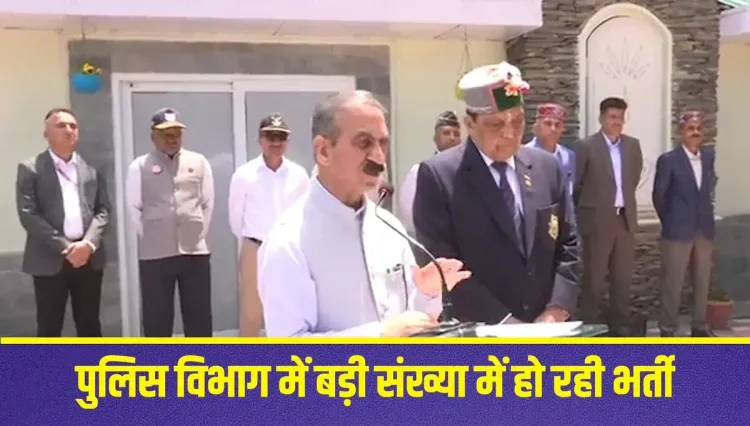
Himachal Pradesh Chief Minister Sukhvinder Singh Sukhu on Tuesday, 2 June 2026, accused the central government's Agniveer scheme of curtailing employment opportunities for youth and announced a sweeping state-level recruitment drive across the Himachal Pradesh Police and Home Guards to absorb aspirants shut out of permanent army careers.
Context
In his post, CM Sukhu stated that the Agnipath scheme — the central government's short-term military enlistment model — has 'yuvaon ke sapnon aur aakankshaaon ko thes pahunchai hai' ('damaged the dreams and aspirations of many young people'), creating an atmosphere of despondency among youth. He specifically named Hamirpur, Una, Kangra and Bilaspur as districts historically identified as the land of brave soldiers, underscoring the scheme's local impact in these high-recruitment zones.
The Agnipath scheme was launched by the Government of India in June 2022, replacing permanent army enlistment with a four-year contractual Agniveer tenure, with only a limited proportion of recruits retained thereafter. Critics, particularly from opposition-ruled states, have argued the model shrinks the pipeline of permanent military jobs that communities in states like Himachal Pradesh have historically depended upon.
Policy Backdrop
CM Sukhu announced that 1,000 posts in the Himachal Pradesh Police have already been filled through a recently completed recruitment process. An additional 800 posts are currently being filled, bringing the total police intake to 1,800 positions. Alongside this, 700 Home Guard vacancies will also be recruited — the first such Home Guard intake in approximately 15 years, according to the Chief Minister.
The Chief Minister framed these hirings as a direct policy response, arguing that the state cannot allow the 'energy, talent and capability of youth to go to waste for lack of opportunity.' The announcements position state security-sector employment as a compensatory avenue for army aspirants from Himachal Pradesh.
Stakeholders and Impact
The districts of Hamirpur, Una, Kangra and Bilaspur have long supplied a disproportionately large share of Indian Army recruits relative to their population, making the shift to short-term Agniveer contracts especially consequential for local families whose livelihoods and social standing are tied to permanent military service. Young men who trained for army careers but were either not selected or unwilling to accept a contractual tenure now form the primary target group for these state-level openings.
Opposition-ruled states across India have responded to the Agnipath model with accelerated police and paramilitary hiring, and Himachal Pradesh's latest round fits that broader pattern. The 700 Home Guard positions are particularly significant given the roughly 15-year gap since the last such recruitment, suggesting a large backlog of eligible candidates.
What's Next
The completion of the ongoing 800-post police recruitment and the launch of the 700 Home Guard intake will be closely watched as indicators of whether the state can translate political commitment into timely appointments. Any state budget allocations earmarked for further security-sector expansion will signal whether this drive is a one-time response or part of a sustained employment strategy. With assembly-level sentiment in military-belt districts tied closely to army recruitment outcomes, the political stakes for both the state government and the central dispensation remain high heading into the next electoral cycle.
Point of View
He is speaking directly to a voter base that has historically delivered strong electoral returns on the back of military employment. The 15-year gap in Home Guard recruitment, if filled swiftly, could generate tangible goodwill in communities that feel abandoned by the Agnipath model. However, the credibility of this push will ultimately rest on the speed and transparency of the actual hiring process, not the announcement alone.
NationPress
24 Sept 2026
Frequently Asked Questions
What is the Agniveer scheme and why is CM Sukhu criticising it?
The Agniveer scheme, introduced by the central government in June 2022, replaces permanent army enlistment with a four-year contractual tenure, with only a limited number of recruits retained permanently. CM Sukhu argues this has sharply reduced long-term military employment opportunities for youth in Himachal Pradesh, particularly in districts like Hamirpur, Una, Kangra and Bilaspur.
How many police jobs has Himachal Pradesh announced in 2026?
Himachal Pradesh has announced a total of 1,800 police posts — 1,000 of which have already been filled and 800 of which are currently under recruitment — as part of a state-level drive to provide employment alternatives to army aspirants.
When was the last Home Guard recruitment in Himachal Pradesh?
According to Chief Minister Sukhu, the upcoming 700-post Home Guard recruitment will be the first such intake in approximately 15 years, making it a significant development for candidates who have been waiting for this opportunity.
Which Himachal districts are most affected by the Agniveer scheme?
CM Sukhu specifically named Hamirpur, Una, Kangra and Bilaspur as districts long recognised for supplying large numbers of soldiers to the Indian Army, and therefore most acutely affected by the shift to short-term Agniveer contracts.
Is Himachal Pradesh the only state responding to Agnipath with state-level hiring?
No. Several opposition-ruled states have responded to the Agnipath model by accelerating police and home-guard recruitment, framing it as a compensatory measure for army aspirants. Himachal Pradesh's latest announcement follows this broader pattern.