CM Sukhu Slams Agnipath, Says HP Youth Shortchanged
Synopsis
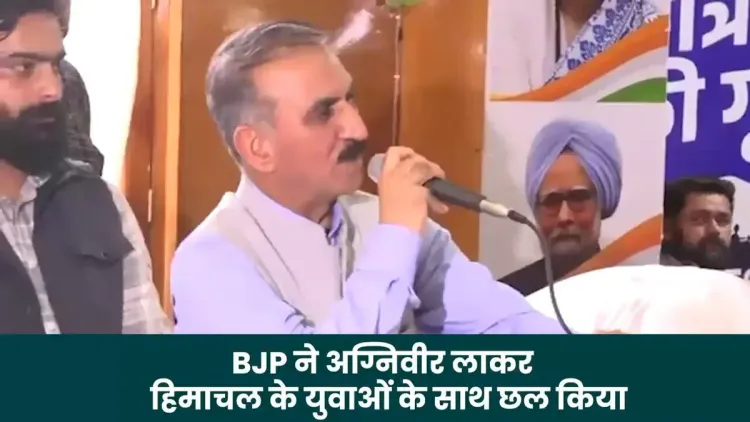
Himachal Pradesh CM Sukhvinder Singh Sukhu on 13 July 2026 criticised the Agnipath scheme, saying it has reduced army recruitment from the state's 75 lakh population and replaced permanent service with a four-year contract, calling it anti-youth and blaming the BJP's 12-year central tenure.
Key Takeaways
CM Sukhu publicly attacked the Agnipath scheme on 13 July 2026 , calling it anti-youth.
Himachal Pradesh , with a population of 75 lakh , has a long tradition of large-scale military recruitment and gallantry awards.
Under Agnipath, recruits serve for four years before being discharged without a pension, replacing the earlier permanent enrolment model.
Sukhu attributed the scheme to the BJP government's 12 years at the Centre, framing it as a policy failure for Himachali youth.
The criticism reflects a broader Congress-led opposition pattern in hill and north-eastern states with strong military recruitment traditions.
A formal review of retention percentages or pension provisions would require action by the Union Ministry of Defence .
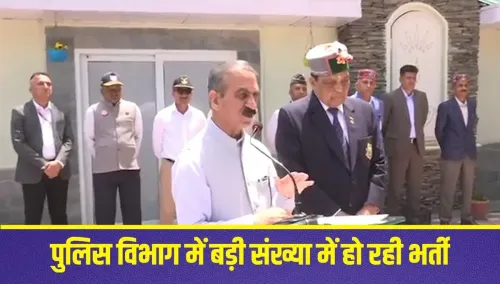
Himachal Pradesh Chief Minister Sukhvinder Singh Sukhu on Monday, 13 July 2026, sharply criticised the Centre's Agnipath military recruitment scheme, saying it has reduced the number of Himachal Pradesh youth entering the armed forces and amounts to an anti-youth policy that replaces lifetime service with a four-year contract ending in forced retirement.
Context
Posting on X, CM Sukhu wrote in Hindi: 'सेना भर्ती में हिमाचल प्रदेश के युवाओं की संख्या कम कर अग्निवीर योजना लागू कर दी गई' ('The Agnipath scheme has been implemented by reducing the number of Himachal Pradesh youth in army recruitment'). He argued that the state's 75 lakh population has historically punched far above its weight in military service, with its soldiers earning numerous gallantry awards and making the ultimate sacrifice for the country.
Sukhu directly blamed the Bharatiya Janata Party government at the Centre, stating it had given youth the Agnipath scheme during its 12 years in power, contrasting it unfavourably with the older permanent enrolment system under which large numbers of Himachali youth were absorbed into the forces.
Policy Backdrop
The Agnipath scheme was formally announced by the Ministry of Defence in June 2022, replacing a decades-old model of direct permanent enrolment that came with defined pension entitlements and long-service benefits. Under the new framework, recruits — called Agniveers — serve for four years, after which only a limited percentage are retained; the rest are discharged without a pension.
Himachal Pradesh has a well-documented tradition of disproportionate military representation relative to its population. The pre-2022 permanent recruitment model was particularly suited to hill states where army service formed a core part of the local economy and social fabric. Critics from Congress-ruled states have consistently argued that the four-year tenure model undermines this tradition and leaves discharged Agniveers without guaranteed livelihoods.
Stakeholders and Impact
The immediate stakeholders are Himachali youth who aspire to long-term armed forces careers. Under the earlier system, a successful recruit could serve for 15 to 17 years or more, earning a pension and post-service benefits — a significant economic anchor for families in a state with limited industrial employment. Discharged Agniveers after four years receive a lump-sum corpus but no monthly pension, a distinction that CM Sukhu characterised as fundamentally unfair.
The criticism also carries electoral weight. Himachal Pradesh has a large community of ex-servicemen and serving personnel whose families form a politically influential constituency. Opposition parties, including the Indian National Congress, have made the Agnipath review a consistent campaign plank in states with strong military recruitment traditions, including several north-eastern and hill states that echo Sukhu's concerns.
What's Next
Pressure from Congress-ruled states could translate into formal resolutions in state assemblies or coordinated demands at the Inter-State Council for a review of retention percentages under the Agnipath framework. Any revision to the scheme — including higher retention quotas or modified pension provisions — would require a policy decision by the Union Ministry of Defence. Parliamentary budget sessions remain a likely forum for the debate to intensify, particularly if opposition parties table adjournment motions or call attention notices on Agniveer welfare.
Point of View
He frames the Agnipath scheme not as a national security reform but as a regional injustice — a framing that resonates strongly with ex-servicemen families who form a key voter bloc. The reference to the BJP's '12 years' is a deliberate broadening of accountability, seeking to make Agnipath a cumulative indictment rather than a single policy decision. This fits into a wider Congress strategy of using state-level platforms to build a national narrative around Agnipath ahead of any future electoral contest.
NationPress
12 Oct 2026
Frequently Asked Questions
What is the Agnipath scheme and why is CM Sukhu criticising it?
The Agnipath scheme, launched in June 2022 , recruits soldiers for a fixed four-year tenure with no guaranteed pension, replacing the earlier permanent enrolment model. CM Sukhu says it has reduced the number of Himachal Pradesh youth entering the army and is unfair to a state with a long military tradition.
How many people live in Himachal Pradesh and what is its military tradition?
Himachal Pradesh has a population of approximately 75 lakh (7.5 million) . Despite its small size, the state has historically supplied a disproportionately large number of soldiers to the Indian Army , with many earning gallantry awards.
What happens to Agniveers after four years?
After four years , most Agniveers are discharged and receive a lump-sum financial corpus. Only a limited percentage are retained for permanent service. They do not receive a monthly pension, unlike soldiers recruited under the pre-2022 system.
Which party introduced the Agnipath scheme?
The Agnipath scheme was introduced by the Bharatiya Janata Party -led Union government, which has been in power at the Centre since 2014. CM Sukhu specifically referred to the BJP's 12 years in government while criticising the policy.
Is Himachal Pradesh the only state opposing the Agnipath scheme?
No. Similar objections have been raised by political leaders in other hill states and north-eastern states that historically supplied large numbers of soldiers under the pre-2022 permanent recruitment process. The Indian National Congress has made Agnipath review a consistent demand across these states.