Amit Shah: Covid crisis proved India's PPE, vaccine manufacturing power
Synopsis
Amit Shah's Ahmedabad address wasn't a routine awards speech — it was a case study in industrial statecraft. India went from near-zero PPE output to global exporter, and produced two vaccines in 13 months. The minister's message: that crisis-driven manufacturing surge must now be channelled into long-term R&D self-reliance.
Key Takeaways
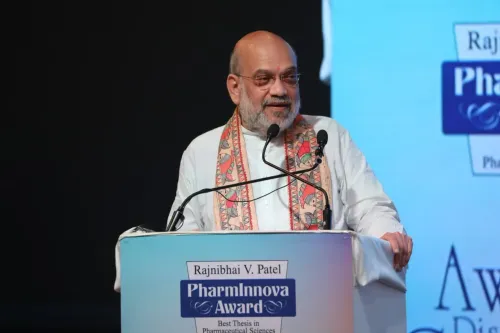
Amit Shah addressed the RV Patel Pharminova Awards 2026 in Ahmedabad on 27 August 2026 .
India scaled from negligible PPE kit output to becoming a major producer and exporter during the COVID-19 pandemic.
Covaxin and Covishield were developed within 13 months , showcasing India's scientific and industrial capacity.
India also supplied vaccines to several other countries, contributing to the global pandemic response.
Shah called on the pharmaceutical sector to invest in R&D until India achieves full self-reliance in research capability.
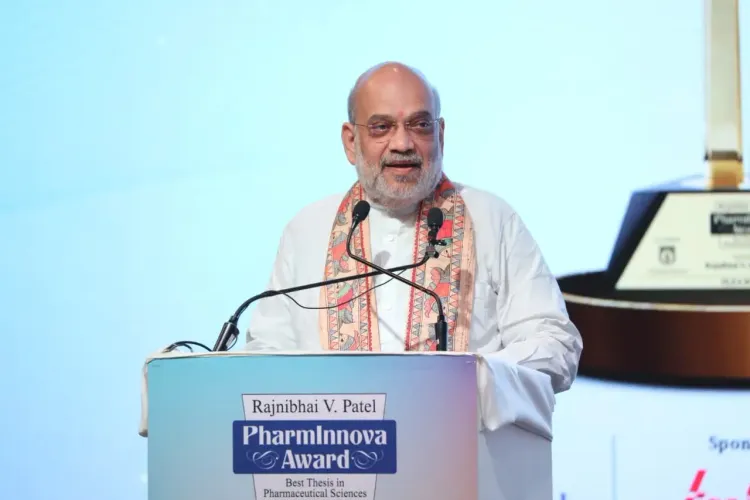
Union Home and Cooperation Minister Amit Shah on 27 August 2026 said that India's response to the COVID-19 pandemic demonstrated the country's ability to rapidly scale domestic manufacturing of critical medical supplies — from PPE kits and N95 masks to home-grown vaccines. Shah made the remarks while addressing the RV Patel Pharminova Awards 2026 ceremony organised by Troikaa Pharmaceuticals Ltd at Sindhu Bhavan in Ahmedabad.
From Scarcity to Surplus: India's PPE Turnaround
Shah recalled that at the outbreak of the pandemic, domestic production of PPE kits was extremely limited and even procuring N95 masks posed a significant challenge. Within a short span, India scaled up manufacturing capacity to meet national demand and subsequently emerged as a major producer and exporter of both products. He described this transformation as emblematic of the country's industrial resolve under pressure.
"India rapidly developed indigenous capabilities across several areas during the crisis," Shah said, adding that the country's collective determination — involving the Centre, state governments, and 140 crore Indians — was central to that achievement.
Covaxin and Covishield: Vaccines in 13 Months
Shah specifically highlighted India's vaccine development timeline, noting that Covaxin and Covishield were produced within 13 months of the pandemic's onset — a feat he described as evidence of the country's scientific and industrial capacity during an unprecedented health emergency. India, he added, did not limit its efforts to self-sufficiency; it supplied vaccines to several other countries, contributing to the global fight against the disease.
"The experience showed that India could not only meet its own requirements but also assist other countries in times of crisis," Shah said.
The Role of Public Trust and Political Leadership
Shah referenced the early Janata Curfew — the voluntary public lockdown called by Prime Minister Narendra Modi — as a moment that illustrated the depth of public trust in political leadership during the crisis. He said the Prime Minister had expressed confidence that India would prevail, and that citizens had responded accordingly. "When the people of the country stand together with a resolve, any challenge can be overcome," Shah said.
R&D Self-Reliance: The Road Ahead
Linking the pandemic experience to the pharmaceutical sector's future, Shah stressed the importance of sustained investment in research and development. He said pharmaceutical organisations must contribute substantially until India builds stronger systems for R&D self-reliance. He also underlined the value of recognising researchers through industry awards, arguing that platforms such as the RV Patel Pharminova Awards play a meaningful role in encouraging innovation.
The remarks come as India's pharmaceutical industry continues to position itself as a global manufacturing hub, with the government pushing domestic R&D capability as the next frontier after production-scale success.
Point of View
Which the speech sidesteps, is whether that crisis-driven capacity has been institutionalised or whether it was a one-time mobilisation that fades when the emergency does. India's R&D spend as a share of GDP remains well below the global pharmaceutical innovation benchmark, and the gap between manufacturing prowess and original drug discovery is still wide. Pharminova awards are a start, but structural incentives for basic research are what will determine whether India graduates from generics manufacturer to innovation leader.
NationPress
12 Oct 2026
Frequently Asked Questions
What did Amit Shah say about India's Covid pandemic response?
Amit Shah said India's COVID-19 response demonstrated the country's ability to rapidly build domestic manufacturing capacity for essential medical supplies. Speaking at the RV Patel Pharminova Awards 2026 in Ahmedabad on 27 August 2026, he highlighted the scale-up of PPE kits, N95 masks, and vaccines as evidence of India's industrial and scientific resolve.
How quickly did India develop Covaxin and Covishield?
According to Shah, India produced both Covaxin and Covishield within 13 months of the pandemic's onset. He described this timeline as a demonstration of the country's scientific and industrial capacity during an unprecedented health emergency.
What was India's PPE manufacturing situation at the start of the pandemic?
At the beginning of the pandemic, domestic production of PPE kits was very limited and obtaining N95 masks was also difficult, according to Shah. Within a short period, India developed large-scale manufacturing capacity and subsequently became a major producer and exporter of both products.
Did India supply vaccines to other countries during Covid?
Yes. Shah noted that India's pandemic efforts were not limited to meeting its own requirements — the country also produced vaccines and supplied them to several other nations, contributing to the broader global fight against the disease.
What did Shah say about India's pharmaceutical R&D future?
Shah stressed that pharmaceutical organisations must contribute substantially to research and development until India builds stronger systems for R&D self-reliance. He also said that industry recognition of researchers — through awards like the RV Patel Pharminova Awards — is important for encouraging innovation.