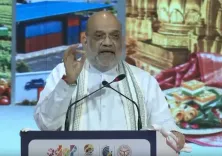
Smriti Irani Marks 12 Years of Make in India
Synopsis
On the 12th anniversary of Make in India, BJP leader Smriti Irani declared the initiative a resounding success, pointing to indigenous advances in semiconductors, aircraft, warships, and rockets as evidence that early sceptics have been proved wrong.
Key Takeaways
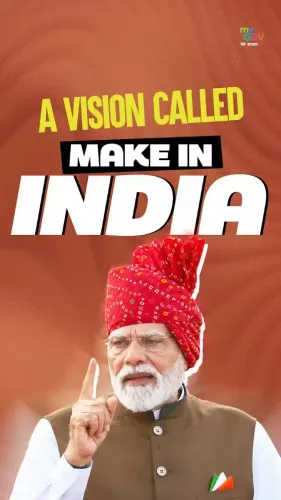
Make in India was launched on 25 September 2014 by PM Narendra Modi; 25 September 2026 marks its 12th anniversary .
Smriti Irani cited semiconductors, aircraft, warships, and rockets as flagship proof points of India's manufacturing transformation.
The initiative operates within the broader Atmanirbhar Bharat self-reliance framework, backed by Production-Linked Incentive (PLI) schemes .
Defence indigenisation and private-sector space participation are among the most visible sectoral advances linked to the policy.
Irani's post frames the anniversary as a rebuttal to historical scepticism about India's industrial capabilities, using explicitly combative political language.
Twelve years ago, the doubters were loud. Today, BJP leader Smriti Irani is louder — and she has a point. On 25 September 2026, the 12th anniversary of Make in India, the former Union Minister fired back at every sceptic who once bet against India's industrial ambitions, citing a sweep of sectors — semiconductors, aircraft, warships, and rockets — as proof that the nation's manufacturing story has moved well past the promise stage.
From a 2014 Pledge to a 12-Year Manufacturing Arc
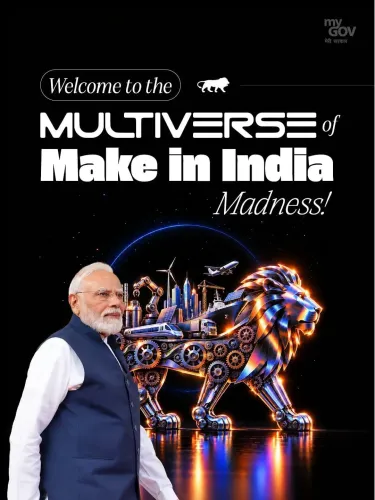
Make in India was launched on 25 September 2014 by Prime Minister Narendra Modi with a single animating idea: transform India from a consumption economy into a global production hub. The initiative's lion-wheel logo — which Irani invokes directly — was always meant to be a statement of intent. Twelve years on, the BJP frames it as a statement of fact.
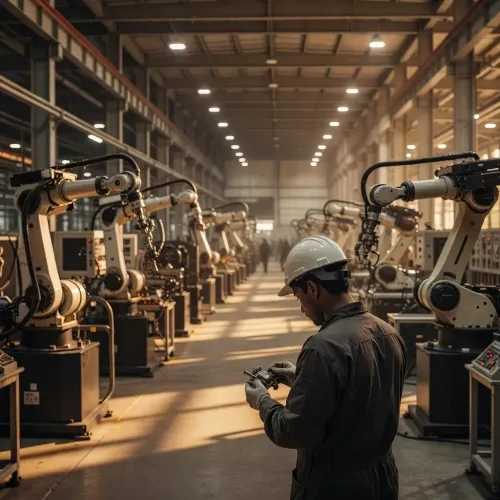
The sectors Irani names are not random. Semiconductors, commercial and defence aircraft, warships, and space rockets represent the hardest end of the manufacturing spectrum — the domains where, for decades, India depended almost entirely on imports. Each is now the site of active indigenous programmes, making them the sharpest possible rebuke to the 'India can never' school of thought.
Semiconductors, Warships, and the Atmanirbhar Backbone
Make in India sits inside a broader policy architecture. The Atmanirbhar Bharat (self-reliant India) framework, which gathered pace after 2020, added urgency and funding muscle — through Production-Linked Incentive (PLI) schemes — to the original initiative's ambitions. Defence indigenisation targets, semiconductor fabrication projects, and the push to build homegrown aerospace platforms all draw from the same policy well.
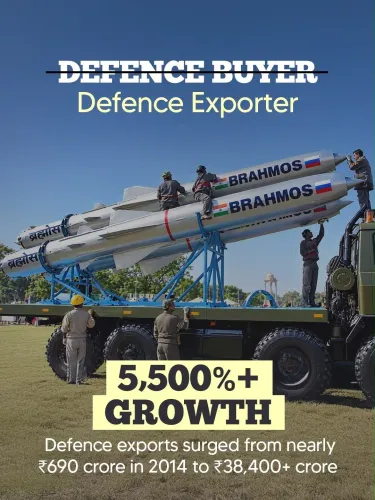
The defence sector has been a particularly visible theatre. India's domestic warship-building programme has expanded its order book significantly, while the aerospace pipeline — both civil and military — increasingly features components and platforms designed and assembled on Indian soil. Space, once a niche government domain, has opened to private players under structural reforms that Make in India helped catalyse.
The Political Arithmetic of an Anniversary Post
Anniversary markers like this one do double political duty. They consolidate a narrative of competence for the ruling party while also setting a benchmark — the sectors Irani names are now on record as Make in India's flagship claims, and future scrutiny will hold them to that standard. The language of 'naysayers' and 'roaring lions' is explicitly combative, framing the anniversary not as a bureaucratic milestone but as a won argument.
What Irani does not do — and the research cautions against assuming — is attach specific verified output figures to the anniversary. The claim is directional and political, not a statistical audit. That distinction matters as India's manufacturing ambitions continue to be tested against global supply-chain realities and competition from other low-cost production hubs.
Twelve years of Make in India, and the conversation has shifted from 'can India manufacture?' to 'how fast?' — that, more than any single number, may be the anniversary's most durable headline.
Point of View
Jets, warships, rockets) to pre-empt any 'what has it really achieved?' counter-narrative. The invocation of 'naysayers' signals that the BJP intends to contest the economic legacy argument aggressively as the political cycle advances. Framed within the Atmanirbhar Bharat arc, Make in India has evolved from a foreign-investment pitch into a self-reliance doctrine — a significant ideological shift. The sectors named are real policy priorities, but attaching them to a celebratory post without verified output data means the rhetoric is running ahead of the auditable record.
NationPress
25 Sept 2026
Frequently Asked Questions
When was Make in India launched?
Make in India was launched on 25 September 2014 by Prime Minister Narendra Modi to position India as a global manufacturing hub.
What is the Make in India lion symbol?
The Make in India logo features a lion made of cog wheels, symbolising industrial strength and manufacturing prowess. Smriti Irani referenced it in her anniversary post as the scheme's emblem.
What sectors does Make in India cover?
Make in India spans a wide range of sectors. Smriti Irani's 12th-anniversary post highlighted semiconductors, aircraft, warships, and rockets as standout areas of progress.
What is the connection between Make in India and Atmanirbhar Bharat?
Atmanirbhar Bharat, launched around 2020, built on Make in India's foundation by adding a strong self-reliance dimension, including Production-Linked Incentive schemes to boost domestic manufacturing in strategic sectors.
Why is Smriti Irani posting about Make in India?
As a senior BJP leader and former Union Minister, Smriti Irani posted to mark the 12th anniversary of Make in India on 25 September 2026, celebrating the initiative's legacy in transforming India's industrial capabilities.