CM Dhami marks 12 years of Make in India, cites record output

Synopsis
Uttarakhand CM Pushkar Singh Dhami marked 12 years of Make in India on 25 September 2026, highlighting record defence production of ₹1.78 lakh crore and electronics output of ₹13.11 lakh crore, crediting PLI schemes for driving India's manufacturing and self-reliance goals.
Key Takeaways
Make in India completed 12 years on 25 September 2026 , launched originally in September 2014 under PM Narendra Modi.
CM Dhami cited defence production reaching a record ₹1.78 lakh crore as a milestone of domestic manufacturing scale-up.
Electronics production has grown to ₹13.11 lakh crore , driven in large part by the PLI scheme rolled out from 2020-21.
The Production-Linked Incentive (PLI) scheme now covers 14 sectors including mobile phones, automobiles, pharmaceuticals and defence.
Uttarakhand hosts pharmaceutical and FMCG manufacturing clusters at Haridwar and Sitarganj that are part of the broader Make in India supply chain.
The post underscores the BJP's political alignment of production milestones with the Atmanirbhar Bharat (self-reliant India) narrative.
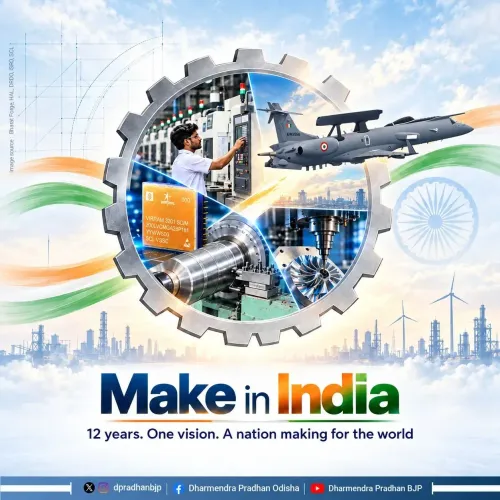
Twelve years after its launch, Make in India has transformed from a campaign slogan into a measurable industrial reality — and Uttarakhand Chief Minister Pushkar Singh Dhami made that case emphatically on Friday, 25 September 2026, marking the initiative's anniversary with a detailed accounting of what Indian manufacturing has built.
In a post on X carrying the hashtag #12YearsOfMakeInIndia, CM Dhami credited Prime Minister Narendra Modi's 'visionary leadership' for a programme that he described as a 'powerful symbol of India's manufacturing capacity, innovation and self-reliance.' He pointed to two headline numbers as proof: defence production has reached a record ₹1.78 lakh crore, while electronics production has scaled to ₹13.11 lakh crore.
From a 2014 vision to a ₹13-lakh-crore electronics story
Make in India was formally launched in September 2014 with a single, ambitious brief: position India as a global manufacturing hub, attract foreign direct investment, and reduce the economy's dependence on imports. The initiative covered sectors ranging from automobiles and pharmaceuticals to aerospace and textiles — but it was in electronics and defence that the numbers eventually became undeniable.
The growth accelerator that changed the trajectory was the Production-Linked Incentive (PLI) scheme, introduced in the 2020-21 Union Budget and later expanded to 14 sectors. PLI ties cash incentives directly to incremental production, meaning companies only collect the reward after they manufacture. The design was deliberately export-oriented: higher output, higher exports, lower subsidy-to-output ratio. For mobile manufacturing alone, India went from near-zero global share to becoming one of the world's largest smartphone exporters within five years of the scheme's rollout.
Defence output crosses a historic threshold
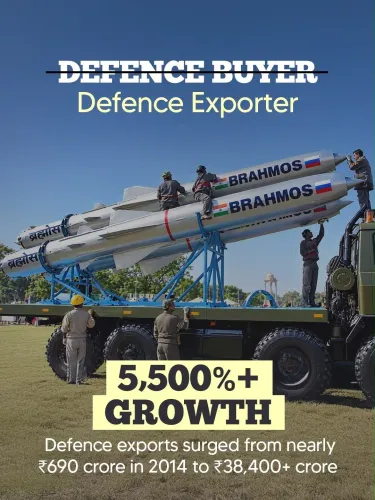
The ₹1.78 lakh crore defence production figure cited by CM Dhami represents perhaps the sharpest reversal in any single sector. For decades, India ranked among the world's top arms importers, spending tens of thousands of crore each year buying equipment — tanks, helicopters, warships, artillery — that Indian factories could not yet make at scale or cost. The Atmanirbhar Bharat push from 2020 onwards enforced positive import embargo lists, ring-fenced budgets for domestic procurement, and channelled PLI capital into private defence manufacturers alongside legacy public-sector units. The result, if the figure holds, is a manufacturing base that now supplies not just the Indian armed forces but foreign buyers as well.
Sectors, jobs, and the self-reliance logic
CM Dhami's post specifically named electronics, mobile phones, automobiles, pharmaceuticals and defence as the sectors where India's manufacturing footprint has visibly expanded. The common thread across all five is the PLI architecture — sector-specific targets, time-bound incentives, and a deliberate attempt to pull global supply chains toward Indian factories. Pharmaceuticals and automobiles carry their own strategic weight: one underpins India's identity as the 'pharmacy of the world,' while the other is rapidly pivoting toward electric vehicles, where domestic component manufacturing will determine whether India captures or concedes the transition.
Employment runs through the entire argument. Manufacturing at scale — particularly in electronics assembly and defence fabrication — generates jobs at a density that services sectors rarely match, especially for workers without college degrees. The BJP's political messaging has consistently linked PLI output to job creation, making each production milestone double as an electoral data point.
Uttarakhand's stake in the national manufacturing push
CM Dhami's intervention is not purely ceremonial. Uttarakhand has positioned itself as an active participant in the broader industrial story — the state's Haridwar and Sitarganj corridors host pharmaceutical and FMCG manufacturing clusters that feed directly into the Make in India supply chain. His anniversary post signals that Uttarakhand intends to continue aligning state policy with central manufacturing priorities, a posture that typically precedes state-level investment summits or sector-specific announcements.
Twelve years in, the question is no longer whether Make in India produced results — the production figures answer that. The live question is whether the next phase can deepen value addition, move India up the manufacturing complexity ladder, and sustain export competitiveness as rival hubs in Southeast Asia sharpen their own incentive regimes. The anniversary is a milestone. The race is still on.
Point of View
Which strengthens the Atmanirbhar Bharat story heading into any future election cycle. The PLI scheme's design — incentivising incremental production rather than capacity creation — proved a durable mechanism that survived multiple budget cycles, and the electronics number suggests it has fundamentally reshaped one high-visibility supply chain. The next stress test is whether India can move beyond assembly into deep component and chip manufacturing, a shift that will define whether the 12-year milestone is a ceiling or a launchpad.
NationPress
25 Sept 2026
Frequently Asked Questions
When was Make in India launched and who started it?
Make in India was launched in September 2014 by Prime Minister Narendra Modi to position India as a global manufacturing hub, attract foreign investment and reduce import dependence.
What is the PLI scheme and which sectors does it cover?
The Production-Linked Incentive (PLI) scheme, introduced in the 2020-21 Union Budget , provides financial incentives tied to incremental production. It covers 14 sectors including electronics, mobile phones, automobiles, pharmaceuticals and defence.
What is India's current defence production figure under Make in India?
According to CM Dhami's post, India's defence production has reached a record ₹1.78 lakh crore , reflecting significant growth driven by domestic procurement mandates and PLI-linked investment.
How large is India's electronics manufacturing sector now?
India's electronics production has scaled to ₹13.11 lakh crore , with mobile phone manufacturing being one of the biggest contributors following PLI scheme incentives.
What is Uttarakhand's role in India's Make in India manufacturing push?
Uttarakhand hosts key pharmaceutical and FMCG manufacturing clusters in Haridwar and Sitarganj that are integrated into the national Make in India supply chain, and CM Dhami has consistently aligned state policy with central manufacturing priorities.