Amit Shah: India's rise to 4th-largest economy proves 2047 vision is achievable
Synopsis
At a pharma awards ceremony in Ahmedabad, Home Minister Amit Shah made the clearest government case yet for the 2047 Viksit Bharat target — anchoring it in India's climb from 11th to 4th-largest economy since 2014 and framing the ₹67,000 crore pharma investment push as both an economic and strategic move to reduce global dependence on China.
Key Takeaways
Amit Shah stated that India has risen from the 11th to the 4th-largest economy globally since 2014 .
He reaffirmed PM Modi's Viksit Bharat 2047 goal — a developed, leading India by the country's centenary of Independence.
Approximately ₹67,000 crore of investment has been mobilised in the pharmaceutical sector , with notable growth in drug exports.
Initiatives including bulk drug parks , medical device parks , and the PLI scheme are being positioned to reduce global reliance on China in pharma supply chains.
Shah described the Indian pharma sector as a national strategic asset , not merely a commercial industry.
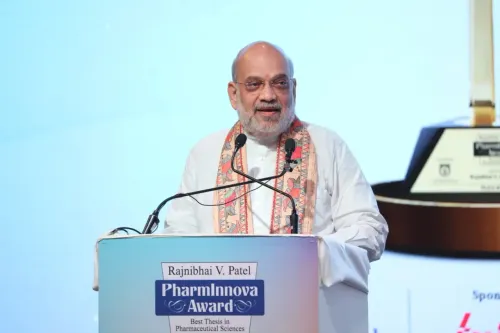
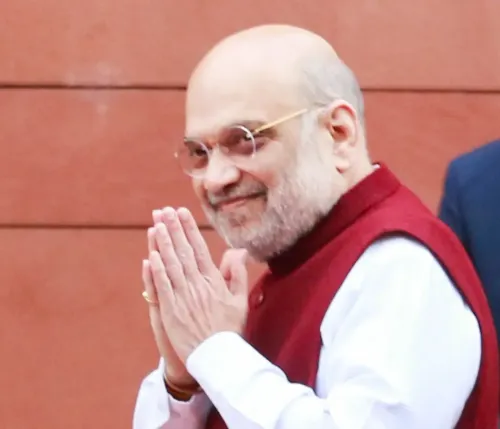
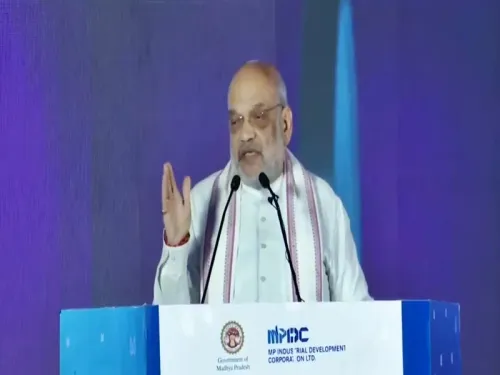
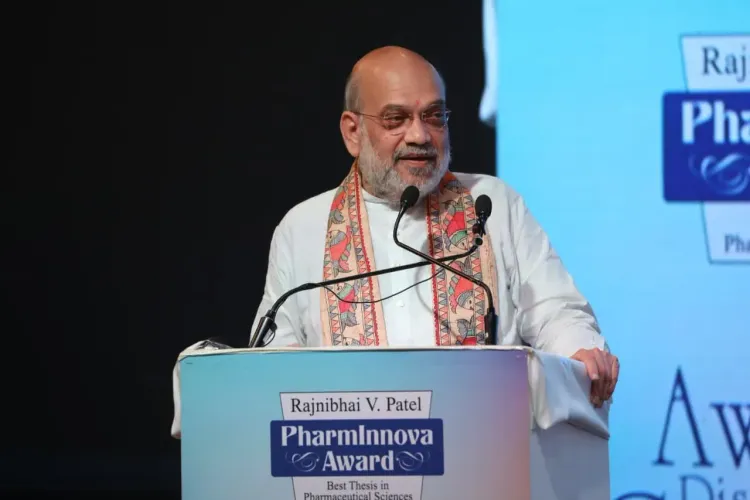
Union Home and Cooperation Minister Amit Shah on Thursday, 27 August 2026, declared that India's ascent to the world's fourth-largest economy — up from 11th place in 2014 — is proof that the country has the capacity to realise Prime Minister Narendra Modi's vision of becoming a developed, leading nation by 2047. Shah made the remarks in Ahmedabad at the RV Patel Pharminova Awards 2026 ceremony, organised by Troikaa Pharmaceuticals Ltd at Sindhu Bhavan.
India's Economic Leap Since 2014
Shah underscored that India's jump of seven ranks in the global economic order over the past decade was not accidental. He attributed the progress to a wholesale transformation in policies, regulations, mindset, and working methods since 2014. 'Companies from across the world are now keen to invest in the country, while India is strengthening its position as a manufacturing hub,' he said.
He pointed to a shift in global investor sentiment, noting that the policy environment had made India a preferred destination for multinational capital. This comes amid a broader global realignment of supply chains away from single-country dependence — a trend India has actively sought to capitalise on.
Pharma Sector as a Strategic Asset
Shah placed particular emphasis on the pharmaceutical industry, calling it 'a national strategic asset of India' and 'a reflection of India's tradition, talent and research capabilities' — rather than merely a commercial sector. He highlighted that approximately ₹67,000 crore of investment had been mobilised in pharmaceuticals, with India recording significant gains in drug exports.
Initiatives such as bulk drug parks, medical device parks, and the Production-Linked Incentive (PLI) scheme were cited as cornerstones of a world-class manufacturing ecosystem. Shah added that these measures would also help reduce India's — and the world's — dependence on China in the global pharmaceutical supply chain. Notably, China's dominance in active pharmaceutical ingredient (API) manufacturing has long been flagged as a strategic vulnerability by Indian policymakers.
The 2047 Vision: Goals and Governance
Shah reiterated that Viksit Bharat 2047 — India's centenary of Independence — required three interlocking pillars: a secure, educated, and culturally grounded society; sustained economic development; and a leading position in the global order. 'The capacity to achieve this goal exists within India,' he said, stressing the need to channel youth talent, frame adaptive policies, and ensure their effective implementation.
He recalled the 'Azadi Ka Amrit Mahotsav' initiative, under which citizens — especially young Indians — were encouraged to study the freedom struggle, assess India's post-Independence journey, and situate the country's current global standing within that arc.
Tribute to the Late Rajnibhai
At the awards ceremony, Shah also paid tribute to the late Rajnibhai, crediting him with understanding the essence of the pharmaceutical business and advancing it with purpose. He said sustained research, scientific capability, entrepreneurship, and sound policy would remain critical to India's 2047 ambitions.
With the next phase of PLI disbursements and bulk drug park operationalisation expected in the coming months, the government's ability to translate these targets into verifiable outcomes will be closely watched by industry and investors alike.
Point of View
But rankings shift with exchange rates and global volatility — purchasing-power-parity tables tell a more complex story. The ₹67,000 crore pharma investment figure also lacks a baseline or timeline, making it difficult to assess additionality. Most critically, the 2047 vision has been articulated repeatedly at events like this one, yet the institutional architecture — independent outcome measurement, transparent PLI job counts, verifiable API import substitution data — remains underdeveloped. Ambition is not the constraint; accountability infrastructure is.
NationPress
12 Oct 2026
Frequently Asked Questions
What did Amit Shah say about India's economy at the Ahmedabad event?
Shah stated that India has risen from the 11th to the 4th-largest economy in the world since 2014, and that this progress demonstrates the country's capacity to achieve the Viksit Bharat 2047 goal. He was speaking at the RV Patel Pharminova Awards 2026 in Ahmedabad on 27 August 2026.
What is the Viksit Bharat 2047 vision that Shah referred to?
Viksit Bharat 2047 is PM Narendra Modi's goal for India to become a developed, leading nation by 2047, when the country marks 100 years of Independence. It envisions a secure, educated, and culturally grounded India that holds a top position in the global economy.
How much has India invested in the pharmaceutical sector according to Shah?
Shah said approximately ₹67,000 crore of investment had been encouraged in the pharmaceutical sector, alongside significant growth in drug exports. He cited bulk drug parks, medical device parks, and the PLI scheme as key enablers.
Why did Shah highlight reducing dependence on China in pharma?
Shah said India's manufacturing initiatives — including bulk drug parks and the PLI scheme — would help reduce global dependence on China in the pharmaceutical supply chain. China's dominance in active pharmaceutical ingredient production has long been viewed as a strategic vulnerability by Indian policymakers.
What is the PLI scheme and how does it relate to India's 2047 goals?
The Production-Linked Incentive (PLI) scheme offers financial incentives to manufacturers tied to incremental production. Shah positioned it as central to building a world-class manufacturing ecosystem in India, spanning pharmaceuticals and other strategic sectors, as part of the broader 2047 development agenda.