CM Sukhu spotlights Swabhiman Yojana for sexual assault survivors
Synopsis
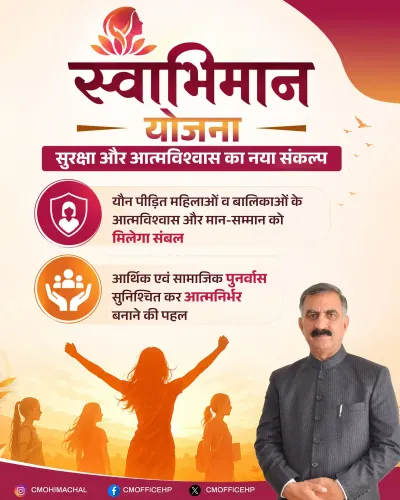
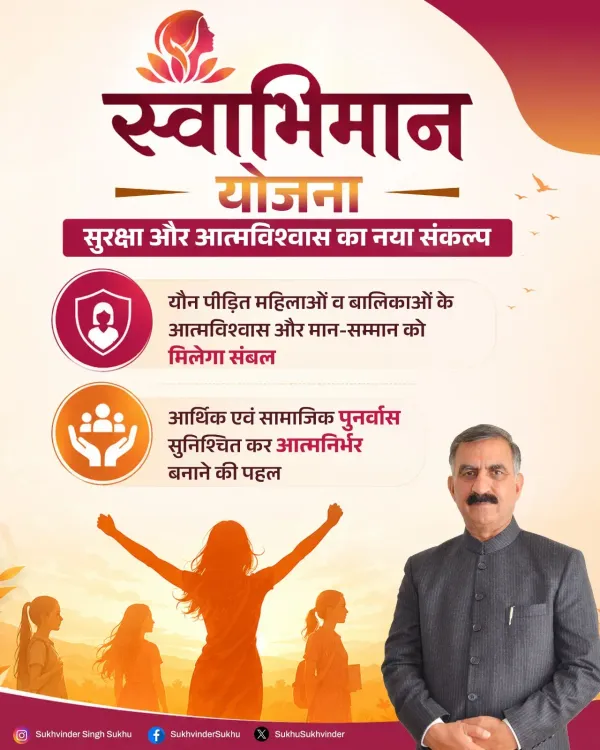
Himachal Pradesh Chief Minister Sukhvinder Singh Sukhu highlighted the state's Swabhiman Yojana on 4 June 2026, describing it as a survivor-centric initiative that restores dignity, self-confidence and a fresh start to women and girls affected by sexual exploitation, framing emotional rehabilitation as a core policy goal.
Key Takeaways
CM Sukhvinder Singh Sukhu posted on 4 June 2026 on the Swabhiman Yojana for survivors of sexual exploitation.
The scheme is framed as a vehicle for dignity, self-confidence and a new beginning for affected women and girls.
Sukhu emphasised that rebuilding internal self-trust is the toughest battle survivors face.
The initiative sits within a wider Indian shift toward survivor-centric rehabilitation atop POCSO 2012 and the Nirbhaya Fund.
Implementation detail, budget outlay and coordination with the Union Women and Child Development ministry remain to be disclosed.
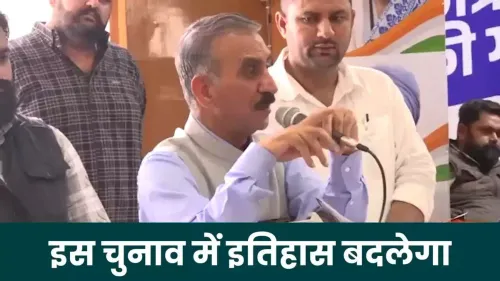
Himachal Pradesh Chief Minister Sukhvinder Singh Sukhu on Thursday, 4 June 2026, used a social media post to foreground his government's ‘Swabhiman Yojana’, framing it as a survivor-centric initiative for women and girls who have endured sexual exploitation. The Chief Minister argued that the toughest battle for survivors is internal — the work of rebuilding shattered self-trust — and that the state has a duty to walk alongside them.
Context
In the post, Sukhu wrote that ‘yaun shoshan se peedit mahilaon aur balikaon ke liye asli sangharsh bahari duniya se kam, apne toote hue vishwas ko phir se jodne ka hota hai’ (the real struggle for women and girls affected by sexual exploitation is less with the outside world and more with rebuilding their broken trust). He added that in such difficult times, ‘samaj ka saath, sahanubhuti aur thos samvedna nitant aavashyak hai’ (the support, empathy and concrete sensitivity of society are absolutely essential).
The Chief Minister positioned the Swabhiman Yojana as the ‘saakar roop’ (tangible form) of that sensitivity, describing it as a scheme that offers dignity, inner strength and the opportunity for a new beginning — so that, in his words, a survivor's future does not become the shadow of her past.
Policy backdrop
The framing of the scheme aligns with a broader shift in Indian sub-national policy over the past decade towards survivor-centric rehabilitation, layered on top of central legal architecture. The Protection of Children from Sexual Offences (POCSO) Act, 2012 set the procedural baseline for handling offences against minors, while the Nirbhaya Fund, established by the Union government in 2013 after the Delhi gang-rape case, created a dedicated financing pool for victim compensation and rehabilitation infrastructure.
Successive state governments have since added non-monetary components — counselling, skill training, livelihood support — to the statutory compensation framework that operates under the Code of Criminal Procedure. Himachal Pradesh's articulation of a Swabhiman Yojana sits within that lineage, with an explicit accent on restoring ‘atmabal’ (self-confidence) rather than only providing financial relief.
Stakeholders and impact
The primary beneficiaries identified in the post are women and girls who are survivors of sexual exploitation in Himachal Pradesh. By foregrounding emotional rehabilitation alongside formal aid, the Chief Minister is signalling that the state intends to treat psycho-social recovery as a measurable policy outcome, not a residual concern.
For frontline stakeholders — district administrations, the state women and child development department, one-stop centres, and partner non-governmental organisations — the messaging sharpens the brief: rehabilitation must be visible, dignified and sustained. The Chief Minister's emphasis on ‘nai shuruaat’ (a new beginning) also speaks to a wider concern about social stigma, which often deters survivors from pursuing both legal remedies and reintegration.
Sukhvinder Singh Sukhu, who has led the Indian National Congress government in the hill state since December 2022, has repeatedly placed welfare-led narratives at the centre of his administration's communications. The current post extends that pattern into the contested terrain of gender-based violence response.
What's next
The operational test for the Swabhiman Yojana will lie in the budget allocations, implementation guidelines and inter-departmental coordination that follow — particularly in any alignment with the Union Ministry of Women and Child Development and existing Nirbhaya-funded verticals. Disclosures during the next Himachal Pradesh legislative session will indicate whether the scheme's stated aspirations on dignity and rehabilitation are matched by measurable delivery targets and trained personnel on the ground.
Point of View
Anchoring Himachal Pradesh's Congress government to a survivor-centric vocabulary that is increasingly the lingua franca of Indian welfare politics. By foregrounding emotional rehabilitation over compensation arithmetic, Sukhu is positioning the state at the softer, more progressive end of the gender-violence response spectrum. The political payoff depends on whether budget lines, trained counsellors and one-stop-centre integration catch up with the rhetoric. Without that follow-through, the messaging risks becoming a branding exercise atop pre-existing central frameworks.
NationPress
26 Sept 2026
Frequently Asked Questions
What is the Swabhiman Yojana in Himachal Pradesh?
It is a Himachal Pradesh government scheme aimed at supporting women and girls who have survived sexual exploitation, with a focus on restoring dignity, self-confidence and helping them make a fresh start, according to Chief Minister Sukhvinder Singh Sukhu.
Who launched the Swabhiman Yojana?
The scheme is being championed by the Himachal Pradesh government led by Chief Minister Sukhvinder Singh Sukhu of the Indian National Congress, who has highlighted it as a key survivor-rehabilitation initiative of his administration.
Who can benefit from the Swabhiman Yojana?
The scheme is directed at women and girls in Himachal Pradesh who are survivors of sexual exploitation, offering them rehabilitation support beyond purely financial compensation.
How does the scheme relate to POCSO and the Nirbhaya Fund?
It complements central frameworks such as the POCSO Act, 2012 and the Nirbhaya Fund of 2013 by adding a state-level layer focused on dignity, emotional rehabilitation and reintegration of survivors.
What did CM Sukhu say in his post about survivors?
He said the real struggle for survivors is rebuilding their broken self-trust, and that society's support, empathy and concrete sensitivity are essential — values he said the Swabhiman Yojana embodies.