Himachal CMO Urges Society to Back Sexual Abuse Survivors
Synopsis
The Chief Minister's Office of Himachal Pradesh issued a public appeal on 4 June 2026, urging society to extend empathy and concrete support to women and girls rebuilding trust after sexual abuse. The statement frames recovery as a long internal struggle and calls community solidarity an absolute necessity, aligning with India's survivor-centric policy direction since 2012.
Key Takeaways
The Himachal Pradesh CMO posted the appeal on 4 June 2026 from Shimla .
The message frames survivors' real struggle as rebuilding broken trust , not just facing the outside world.
It calls society's support, sympathy and concrete sensitivity absolutely essential.
The framing aligns with India's survivor-centric policy arc since the 2012 reforms and the POCSO Act .
No specific incident, prosecution or new scheme is referenced in the post.
Follow-through may take the form of expanded One-Stop Centres or victim compensation measures.
The Chief Minister's Office of Himachal Pradesh on Thursday, 4 June 2026, issued a public appeal calling for greater societal empathy and concrete solidarity with women and girls who have survived sexual abuse, framing their recovery as primarily an internal struggle to rebuild shattered trust.
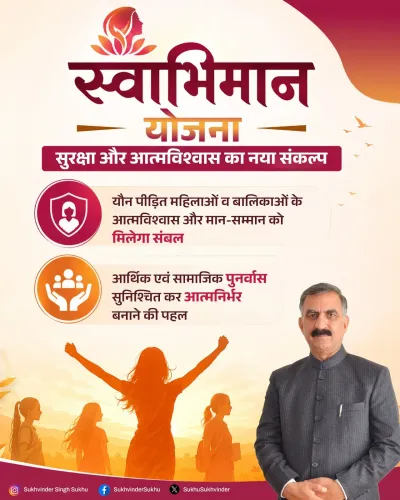
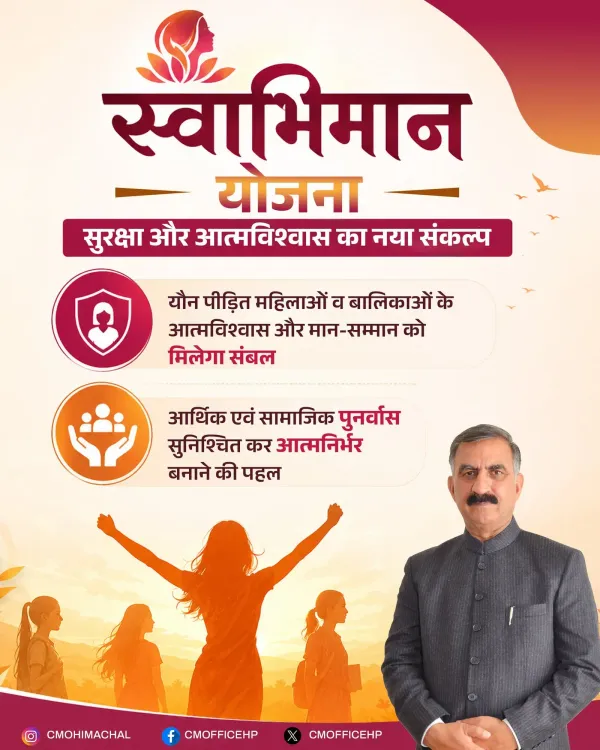
In a post published from Shimla, the CMO wrote: 'Yaun shoshan se peedit mahilaon aur balikaon ke liye asli sangharsh bahari duniya se kam, apne toote hue vishwas ko phir se jodne ka hota hai' ('For women and girls who have suffered sexual exploitation, the real struggle is less with the outside world and more about reconnecting their own broken trust'). The message added that 'in such difficult times, the support, sympathy and concrete sensitivity of society is absolutely essential'.
Context
The statement is survivor-centric in tone, foregrounding psychological recovery rather than the procedural machinery of criminal justice. By naming both women and girls, the CMO's framing covers victims across the adult and minor categories, the latter governed by dedicated child-protection law.
Notably, the post does not reference any specific incident, prosecution or new programme. It instead reads as a values-based intervention from the highest political office in the state, addressed broadly to Himachali society.
Policy backdrop
Indian states have, since the legal reforms that followed the 2012 Delhi gang-rape case, periodically issued public messaging that emphasises community support for survivors alongside the formal legal process. The Protection of Children from Sexual Offences (POCSO) Act, 2012 established the central framework for offences against minors, later supplemented by victim compensation and rehabilitation provisions.
Operationally, survivor support in states including Himachal Pradesh is routed through One-Stop Centres, helplines and District Legal Services Authorities, which combine medical aid, counselling, police liaison and legal assistance under one roof. The CMO's message aligns with the policy direction these institutions are designed to serve: treating rehabilitation as a long-term, community-anchored process.
Stakeholders and impact
The primary stakeholders addressed are survivors of sexual abuse, particularly women and girls navigating recovery. The secondary audience is the wider public — families, neighbours, schools, workplaces and panchayats — whose response to a survivor's disclosure often shapes whether she seeks formal redress at all.
Civil-society practitioners working on gender-based violence have long argued that stigma within immediate social circles is a significant barrier to reporting and recovery. A statement from the Chief Minister's Office that explicitly validates this gap carries signalling weight for frontline officials, including police station house officers, child welfare committees and protection officers under the Domestic Violence Act.
What's next
Attention will turn to whether the messaging is followed by an operational announcement — such as expansion of One-Stop Centres, fresh allocations under victim compensation schemes, or training programmes for first responders in Himachal Pradesh's twelve districts. State governments often pair such public appeals with administrative orders in the weeks that follow.
For now, the CMO's intervention places the question of survivor dignity squarely in public discourse, and frames empathy itself as a civic responsibility rather than a private virtue. The test will lie in how that framing translates into the everyday conduct of institutions that survivors must approach.
Point of View
And it sits within a decade-long arc of Indian sub-national messaging on gender-based violence that began after the 2012 reforms. By centring 'broken trust' over legal redress, the post acknowledges what frontline workers have long argued — that social stigma, not statute, often determines whether survivors come forward. The political utility of such messaging is twofold: it pre-positions the government on a sensitive issue and creates a discursive opening for administrative follow-up. The credibility test, however, will be operational expansion of One-Stop Centres and compensation pipelines.
NationPress
18 Oct 2026
Frequently Asked Questions
What did the Himachal Pradesh CMO say about sexual abuse survivors?
The Chief Minister's Office of Himachal Pradesh said on 4 June 2026 that the real struggle for women and girls who have suffered sexual exploitation is rebuilding their broken trust, and that society's support, sympathy and concrete sensitivity are absolutely essential in such difficult times.
Did the Himachal CMO announce any new scheme for survivors?
No new scheme was announced in the post. The statement was a values-based public appeal addressed to society at large, without reference to a specific incident, prosecution or fresh programme.
What support systems exist in Himachal Pradesh for sexual abuse survivors?
Survivors in Himachal Pradesh can access One-Stop Centres, women's helplines, District Legal Services Authorities and protection officers under the Domestic Violence Act, which together provide medical aid, counselling, police liaison and legal assistance.
What is the POCSO Act referenced in survivor protection policy?
The Protection of Children from Sexual Offences (POCSO) Act, 2012 is the central law that established India's framework for handling sexual offences against minors, with later additions covering victim compensation and rehabilitation.
Why do governments stress community support for sexual abuse survivors?
Practitioners argue that stigma within immediate social circles is a major barrier to reporting and recovery. Public messaging from senior offices is intended to validate survivors and reduce the social cost of disclosure, complementing formal legal mechanisms.