Sunetra Pawar asserts NCP control at party's 27th Foundation Day

Synopsis
Sunetra Pawar's Foundation Day address was less a celebration and more a warning shot. Invoking Ajit Pawar's iron-fisted legacy, she declared her transitional phase over — threatening purges, demanding urban expansion before delimitation, and putting Maharashtra's NCP bosses on notice that the party's command structure now flows through her alone.
Key Takeaways
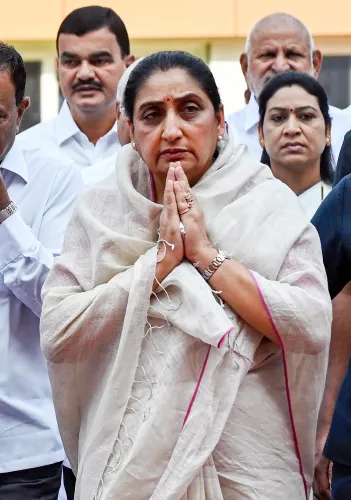
Sunetra Pawar addressed the NCP's 27th Foundation Day in Mumbai , signalling the end of her transitional leadership phase.
She explicitly invoked Ajit Pawar's legacy of decisive administration to assert legitimacy among party loyalists.
Pawar warned against 'divisive politics,' caste-based rifts, and public criticism that damages the party's image.
She urged cadre to build urban infrastructure ahead of electoral delimitation , marking a strategic pivot from the NCP's traditional rural base.
Political observers called the speech a 'high-risk, high-reward strategy' that could either unify the party or accelerate its fragmentation.
Sunetra Pawar used the Nationalist Congress Party's (NCP) 27th Foundation Day in Mumbai to signal a decisive shift in her leadership style, moving from a period of observation to one of active enforcement. Her address made clear that accountability would be performance-driven and that internal indiscipline would no longer be tolerated.
A Break from the Transitional Phase
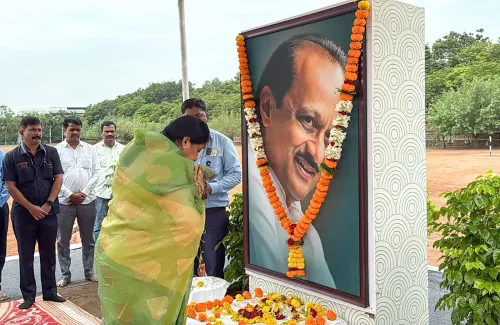
In the months following the death of her husband Ajit Pawar, Sunetra Pawar had largely maintained a low-key presence within the party. Her Foundation Day speech marks the end of that period. She explicitly stated that she has 'understood and tolerated everything until now, but will no longer,' drawing a firm boundary between consultation and the undermining of her authority as party head and Deputy Chief Minister.
Political observers noted that the timing is deliberate. Showing prolonged vulnerability, analysts argue, would have invited Maharashtra's powerful regional bosses to carve up the party's organisational turf among themselves.
Invoking Ajit Pawar's Legacy
A central thread of her address was an explicit invocation of Ajit Pawar's legacy of decisive, iron-fisted administration. By committing to follow his example in taking tough organisational decisions, she sought immediate legitimacy among loyalists who might otherwise view her as a reluctant or transitional figure.
Notably, political observers point out this is a calculated double-edged move. Ajit Pawar was known for micro-managing the party machinery — personally knowing local block leaders by name and clearing administrative bottlenecks himself. Sunetra Pawar has acknowledged, through her framing of a performance-based accountability model, that replicating that granular style overnight is not feasible. Instead, she is shifting responsibility downward.
Warning Against Divisive Politics and Public Criticism
A significant portion of her speech was directed at internal discipline. She issued a strict warning against 'divisive politics' and caste-based rifts within the party, and made clear that 'unnecessary interference' or public criticism that damages the NCP's image would face severe consequences.
This comes amid sustained scrutiny of the NCP's ideological consistency and its position as a junior partner to the Bharatiya Janata Party (BJP) in the MahaYuti alliance. Critics have argued that the party has been functioning under BJP's influence. Pawar's disciplinary rhetoric, observers say, is partly an attempt to counter that narrative by projecting an independent command structure.
Urban Push Ahead of Delimitation
Co-signing a strategy flagged by senior NCP leader Praful Patel, Sunetra Pawar urged party cadre to intensively build infrastructure in urban centres ahead of the anticipated delimitation — the redrawing of electoral constituency boundaries.
The NCP has historically drawn its core strength from rural agrarian networks, cooperative sugar factories, and local banking systems. Pawar's pivot toward urban consolidation reflects a recognition that demographic shifts and a redrawn electoral map could place cities at the centre of Maharashtra's political arithmetic. It signals a forward-looking calculation rather than a defensive one.
High-Risk, High-Reward Strategy
Political observers described Pawar's speech as a 'calculated preemptive strike against internal dissent.' By threatening to purge underperforming and intrusive elements, she has staked her leadership on absolute organisational dominance. 'It is a high-risk, high-reward strategy: she will either successfully tame the party's warring factions, or accelerate its fragmentation,' they remarked.
The coming months will be the real test — whether the NCP cadre reads this assertiveness as genuine strength or overcompensation from a leader still finding her footing.
Point of View
Not a ceremonial one. The NCP's deeper problem is that Ajit Pawar's authority was personal and granular — built over decades of knowing every district-level operator by name. Sunetra Pawar cannot inherit that network through a speech; she can only set the terms under which she will exercise power. The urban pivot is the more substantive signal: if delimitation shifts Maharashtra's electoral centre of gravity toward cities, a party still anchored in cooperative sugar politics will be outmanoeuvred. Whether her cadre treats this as a genuine reset or a widow's overreach will determine if the NCP holds together through the next electoral cycle.
NationPress
26 Oct 2026
Frequently Asked Questions
What did Sunetra Pawar say at the NCP's 27th Foundation Day?
Sunetra Pawar used the NCP's 27th Foundation Day address in Mumbai to signal a shift to assertive, centralised leadership, warning against internal indiscipline, divisive politics, and public criticism of the party. She stated she had 'understood and tolerated everything until now, but will no longer,' marking the end of her transitional phase.
Why is Sunetra Pawar's leadership significant for the NCP?
Sunetra Pawar took over the NCP's leadership following the death of her husband Ajit Pawar, who was known for micro-managing the party's machinery. Her ability to consolidate authority is critical at a time when the NCP faces internal churn and scrutiny over its role as a junior partner to the BJP in the MahaYuti alliance.
What is the NCP's urban strategy ahead of delimitation?
Co-signing a strategy highlighted by senior leader Praful Patel, Sunetra Pawar urged cadre to intensively build party infrastructure in urban centres before the anticipated delimitation — the redrawing of electoral constituency boundaries. This marks a pivot from the NCP's traditional strength in rural agrarian and cooperative networks.
How have political observers reacted to Sunetra Pawar's speech?
Political observers described the speech as a 'calculated preemptive strike against internal dissent,' calling it a high-risk, high-reward strategy. They noted she will either successfully tame the party's warring factions or risk accelerating its fragmentation.
What is the MahaYuti alliance and why does it matter here?
MahaYuti is the ruling alliance in Maharashtra comprising the BJP, the Eknath Shinde-led Shiv Sena faction, and the Ajit Pawar-led NCP. Critics have argued the NCP functions under BJP's influence within this arrangement, making Sunetra Pawar's assertion of independent authority a politically significant signal.