Supreme Court to Review PIL Against Housing Societies' Denial of EV Charger NOCs
Synopsis
The Supreme Court is set to review a PIL addressing the arbitrary refusal of housing societies to grant NOCs for electric vehicle chargers, emphasizing the need for adherence to national EV guidelines and promoting sustainable transportation.
Key Takeaways
The Supreme Court will examine a PIL regarding NOCs for EV chargers.
Housing societies are accused of arbitrary denials that hinder EV infrastructure.
The petitioner emphasizes the necessity for compliance with national EV policies.
Current infrastructure in the society is inadequate for the number of electric vehicles.
Uniformity in implementing guidelines is crucial for sustainable development.
New Delhi, Feb 24 (NationPress) The Supreme Court has decided to look into a public interest litigation (PIL) that aims for the effective execution of the Centre’s electric vehicle (EV) charging infrastructure guidelines and to curb the arbitrary denial of NOCs by housing societies. The court issued a notice regarding a petition from a resident of Greater Noida, with a bench comprising Chief Justice of India (CJI) Surya Kant and Justice Joymalya Bagchi requesting responses from the Union of India, the State of Uttar Pradesh, the Nirala Estate housing society in Greater Noida, and its property management firm, Cushman & Wakefield Property Management Services India Pvt Ltd.
The petition, filed under Article 32 of the Constitution by Rachit Katyal, highlighted that despite explicit guidelines from the Central government promoting the uptake of EVs, housing societies persist in hindering the installation of personal charging infrastructure.
According to the petition, the petitioner, a flat owner and resident in Greater Noida (West) Nirala Estate Phase-3, purchased an electric vehicle to support the growing demand for sustainable and eco-friendly transportation and national EV initiatives.
Katyal intended to set up a certified private EV charger at his own cost via authorized professionals and requested a No Objection Certificate (NOC) from the housing society and management agency on May 26, 2025. Yet, despite multiple reminders and the submission of government directives, no action was taken.
The petition, represented by advocate Sriram Parakkat, asserted that the unjust refusal by housing societies to issue NOCs for EV charger installation in designated parking areas undermines national policy on clean mobility and infringes upon residents’ fundamental rights under Articles 14 and 21.
It stated, "The primary barrier to EV adoption in residential areas is the unreasonable refusal or delay by housing societies to grant permission for charger installations in allotted parking spots."
The petitioner claimed that even though the society comprises nearly 4,000 flats and approximately 56 electric vehicles, there are only two low-capacity charging stations of 7 kW and 3 kW, which are grossly inadequate and contrary to national EV policy.
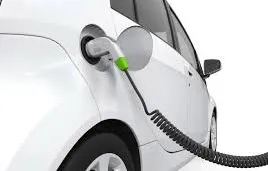
Citing the Union Ministry of Power’s notification dated September 17, 2024, the plea noted that the consolidated "Guidelines for Installation and Operation of Electric Vehicle Charging Infrastructure-2024" explicitly allow residents of group housing societies to set up private EV chargers in their designated parking spaces, adhering to safety norms.
The petition emphasized, "These EV Guidelines clearly advocate for the installation of private EV chargers in group housing societies and facilitate electricity supply through existing meters or sub-meters, leaving no room for arbitrary refusals by housing societies."
It further stated, "Refusing permission by housing societies undermines national policy, breaches principles of reasonableness and non-arbitrariness, and disrupts public interest in sustainable development."
Pointing to policies in states like Maharashtra, where statutory circulars require issuance of NOCs within specified time frames, the petitioner argued that the lack of enforceable guidelines in Uttar Pradesh has led to regulatory uncertainty and inconsistent implementation of Central directives. The petition seeks directives for ensuring a uniform and effective application of the 2024 EV charging infrastructure guidelines and to halt arbitrary denials of NOCs by housing societies.
Point of View
This case highlights the tension between housing societies and residents advocating for sustainable practices. It underscores the need for clear regulatory frameworks that support electric vehicle adoption, aligning local actions with national policies for environmental sustainability.
NationPress
24 Sept 2026
Frequently Asked Questions
What is the purpose of the PIL filed?
The PIL aims to ensure effective implementation of the Centre’s EV charging infrastructure guidelines and to prevent arbitrary denial of NOCs by housing societies.
Who is the petitioner in this case?
The petitioner is Rachit Katyal, a resident of Greater Noida, who is advocating for the installation of a private EV charger.
What are the implications of the Supreme Court's decision?
The Supreme Court's decision could lead to clearer guidelines for housing societies regarding the installation of EV chargers, promoting sustainable transportation.
How many electric vehicles are in the housing society mentioned?
The housing society has around 56 electric vehicles but only two low-capacity charging points available.
What are the current guidelines related to EV charger installation?
The guidelines allow residents of group housing societies to install private EV chargers in designated parking spaces, adhering to safety norms.