CM Office Takes Sushasan Tihar 2026 to Kushha Village, Koriya
Synopsis
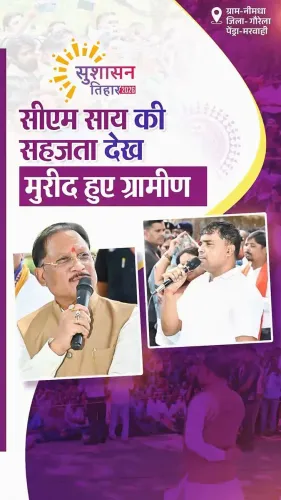
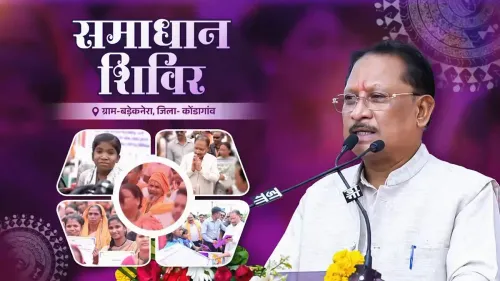
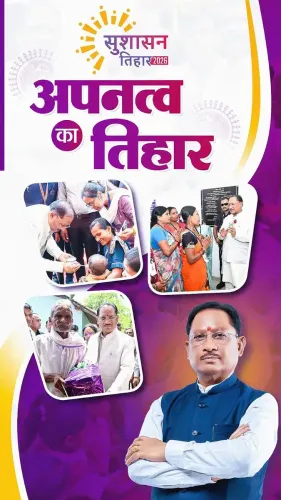
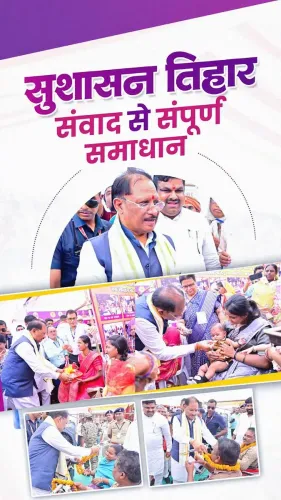
The Chhattisgarh Chief Minister's Office has taken Sushasan Tihar 2026 to Gram Kushha in Koriya district, continuing the state's annual village-level programme of service delivery, grievance redressal and direct administrative dialogue with rural and tribal communities.
Key Takeaways
The Chhattisgarh CMO confirmed Sushasan Tihar 2026 reached Gram Kushha, Koriya district on 22 May 2026 .
The programme's stated goal is 'village by village expansion of trust' through service and dialogue.
Koriya is a northern Chhattisgarh district with a significant tribal population and forest cover.
Sushasan Tihar has been conducted annually since at least 2022 , emphasising physical official presence over digital-only delivery.
The initiative targets rural households and tribal communities in remote Scheduled Areas.
The 2026 rollout is ongoing across multiple districts, with further phases expected.
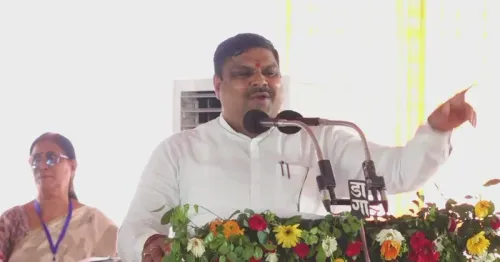
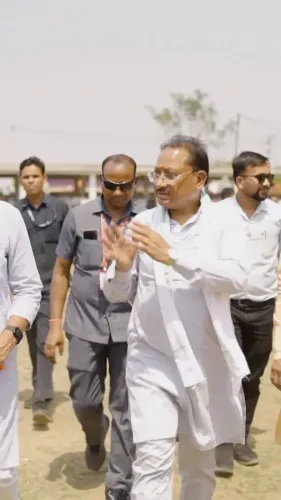
The Chief Minister's Office of Chhattisgarh announced on Friday, 22 May 2026 that the state government's annual grassroots governance outreach, Sushasan Tihar 2026, has reached Gram Kushha in Koriya district — carrying its message of service delivery and dialogue directly to rural doorsteps.
Context
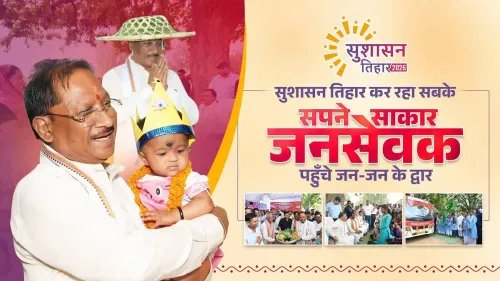
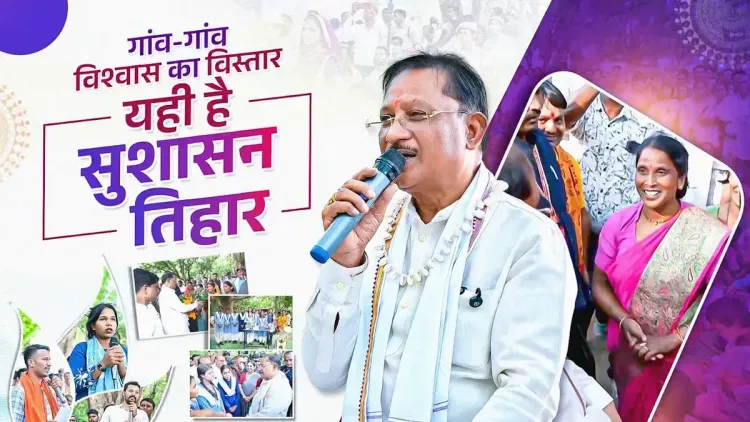
The official post declared: 'Gaon gaon vishwas ka vistaar, seva aur samvaad ka mahaparv hai Sushasan Tihar' — 'Village by village, the expansion of trust; Sushasan Tihar is a grand festival of service and dialogue.' The phrase captures the programme's dual emphasis: building administrative credibility in remote areas while creating a structured platform for citizens to voice grievances and access government schemes on the spot.
Koriya district, located in northern Chhattisgarh, has a significant tribal population and is characterised by dense forest cover and coal-mining activity. The selection of Gram Kushha as a venue underlines the programme's focus on reaching communities that are often distant from urban administrative centres.
Policy Backdrop
Chhattisgarh has conducted successive editions of Sushasan Tihar since at least 2022, institutionalising a model of governance that prioritises the physical presence of officials in villages over purely digital or centralised service delivery. The programme is designed to compress the distance between the state apparatus and citizens — particularly in Scheduled Areas — by enabling on-spot resolution of applications, welfare disbursements and public dialogue.
Several Indian states have experimented with periodic village-level camps and governance festivals, but Chhattisgarh's version stands out for its festival framing, which is intended to generate community participation rather than a routine bureaucratic visit. The 2026 edition continues this model, with Koriya being one of the districts in the current rollout phase.
Stakeholders and Impact
The primary beneficiaries are rural households and tribal communities in districts like Koriya, where access to government services can be constrained by geography and infrastructure. For these communities, Sushasan Tihar events serve as a convergence point where multiple departments are represented simultaneously, reducing the need for multiple trips to block or district headquarters.
Local gram panchayats and village-level functionaries also play a key role, as the programme relies on their mobilisation capacity to ensure turnout and the submission of pending applications. The trust-building dimension of the initiative is particularly relevant in forested and tribal belts, where historical administrative gaps have sometimes deepened citizen-state distance.
What's Next
The Sushasan Tihar 2026 rollout is continuing across districts, with Koriya representing one stop in a broader statewide circuit. Observers will watch for any new welfare or infrastructure announcements made during village-level events, as such programmes have historically served as platforms for scheme launches and beneficiary identification. The pace and geographic spread of the remaining phases will indicate the scale of the 2026 edition relative to previous years.
Point of View
In-person governance events rather than digital portals alone. By framing the outreach as a 'festival', the Chhattisgarh government seeks to shift the psychological register of citizen-state interaction from obligation to participation. The choice of Koriya — a district with coal, forests and tribal demographics — signals that the 2026 edition is prioritising areas where welfare gaps and trust deficits are most acute. Sustained delivery across such districts will determine whether the programme deepens its institutional footprint or remains primarily a symbolic exercise.
NationPress
20 Sept 2026
Frequently Asked Questions
What is Sushasan Tihar in Chhattisgarh?
Sushasan Tihar is an annual grassroots governance outreach programme run by the Chhattisgarh government that brings officials directly to villages for on-spot service delivery, grievance redressal and public dialogue, with a particular focus on remote tribal and rural areas.
Where was Sushasan Tihar 2026 held on 22 May?
On 22 May 2026 , Sushasan Tihar 2026 was held at Gram Kushha in Koriya district of northern Chhattisgarh.
Who organises Sushasan Tihar?
Sushasan Tihar is organised by the Chhattisgarh state government , with the Chief Minister's Office serving as a key communication channel for the programme.
How long has Sushasan Tihar been running?
Chhattisgarh has conducted Sushasan Tihar since at least 2022 , making the 2026 edition one of several successive annual iterations of the programme.
Which communities benefit from Sushasan Tihar?
The programme primarily benefits rural households and tribal communities , especially those in Scheduled Areas and forested districts where access to government services and administrative offices is limited by geography.