Swamy Questions Direction of Indian Economy in New Discussion
Synopsis
Veteran economist-politician Dr. Subramanian Swamy publicly questioned the direction of the Indian economy on 14 June 2026, sharing a video discussion with economist Dr. M.R. Venkatesh. The intervention reignites debate on whether India's headline growth translates into broad-based prosperity ahead of key Budget and RBI policy decisions.
Key Takeaways
Subramanian Swamy posted a discussion with economist Dr.
Venkatesh on 14 June 2026 questioning the direction of the Indian economy .
India is the world's fifth-largest economy , underpinned by reforms stretching from the 1991 liberalisation to the 2020 Atmanirbhar Bharat package.
Structural concerns — job creation, rural demand and external-sector resilience — persist alongside strong headline GDP growth figures.
Indian households , the MSME sector and foreign investors are the key stakeholders affected by the economy's policy trajectory.
The next Union Budget and RBI monetary-policy statement are the immediate forums where directional clarity is expected.
Swamy's historical commentary has emphasised monetary sovereignty, trade-balance discipline and institutional accountability.
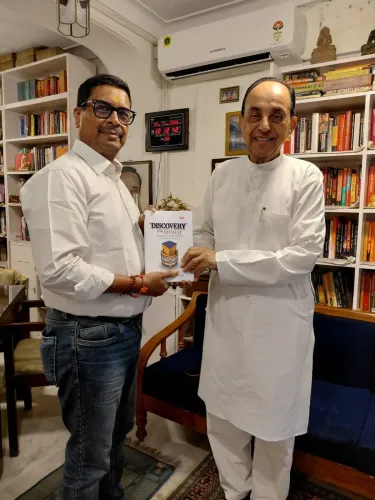
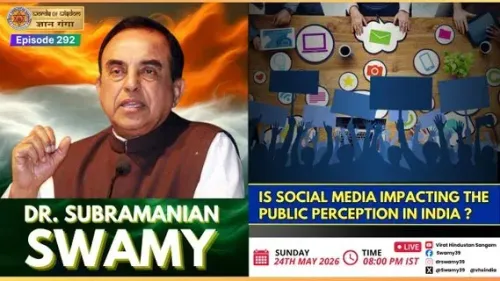
Veteran politician and economist Dr. Subramanian Swamy raised pointed questions about the trajectory of the Indian economy on Sunday, 14 June 2026, sharing a discussion with economist Dr. M.R. Venkatesh on his official X account under the heading 'In Which Direction Is The Indian Economy Heading?'
Context
Dr. Swamy, a former Union Minister and Rajya Sabha MP with a doctorate in economics from Harvard University, has long positioned himself as an independent voice on macroeconomic policy. His question — framed in stark capitals — signals a deliberate challenge to the current economic consensus rather than a routine commentary. Dr. M.R. Venkatesh is a well-regarded economist and public commentator who regularly dissects fiscal, monetary and trade dynamics in Indian policy circles.
The post links to a video discussion between the two, the specific contents of which have not been independently verified. However, the framing of the central question — directional uncertainty about the economy — places the conversation squarely within a long-running national debate about whether India's headline growth numbers translate into broad-based prosperity.
Policy Backdrop
India is today the world's fifth-largest economy, a position built on the foundations of the landmark 1991 liberalisation under Prime Minister P.V. Narasimha Rao, which dismantled industrial licensing and opened the door to foreign direct investment. Subsequent structural interventions — the 2016 demonetisation, the 2017 Goods and Services Tax rollout, and the 2020 Atmanirbhar Bharat package with its production-linked incentive schemes — have each sought to deepen formalisation and boost domestic manufacturing.
Yet recurring structural concerns persist: sluggish job creation, compressed rural demand, and questions about the resilience of the external sector. Dr. Swamy's past interventions have consistently emphasised monetary sovereignty, trade-balance discipline and institutional accountability as lenses through which aggregate growth data must be re-examined.
Stakeholders and Impact
Indian households, the vast MSME sector and foreign investors are the primary constituencies affected by whichever direction economic policy takes. For households, the concerns centre on real wage growth and the cost of living; for MSMEs, credit access and demand conditions remain perennial pain points; and for foreign investors, policy predictability and regulatory clarity determine capital-allocation decisions.
When figures of Dr. Swamy's stature publicly question the economy's direction, it amplifies pressure on policymakers to provide clearer communication on fiscal consolidation, interest-rate management and employment outcomes. Such interventions also shape the terms of the broader public debate ahead of key policy events.
What's Next
The immediate policy calendar offers two critical checkpoints: the next Union Budget and the Reserve Bank of India's forthcoming monetary-policy committee statement. Both will be scrutinised for any course corrections in fiscal stance or interest-rate trajectory. Dr. Swamy's public framing of directional uncertainty is likely to feed into pre-Budget discourse and could invite responses from government economists and opposition leaders alike. Whether the discussion with Dr. Venkatesh crystallises into specific policy prescriptions remains to be seen, but the intervention ensures the question of economic direction stays prominently in public view.
Point of View
He signals that headline growth metrics alone are insufficient measures of success. This fits a broader pattern of independent economists challenging the official growth narrative ahead of electoral and budgetary cycles. The choice to engage Dr. M.R. Venkatesh, a credible technocratic voice, lends the critique cross-ideological weight that purely partisan commentary would lack. The timing, ahead of a Union Budget and RBI policy review, ensures the question lands where it can do the most political and intellectual work.
NationPress
14 Sept 2026
Frequently Asked Questions
What did Subramanian Swamy say about the Indian economy?
Dr. Subramanian Swamy shared a discussion with economist Dr. M.R. Venkatesh on 14 June 2026 publicly asking 'In Which Direction Is The Indian Economy Heading?', raising questions about whether India's growth trajectory is on the right course.
Who is Dr. M.R. Venkatesh?
Dr. M.R. Venkatesh is an Indian economist and public commentator known for analysing fiscal, monetary and trade policy issues in national discourse.
What are the main concerns about the Indian economy right now?
Key structural concerns include sluggish job creation, compressed rural demand and external-sector resilience, even as India maintains its position as the world's fifth-largest economy with strong headline GDP growth.
What is Atmanirbhar Bharat and how does it relate to this debate?
Atmanirbhar Bharat is a 2020 government package combining production-linked incentives with domestic manufacturing targets, aimed at formalising the economy — its outcomes are among the policy measures being scrutinised in debates about economic direction.
What policy events will shape India's economic direction next?
The next Union Budget and the Reserve Bank of India's monetary-policy committee statement are the most immediate forums where India's fiscal stance and interest-rate trajectory will be clarified.