Swamy Writes to Amit Shah, Demands Starlink Security Review
Synopsis
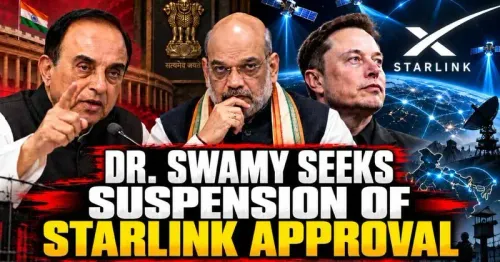
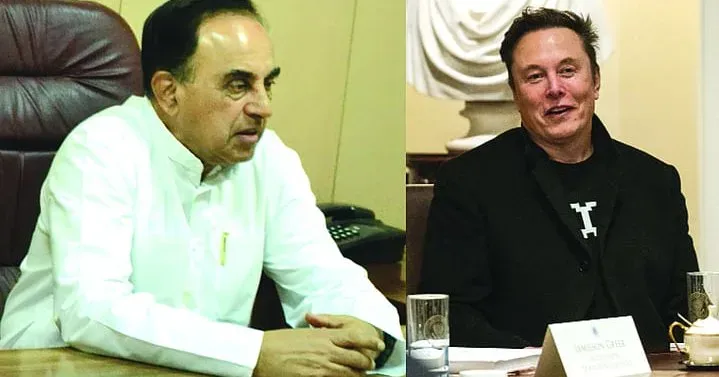
Dr. Subramanian Swamy has written to Home Minister Amit Shah demanding a security review and suspension of Starlink's India operating licence, framing the satellite internet service as a potential national-security risk and pressing the Home Ministry to act before commercial rollout proceeds.
Key Takeaways
Subramanian Swamy wrote to Home Minister Amit Shah on 23 October 2026 seeking a security review and licence suspension of Starlink in India.
The letter is routed through the Home Ministry rather than the telecom regulator, invoking the ministry's parallel security-clearance role in licensing decisions.
Swamy frames Starlink's satellite broadband service as a national-security risk, not merely a commercial licensing matter.
India has a precedent of applying security and data-sovereignty filters to foreign technology entrants, most prominently the 2020 Chinese app restrictions.
Satellite internet networks complicate conventional lawful-access frameworks because they bypass India's terrestrial network infrastructure entirely.
Progress on India's satellite-spectrum allocation rules and any formal response from the Ministry of Home Affairs or Department of Telecommunications will be the next indicators to watch.
A pointed national-security alarm has landed on the desk of India's most powerful interior official. Veteran politician Dr. Subramanian Swamy has written to Union Home Minister Amit Shah on Friday, 23 October 2026, demanding a formal security review of satellite internet firm Starlink and calling for the suspension of its operating licence in India.
What Swamy Is Asking For
Dr. Swamy's letter, which he flagged publicly on X, urges the Home Ministry to treat Starlink's entry into the Indian market as a national-security question — not merely a telecom licensing formality. He is specifically seeking two things: a comprehensive security review of Starlink's operations and data infrastructure, and a suspension of its licence pending that review. The intervention puts the spotlight squarely on SpaceX's satellite broadband service at a moment when India's satellite-spectrum allocation rules remain a live and contested policy space.
India's Long History of Scrutinising Foreign Tech at the Gate
This is not the first time New Delhi has applied a security and data-sovereignty lens to a foreign technology platform seeking to operate at scale inside India. The 2020 restrictions on dozens of Chinese applications established the template: connectivity benefits are real, but so are surveillance and control risks, and the government has consistently chosen to weigh both before granting unrestricted access. Satellite internet services present a particularly complex version of that equation — they bypass terrestrial network choke-points entirely, making conventional interception and lawful-access frameworks harder to enforce.
Telecom operators with significant ground infrastructure have also raised competitive and regulatory-parity concerns about satellite entrants, adding a commercial dimension to what is publicly framed as a security debate. The Department of Telecommunications and the Ministry of Home Affairs are the two nodal agencies whose sign-off matters most in this corridor.
Why the Letter Goes to Shah, Not the Telecom Ministry
Dr. Swamy's decision to route his demand through the Home Ministry rather than the Department of Telecommunications is deliberate and telling. Security clearance for sensitive telecom infrastructure requires Home Ministry concurrence — a licence from the telecom regulator alone does not override an intelligence or security objection. By writing to Amit Shah directly, Dr. Swamy is invoking that parallel channel and asking it to activate before, not after, commercial operations begin.
Whether the ministry formally responds, quietly asks agencies to expedite a review, or lets the letter rest on file will signal how seriously the current security apparatus rates the Starlink question — and that signal will be watched closely by every other foreign satellite-broadband firm eyeing the Indian market.
Point of View
Especially in a climate where India's satellite-spectrum policy is still being written. Routing the demand through the Home Ministry rather than the telecom regulator signals that Swamy sees this as a sovereignty issue, not a licensing technicality. If the Home Ministry responds substantively, it sets a precedent that satellite broadband firms — not just Chinese app developers — must clear a security bar before scaling in India. The broader arc here is India's ongoing effort to reconcile its appetite for frontier connectivity infrastructure with its insistence on lawful-access and data-localisation controls.
NationPress
23 Oct 2026
Frequently Asked Questions
Why has Subramanian Swamy written to Amit Shah about Starlink?
Dr. Swamy wrote to Home Minister Amit Shah demanding a national-security review of Starlink's operations in India and calling for the suspension of its operating licence until that review is complete.
What is Starlink and why is it controversial in India?
Starlink is a satellite internet service operated by SpaceX. In India, concerns centre on data sovereignty and the difficulty of applying conventional lawful-access frameworks to satellite networks that bypass terrestrial infrastructure.
Can the Home Ministry suspend a Starlink licence in India?
The Home Ministry holds a key security-clearance role in India's telecom licensing process. A security objection from the ministry can stall or block a licence even if other regulatory conditions are met.
Has India previously restricted foreign tech platforms on security grounds?
Yes. India banned dozens of Chinese applications in 2020 on national-security grounds and has consistently required foreign telecom and tech platforms to comply with local data and infrastructure mandates before operating at scale.
What happens next after Swamy's letter to Amit Shah on Starlink?
The key things to watch are any formal response from the Ministry of Home Affairs, movement on India's satellite-spectrum allocation rules, and whether the Department of Telecommunications signals a pause in Starlink's licensing process.