Swamy Calls on Modi to Retire Over G7 Status, China Border

Synopsis
Senior BJP figure Dr. Subramanian Swamy on 16 June 2026 publicly called on PM Narendra Modi to retire, citing India's guest-observer status at the G7 as a national insult and alleging that Modi ceded undisputed territory to China without resistance.
Key Takeaways
Subramanian Swamy , former Union Minister and BJP Rajya Sabha MP, publicly demanded PM Narendra Modi 's retirement on 16 June 2026 .
Swamy described India attending the G7 summit as an 'Observer' — not a full member — as 'an insult to Bharat Mata.' He alleged that Modi has given away 'undisputed land' to China , using the phrase koyi aya nahin to suggest the concession was made without resistance.
India has attended multiple G7 summits as a guest nation and holds no permanent membership in the group of seven advanced economies.
The June 2020 Galwan clash in eastern Ladakh triggered a prolonged LAC standoff; the government maintains no territory was ceded.
The statement is notable as it originates from within the broader BJP ideological orbit rather than from the formal opposition.
Veteran politician Dr. Subramanian Swamy, former Union Minister and BJP Rajya Sabha MP, on Tuesday, 16 June 2026, called on Prime Minister Narendra Modi to retire, citing what he described as the humiliation of India at the G7 summit and alleged territorial concessions to China. Swamy posted the sharp critique on X, accusing the Modi government of failing to protect national dignity and sovereign territory.
Context
In his post, Swamy wrote that it is 'time for us patriotic Indians to ask Modi to retire,' pointing to India's attendance at the G7 summit as a guest observer rather than a permanent member. He called this status 'an insult to Bharat Mata,' arguing that attending as an 'Observer' while not being a full member amounted to a public humiliation of India in the presence of both the United States and China. Swamy also alleged, using the colloquial Hindi phrase koyi aya nahin ('as if no one came'), that Modi has effectively ceded 'undisputed land' to China without resistance.
The post blends English and Hindi in a rhetorical register common to Swamy's public interventions. The core charges are twofold: diplomatic inadequacy at multilateral forums and weakness on the Line of Actual Control (LAC) with China.
Policy Backdrop
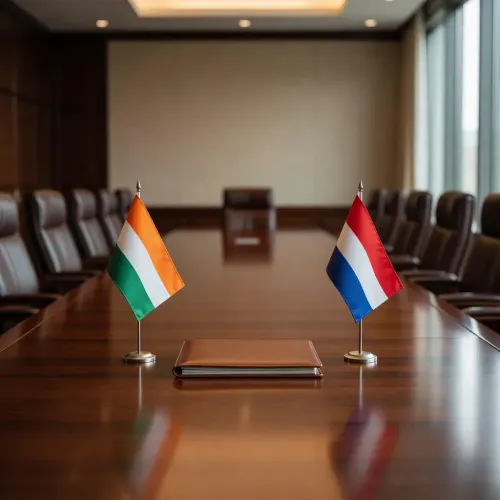
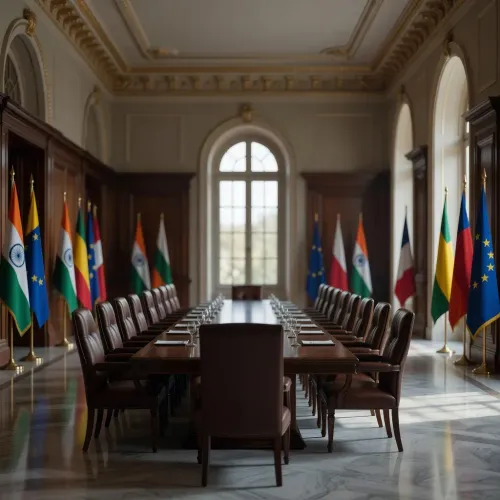
India has participated in multiple G7 summits as an invitee nation, including the 2023 summit in Hiroshima, Japan, but holds no permanent seat at the table. Full membership in the G7 is restricted to seven advanced economies — the United States, United Kingdom, France, Germany, Italy, Canada, and Japan — along with the European Union. India's recurring guest status has been a point of debate among strategic analysts who argue it reflects both India's growing global weight and the limits of its formal integration into Western-led economic governance.
On the border front, the June 2020 Galwan Valley clash in eastern Ladakh resulted in casualties on both sides and triggered a prolonged military standoff along the LAC. Subsequent disengagement agreements were reached in several friction points, though differing claims over remaining areas have continued. The Modi government has maintained that no Indian territory was ceded, a position contested by opposition voices and now, more pointedly, by a senior figure within the BJP's own orbit.
Stakeholders and Impact
Swamy's intervention carries particular weight because it comes from within the broader BJP ideological family rather than from the opposition. His critique speaks directly to nationalist voters and BJP rank-and-file members for whom territorial integrity and international prestige are core concerns. A serving or former party figure demanding the Prime Minister's retirement is an unusual and politically significant act.
The statement is likely to reverberate in parliamentary circles ahead of the monsoon session, where opposition parties have repeatedly sought to raise questions on border management and India's posture toward China. It also adds to a pattern of periodic dissent from senior BJP-aligned voices on perceived softness toward Beijing.
What's Next
Attention will now turn to whether Swamy's remarks draw a formal response from the BJP leadership or the government, and whether they catalyse broader intra-party debate. India's guest status at future G7 summits and any formal parliamentary discussion on LAC management during the upcoming monsoon session will be the immediate arenas to watch. The government has not responded to the post as of the time of publication.
If Swamy's call finds resonance beyond social media — in parliamentary debates or party forums — it could sharpen the domestic political cost of India's current diplomatic and border postures, regardless of the government's stated position on both fronts.
Point of View
Suggesting that the political cost of India's China posture is no longer confined to the opposition. By yoking the G7 observer-status debate to the LAC territorial dispute, Swamy frames two distinct policy questions — multilateral standing and border management — as a single narrative of national diminishment. This framing is strategically potent: it is harder for the government to rebut on patriotic grounds when the critic is himself a long-standing nationalist voice. Whether this remains an isolated social-media salvo or seeds a wider intra-party reckoning will depend on how the BJP leadership responds, and on what the upcoming monsoon parliamentary session surfaces on the border file.
NationPress
23 Sept 2026
Frequently Asked Questions
Why is Subramanian Swamy asking Modi to retire?
Swamy cited two reasons: India's attendance at the G7 summit as a guest observer rather than a full member, which he called an insult to national dignity, and his allegation that the Modi government has ceded undisputed land to China without resistance.
Is India a member of the G7?
No. India is not a permanent member of the G7, which comprises the United States, United Kingdom, France, Germany, Italy, Canada, and Japan, plus the European Union. India has attended several G7 summits as an invited guest nation.
What did Swamy mean by 'koyi aya nahin' in his post?
The Hindi phrase 'koyi aya nahin' roughly translates to 'as if no one came' or 'as though nobody showed up.' Swamy used it to allege that the Modi government handed over territory to China without putting up any resistance or making it a public issue.
What is the India-China border dispute Swamy is referring to?
Swamy's remark references the long-running Line of Actual Control dispute, which escalated sharply after the June 2020 Galwan Valley clash in eastern Ladakh. The Indian government has maintained that no territory was ceded; Swamy and others contest this position.
Is Subramanian Swamy in the BJP?
Swamy is a veteran BJP politician who served as a Union Minister and was a Rajya Sabha MP. He has been a long-standing but often independent-minded voice within the broader BJP-aligned political space, frequently criticising government decisions publicly.