Swamy Urges Modi to Call Trump, Not Route US Protest Via MEA
Synopsis
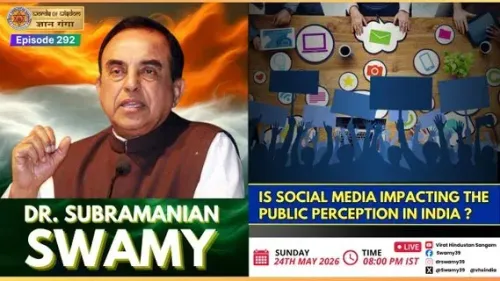
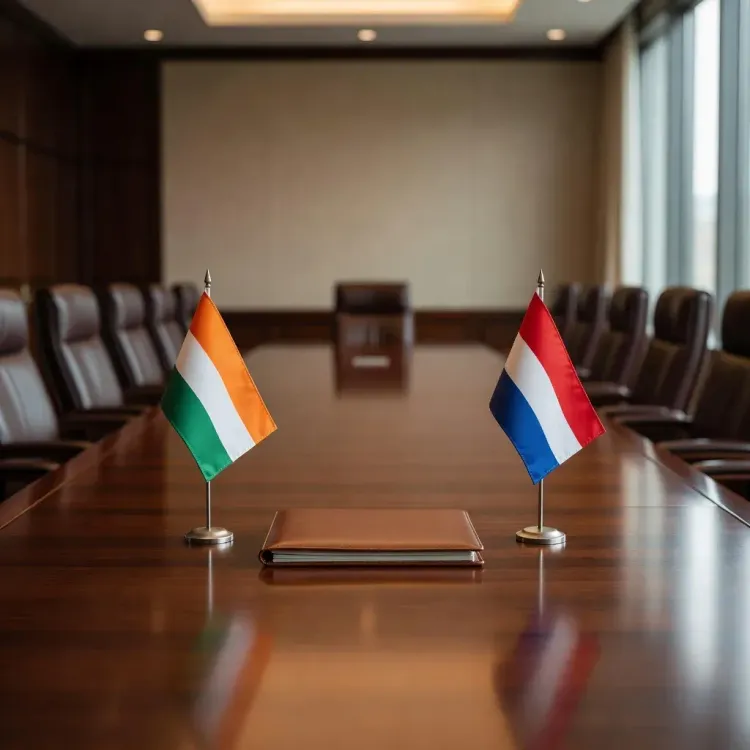
Veteran politician Dr. Subramanian Swamy on 13 June 2026 publicly challenged PM Modi to call the US President directly and make the conversation public, questioning why India's protest on an unspecified bilateral matter was being routed through the External Affairs Ministry and the US Embassy in New Delhi.
Key Takeaways
Subramanian Swamy posted on 13 June 2026 questioning why the Ministry of External Affairs was communicating with the US Embassy in New Delhi on a sensitive bilateral matter.
Swamy explicitly called on PM Modi to personally telephone the US President and make the contents of that call public.
The closing phrase 'I know why Modi won't' amounts to a pointed personal rebuke of the Prime Minister's assertiveness on the issue.
India-US diplomatic architecture combines routine embassy-level exchanges with high-level leader calls; Swamy argued the situation warranted the latter.
The specific incident triggering Swamy's post has not been publicly identified or verified.
No response from the Ministry of External Affairs or the PMO was available at the time of publication.
Veteran politician Dr. Subramanian Swamy, former Union Minister and Rajya Sabha MP, on Saturday, 13 June 2026, publicly challenged Prime Minister Narendra Modi to directly telephone the US President to register India's protest on an unspecified bilateral matter, rather than routing the communication through the Ministry of External Affairs and the US Embassy in New Delhi.
Context
Swamy posted on X questioning why India's diplomatic response to a sensitive matter with Washington was being handled at the level of the External Affairs Ministry speaking to the US Embassy. 'Why is our External Affairs Ministry speaking to US Embassy in New Delhi?' he wrote, adding that Modi, 'if he has a backbone, should instead call up US President and protest, and circulate what he told him.' The closing line — 'However, I know why Modi won't' — carries an implicit rebuke without specifying the underlying grievance.
Swamy did not name the specific incident or issue that prompted his call for a direct leader-level protest. The research record does not identify a verifiable triggering event linked to this post's timestamp, and NationPress makes no assertion about what that incident may be.
Policy Backdrop
India and the United States maintain layered diplomatic architecture: routine day-to-day issues are handled through embassy and ministry channels, while strategic matters are typically escalated to the 2+2 Ministerial dialogue or direct leader-level calls. Modi has conducted multiple direct telephone conversations with successive US Presidents on trade, defence, and regional security, a pattern that has defined his foreign-policy style since 2014.
Swamy's argument is that the gravity of the matter — whatever it may be — warrants the highest channel available: a direct call between Modi and the US President, with the content of that call made public. This demand for transparency in leader-to-leader diplomacy is consistent with positions Swamy has articulated on other foreign-policy questions in the past.
Stakeholders and Impact
The post places the Ministry of External Affairs at the centre of the debate, implicitly criticising its choice of channel as insufficiently assertive. The diplomatic corps on both sides — including officials at the US Embassy, New Delhi and the Indian Embassy, Washington DC — operates within standard protocol that reserves leader-level calls for moments of strategic weight.
Swamy's criticism, coming from within the broader BJP ecosystem, carries political weight precisely because it is directed at a prime minister from his own ideological space. Senior party figures publicly questioning foreign-policy execution is not without precedent, but such pointed personal challenges to Modi's resolve are relatively rare in the public record.
What's Next
No clarification from the Ministry of External Affairs on its communication channels with Washington was available at the time of publication. The next formal institutional touchpoint between the two countries is the scheduled India-US 2+2 Ministerial dialogue, though no confirmed date has been announced for the next round. Whether Modi chooses to make a direct call to the US President on this matter — and whether any such communication is made public — will be the clearest indicator of how seriously the government treats Swamy's challenge.
Point of View
He shifts the debate from process to character. The demand that any leader-to-leader call be 'circulated' publicly is equally significant — it pushes against the confidentiality norms that ordinarily govern summit diplomacy. Coming from a figure with long institutional memory of India-US relations, the challenge will be hard for the government to dismiss as uninformed. The episode fits a broader pattern in which senior voices on the right flank of Indian politics use social media to set the terms of foreign-policy accountability debates before the official machinery can frame the narrative.
NationPress
15 Sept 2026
Frequently Asked Questions
Why did Subramanian Swamy criticise PM Modi over the US Embassy communication?
Swamy argued that routing India's protest through the External Affairs Ministry and the US Embassy was insufficiently assertive, and that Modi should instead call the US President directly and make the conversation public.
What is the normal diplomatic channel between India and the US?
India and the US use layered channels: routine matters go through the respective embassies and the Ministry of External Affairs, while strategic issues are handled at the 2+2 Ministerial level or through direct leader-to-leader calls between the Prime Minister and the US President.
Has PM Modi spoken directly with US Presidents before?
Yes. Modi has conducted multiple direct telephone conversations with US Presidents on trade, defence, and regional security issues, a practice that has been a hallmark of his foreign-policy approach since 2014.
What specific incident prompted Swamy's post?
Swamy did not name the specific issue in his post, and no verifiable triggering event linked to the 13 June 2026 timestamp has been publicly identified.
What did Swamy mean by 'I know why Modi won't'?
The phrase is an implied personal rebuke suggesting Modi lacks the political will or resolve to make a direct call, though Swamy did not elaborate on his reasoning in the post.