India rejects Pakistan's Karachi attack allegations, demands terror action
Synopsis
India's MEA has flatly rejected Pakistan's claim that Indian-backed militants carried out the deadly Karachi Rangers camp attack, calling it a pattern of deflection by a country with 'zero credibility' on cross-border terrorism. With three Rangers personnel killed and regional tensions already spiking over the Pakistan-Afghanistan border conflict, the exchange marks another sharp deterioration in India-Pakistan relations.
Key Takeaways
India on 28 June rejected Pakistan's allegations linking it to the Karachi Rangers camp attack as “baseless.” The attack on 27 June in Gulistan-i-Jauhar, Karachi killed at least three Sindh Rangers personnel and three terrorists .
Pakistan's ISPR alleged the attack was carried out by Jamaatul Ahrar , which it described as an Indian-backed group — a charge India denied.
MEA spokesperson Randhir Jaiswal called Pakistan a “state sponsor of terrorism for decades” with “zero credibility” on cross-border terrorism.
The incident follows a similar exchange in March , when India rejected Pakistani allegations over the Pakistan-Afghanistan Durand Line conflict.
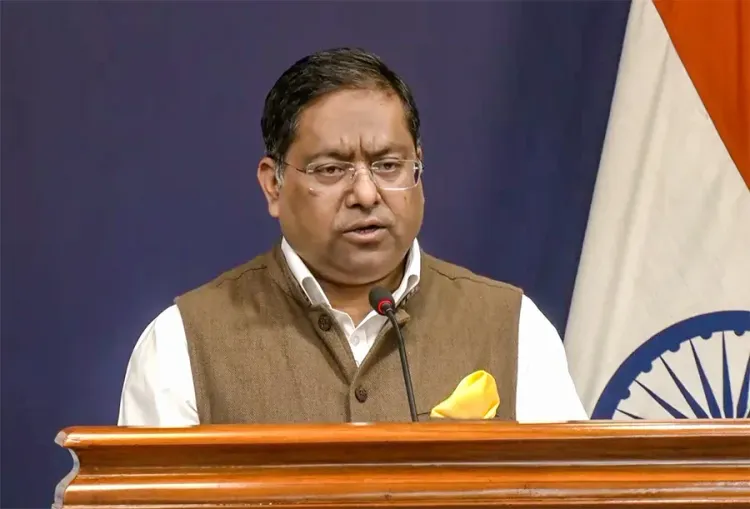
India on Sunday, 28 June categorically rejected Pakistan's allegations linking New Delhi to a deadly attack on security forces in Karachi, calling the claims “baseless” and demanding that Islamabad dismantle the terror infrastructure operating on its own soil. The Ministry of External Affairs (MEA) issued the rebuttal in response to media queries following Pakistan's Inter-Services Public Relations (ISPR) claim that India-backed militants were responsible for the assault.
The Karachi Attack: What Happened
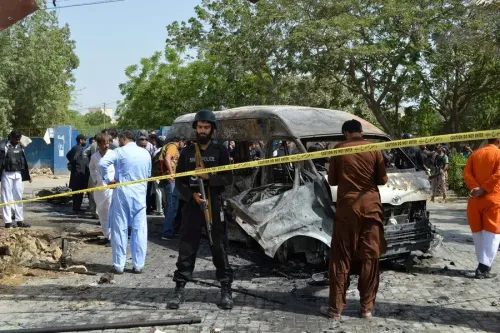
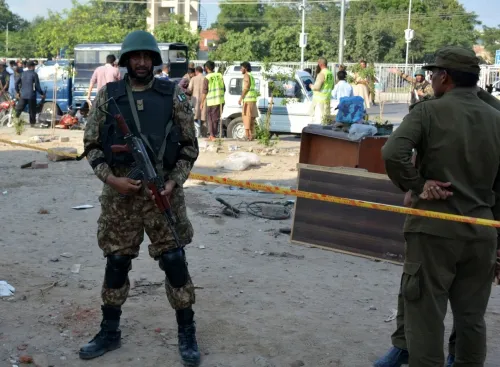
On Saturday, 27 June, terrorists attacked a Pakistan Rangers (Sindh) camp in the Gulistan-i-Jauhar neighbourhood of Karachi, killing at least three Sindh Rangers personnel. The attackers reportedly rammed the facility's main gate with a vehicle. Three terrorists were also killed during the operation, according to Inspector General of Sindh, Javed Alam Odho. Intense firing was also reported near Meteorological Chowrangi on University Road. Odho noted that whether a blast had occurred remained unconfirmed at the time of his statement.
What India's MEA Said
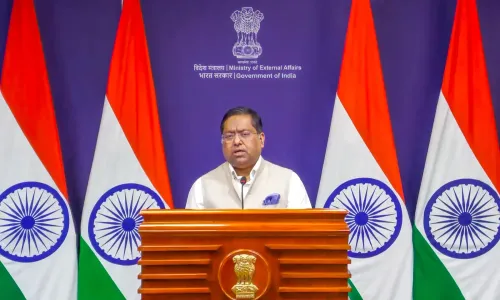
MEA spokesperson Randhir Jaiswal said in a statement: “We have seen Pakistani reports making baseless allegations against India regarding the recent incident in Karachi. We categorically reject them. Instead of pointing fingers at others, Pakistan would do better to look inwards, take credible action against the terror infrastructure on its territory and rid itself of its proclivity to rely on terrorism as an instrument of state policy.”
Pakistan's ISPR had alleged that the attack was carried out by terrorists belonging to the Indian-backed group Jamaatul Ahrar — a claim India has flatly denied.
A Familiar Pattern of Allegations
This is not the first time India has had to rebut such charges. In March, the MEA slammed Pakistan after Islamabad alleged Indian involvement in the ongoing conflict between Pakistan and Afghanistan along the Durand Line. At that time, Jaiswal stated that it had “become second nature for Pakistan to blame India for its misdeeds.”
He added: “As a state sponsor of terrorism for decades, Pakistan has zero credibility when it comes to cross-border terrorism. No amount of storytelling is going to alter this reality, nor is anyone fooled by Pakistan’s assumed victimhood.”
Regional Context: Pakistan-Afghanistan Hostilities
The latest allegations emerge against a volatile regional backdrop. Afghan forces launched retaliatory operations against Pakistani military installations on 27 February, following Pakistan's targeting of areas in Afghan territory on 21 February. Pakistan subsequently launched ‘Operation Ghazab lil-Haq’ (Righteous Fury) in response to what it described as “unprovoked firing” by Afghan forces across multiple border sectors. Critics argue that Pakistan's pattern of attributing domestic security failures to external actors — India in particular — intensifies whenever its own internal security situation deteriorates.
What This Means Going Forward
India's firm and public rebuttal signals that New Delhi will not allow such allegations to go unanswered, particularly as Pakistan faces mounting pressure over its handling of militant groups. Diplomatic ties between the two nations remain severely strained, and the latest exchange is unlikely to ease tensions in the near term.
Point of View
But it is becoming harder to sustain internationally. The Karachi attack exposes a deeper problem: Pakistan's internal militant landscape — including groups like Jamaatul Ahrar — is a product of decades of state policy, not Indian interference. India's response, while firm, also sidesteps the question of why such groups retain operational capacity inside Pakistan's largest city. The real accountability deficit here is Islamabad's, but New Delhi's repeated denials, however justified, do little to advance a credible bilateral framework for addressing cross-border terrorism. With the Pakistan-Afghanistan front already hot, the risk of miscalculation is higher than the diplomatic temperature suggests.
NationPress
28 Jun 2026
Frequently Asked Questions
What was the Karachi Rangers camp attack on 27 June?
Terrorists attacked a Pakistan Rangers (Sindh) facility in Gulistan-i-Jauhar, Karachi on 27 June, killing at least three Sindh Rangers personnel. The attackers reportedly rammed the main gate with a vehicle, and three terrorists were also killed in the operation.
Why did India reject Pakistan's allegations over the Karachi attack?
India's MEA called Pakistan's allegations 'baseless,' stating that Pakistan has a pattern of blaming India for its own internal security failures. The MEA described Pakistan as a 'state sponsor of terrorism for decades' with 'zero credibility' on cross-border terrorism matters.
What did Pakistan's ISPR claim about the Karachi attack?
Pakistan's Inter-Services Public Relations (ISPR) alleged that the attack was carried out by terrorists belonging to Jamaatul Ahrar, which it described as an Indian-backed militant group. India has categorically denied any connection to the group or the attack.
How does this fit into the broader India-Pakistan tensions?
This is part of a recurring pattern: India rejected similar Pakistani allegations in March 2025 over the Pakistan-Afghanistan Durand Line conflict. Diplomatic ties between the two countries remain severely strained, and this latest exchange is unlikely to ease tensions.
What is Jamaatul Ahrar?
Jamaatul Ahrar is a militant group that Pakistan's ISPR alleged carried out the Karachi Rangers camp attack, claiming it is backed by India. India has rejected this characterisation, and the group has historically been associated with militant activity in the Pakistan-Afghanistan border region.