Philippines accuses China of 'insincerity, hypocrisy' over South China Sea ruling

Synopsis
Philippines Defence Secretary Gilberto Teodoro Jr. has called out Beijing’s response to Manila’s demand for compliance with the 2016 arbitral ruling as ‘an arrogant display of deceptive indignation.’ With Teodoro reportedly barred from China and the US visibly reinforcing its alliance with Manila, the South China Sea standoff is entering a sharper diplomatic phase.
Key Takeaways
Philippines Defence Secretary Gilberto Teodoro Jr. accused China of ‘insincerity and hypocrisy’ over the South China Sea dispute.
Beijing rejected Manila’s call to comply with the 2016 Permanent Court of Arbitration ruling, which China has consistently refused to recognise.
Teodoro has reportedly been barred from entering China since 11 June .
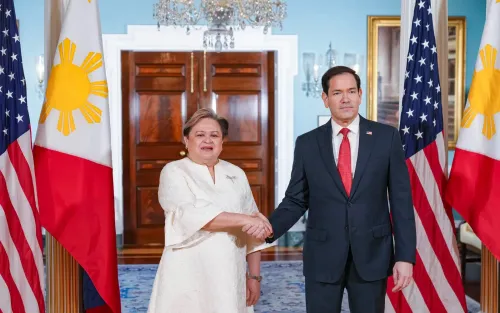
US Secretary of State Marco Rubio reaffirmed Washington’s alliance with Manila , marking 80 years of diplomatic ties and 75 years as treaty allies.
The South China Sea dispute involves overlapping claims from China , the Philippines , Vietnam , Malaysia , Brunei , and Taiwan .
Philippines Defence Secretary Gilberto Teodoro Jr. has accused China of “insincerity and hypocrisy” after Beijing rejected Manila’s renewed demand that it comply with the landmark 2016 ruling by the Permanent Court of Arbitration on the South China Sea. The sharp rebuke marks a fresh escalation in one of Asia’s most enduring territorial disputes.
What Teodoro Said
Responding to the Chinese Embassy’s dismissal of the Philippine government’s official statement, Teodoro said the embassy’s response was “a window into the true intentions of the Chinese Communist Party in its relations with our country.” He went further, describing Beijing’s reaction as “an arrogant display of deceptive indignation,” and adding that “what they say is no longer credible, that’s why they are resorting to agitation.”
Teodoro, who has reportedly been barred from entering China since 11 June, also reaffirmed Manila’s resolve: “We will not be oppressed,” he said, signalling that the Philippines would continue defending its sovereignty against what it describes as repeated Chinese incursions in the disputed waters.
Background: The 2016 Arbitral Award
In July 2016, the Permanent Court of Arbitration in The Hague ruled comprehensively in favour of the Philippines, concluding that China had no legal basis to claim historic rights over maritime areas encompassed by its so-called “nine-dash line” — a sweeping boundary first published in 1947. The tribunal’s decision was declared “final and binding” by Manila. Beijing has consistently rejected the ruling and refuses to recognise the court’s jurisdiction.
The nine-dash line overlaps with the exclusive economic zones of several neighbouring nations, including the Philippines, Vietnam, Malaysia, Brunei, and Taiwan, making it a persistent source of regional friction.
US Reaffirms Alliance with Manila
The diplomatic flare-up comes as Washington has moved to reinforce its strategic partnership with Manila. Earlier this month, US Secretary of State Marco Rubio held talks with Philippines Secretary of Foreign Affairs Maria Theresa Lazaro, reaffirming the United States’ commitment to its alliance with the Philippines as the two countries marked 80 years of diplomatic relations and 75 years as treaty allies.
According to a readout from the US Department of State, Rubio and Lazaro discussed “a range of bilateral economic and security priorities,” including the Philippines’ role as Chair of the Association of Southeast Asian Nations (ASEAN) and ongoing efforts to advance peace and stability in the South China Sea.
Regional Stakes and What Comes Next
The South China Sea is one of the world’s most strategically significant waterways, bordered by China and multiple Southeast Asian nations. It is a critical corridor for global trade and sits atop substantial energy reserves, amplifying the geopolitical weight of every diplomatic exchange.
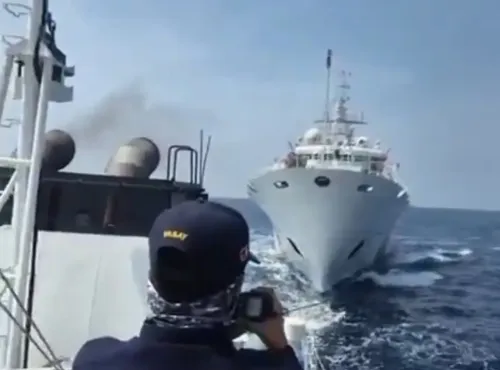
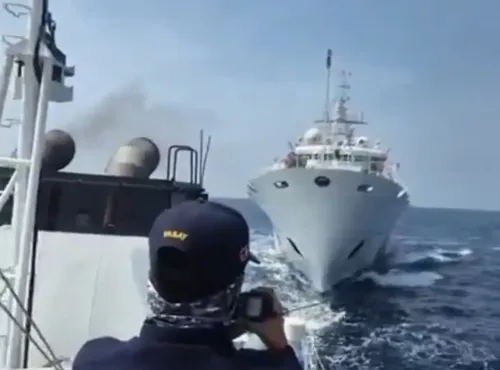
Notably, this latest confrontation follows a pattern of recurring friction between Beijing and Manila over resupply missions, coastguard encounters, and territorial markers in the disputed waters. With the Philippines holding the ASEAN chairmanship and the US-Philippines alliance visibly active, the diplomatic pressure on China to engage constructively is unlikely to ease in the near term.
Point of View
And Manila knows it. What’s notable here is the sharpening of the Philippine government’s language: calling Beijing’s response ‘deceptive indignation’ is a deliberate escalation in tone, not a slip. With the US alliance publicly refreshed and the Philippines holding the ASEAN chair, Manila is betting that multilateral visibility raises the cost of Chinese coercion. The risk is that Beijing reads assertiveness as provocation and tightens its posture in the disputed waters — a dynamic that has played out before and left smaller claimants caught in the middle.
NationPress
28 Jun 2026
Frequently Asked Questions
Why is the Philippines accusing China of insincerity over the South China Sea?
The Philippines accused China of insincerity after Beijing rejected Manila’s renewed demand that it comply with the 2016 Permanent Court of Arbitration ruling, which invalidated China’s nine-dash line claims. Defence Secretary Gilberto Teodoro Jr. described the Chinese Embassy’s response as ‘an arrogant display of deceptive indignation.’
What did the 2016 South China Sea arbitral ruling decide?
The Permanent Court of Arbitration in The Hague ruled in July 2016 that China had no legal basis to claim historic rights over maritime areas covered by its nine-dash line. The ruling was declared final and binding by the Philippines, but China has consistently rejected it and refuses to recognise the tribunal’s jurisdiction.
Why is Gilberto Teodoro reportedly barred from entering China?
According to reports, Philippines Defence Secretary Gilberto Teodoro Jr. has been barred from entering China since 11 June. The source material does not specify the official reason given by Beijing for the travel restriction.
How has the United States responded to the South China Sea tensions?
US Secretary of State Marco Rubio met Philippines Secretary of Foreign Affairs Maria Theresa Lazaro earlier this month and reaffirmed Washington’s commitment to its alliance with Manila. The two sides discussed bilateral security priorities, the Philippines’ ASEAN chairmanship, and efforts to advance stability in the South China Sea, as the two countries marked 80 years of diplomatic relations.
Which countries have overlapping claims in the South China Sea?
The South China Sea is claimed in whole or in part by China, the Philippines, Vietnam, Malaysia, Brunei, and Taiwan. China’s nine-dash line, first published in 1947, overlaps with the exclusive economic zones of all these neighbouring claimants, making it a persistent flashpoint for regional security.