Tamil Nadu targets 20,000 EV charging stations by 2031 in green mobility push
Synopsis
Tamil Nadu has locked in a target of 20,000 public EV charging stations by 2031 — one of the most ambitious state-level EV infrastructure commitments in India. With TNPDCL, ITDP India, and the Mentor Tamil Nadu initiative all at the table, the state is betting that a credible charging network can convert its existing EV manufacturing edge into mass consumer adoption.
Key Takeaways
Tamil Nadu has set a target of 20,000 public EV charging stations by 2031 .
A review meeting chaired by Chief Secretary Sai Kumar was held at the Secretariat on Tuesday, 15 July .
A follow-up technical meeting under the TNPDCL CMD included representatives from ITDP India and Mentor Tamil Nadu .
The initiative targets adoption of electric cars, two-wheelers, buses, and commercial vehicles while reducing fossil fuel dependence.
The government is actively seeking private sector participation through investment-friendly policies to share infrastructure costs.
Tamil Nadu aims to become one of India's leading electric mobility hubs by 2031.
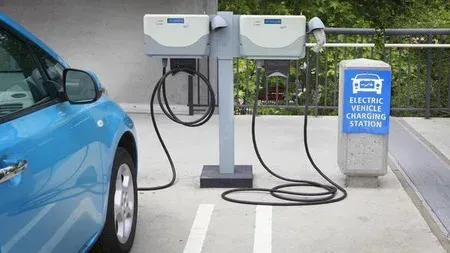
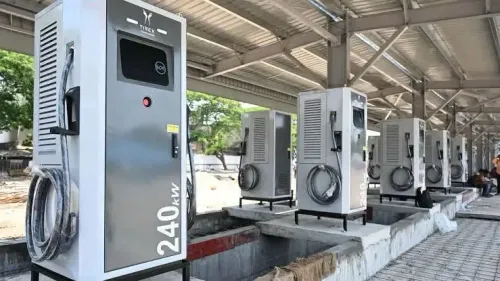
The Tamil Nadu government has set a target of establishing 20,000 public electric vehicle (EV) charging stations across the state by 2031, as part of a long-term strategy to advance clean mobility, build out charging infrastructure, and attract private investment into the rapidly expanding EV sector. The roadmap was finalised following a series of high-level meetings held in Chennai on 14 and 15 July.
Key Developments
A review meeting chaired by Chief Secretary Sai Kumar was convened at the Secretariat on Tuesday to assess the current state of EV charging facilities in Tamil Nadu and evaluate the pace of infrastructure rollout. Senior officials examined existing gaps and deliberated on strategies to ensure equitable access to charging points across both urban and rural areas.
On Wednesday, a high-level technical meeting was held under the chairmanship of the Chairman and Managing Director of the Tamil Nadu Power Distribution Corporation (TNPDCL). Representatives from ITDP India and the Mentor Tamil Nadu initiative participated, focusing on technical planning, policy support, and implementation frameworks for scaling the charging network.
What the Government Said
At the Wednesday session, the government reaffirmed its commitment to the 20,000 public charging stations target by 2031. Officials described an expanded charging ecosystem as a critical enabler for wider adoption of electric cars, two-wheelers, buses, and commercial vehicles, while reducing the state's dependence on fossil fuels.
Officials also noted that the initiative is designed to bring in greater private sector participation through supportive policies and investment-friendly measures, with the aim of accelerating infrastructure development without placing the full financial burden on the public exchequer.
Why It Matters
Tamil Nadu's push comes at a moment when EV adoption across India is accelerating but charging infrastructure remains a widely cited barrier to consumer confidence. A well-distributed charging network is widely seen as the single most important lever for unlocking mass EV uptake beyond early adopters.
This is also part of the state's broader clean energy and climate action agenda. Expanding EV infrastructure is expected to reduce vehicular emissions and improve urban air quality in cities like Chennai, which regularly contend with pollution from high vehicle density. Notably, Tamil Nadu already ranks among India's top states for EV manufacturing, making this infrastructure push a logical complement to its industrial positioning.
Impact on Citizens and Industry
For everyday commuters and fleet operators, the expansion of public charging stations is expected to reduce 'range anxiety' — the fear of running out of charge — which remains a leading deterrent to EV adoption. For private investors, the government's signalling of policy support and a clear 2031 timeline provides a planning horizon for deployment decisions.
Officials said coordinated efforts between government agencies, industry stakeholders, and technical partners would be essential to meeting the 2031 target and positioning Tamil Nadu as one of India's foremost electric mobility hubs.
What Comes Next
With technical planning discussions now concluded, the focus shifts to policy finalisation, site identification, and private sector onboarding. The pace at which the state converts these roadmap commitments into operational charging infrastructure will be the defining measure of whether the 20,000-station goal is achievable within the stated timeline.
Point of View
000 charging stations by 2031 is headline-worthy, but the harder question is density and distribution. India's existing public charging rollouts have skewed heavily toward metro corridors, leaving tier-2 cities and rural districts underserved — precisely where two-wheeler and three-wheeler EV adoption is growing fastest. Tamil Nadu's explicit mention of urban and rural access is the right framing, but without a published site-allocation plan or a binding private-sector concession framework, the 2031 number risks remaining aspirational. The state's manufacturing credentials are real; converting them into an infrastructure lead will require execution discipline that past state-level EV roadmaps have often lacked.
NationPress
13 Oct 2026
Frequently Asked Questions
What is Tamil Nadu's EV charging station target for 2031?
Tamil Nadu has set a target of establishing 20,000 public EV charging stations across the state by 2031. The goal was reaffirmed at high-level government meetings in Chennai on 14 and 15 July, covering both urban and rural areas.
Who chaired the EV infrastructure review meetings in Chennai?
Chief Secretary Sai Kumar chaired a review meeting at the Secretariat on Tuesday, 15 July. A separate technical meeting on Wednesday was chaired by the Chairman and Managing Director of the Tamil Nadu Power Distribution Corporation (TNPDCL), with participation from ITDP India and the Mentor Tamil Nadu initiative.
Why is Tamil Nadu expanding its EV charging network?
The expansion is aimed at reducing range anxiety among consumers, boosting EV adoption across vehicle categories, attracting private investment, and supporting the state's broader clean energy and climate action goals. Officials also cited the need to reduce vehicular emissions and improve urban air quality.
How will the private sector be involved in Tamil Nadu's EV charging rollout?
The government plans to encourage private sector participation through supportive policies and investment-friendly measures, with the intent of accelerating infrastructure deployment without placing the full financial burden on the public sector. Specific concession or incentive frameworks had not been publicly detailed as of the meetings on 15 July.
Which vehicles will benefit from the expanded charging infrastructure?
The expanded network is designed to support electric cars, two-wheelers, buses, and commercial vehicles, covering the full spectrum of EV categories that are expected to grow in Tamil Nadu over the next several years.