Tamil Nadu raises Pongal scheme weaving rates for dhotis and sarees
Synopsis
Tamil Nadu has quietly raised the floor price for tens of thousands of weavers supplying its Pongal giveaway — but the gap between what weavers demanded and what the government sanctioned tells a more complicated story. With ₹300 crore already advanced and orders placed for over three crore garments, the revision is less a victory for labour than a partial concession under pressure.
Key Takeaways
Tamil Nadu Chief Minister C.
Joseph Vijay 's government revised powerloom weaving rates for the Pongal free clothing scheme on 17 October 2026 .
Powerloom dhoti rates raised from 11 paise to 14 paise per pick ; saree rates from 12.5 paise to 13 paise per pick .
Handloom saree weaving charges increased from ₹231.80 to ₹260.39 ; dhoti rates from ₹96.13 to ₹107.76 .
Government plans to distribute free clothing to 2.25 crore ration cardholders, with ₹300 crore advanced for production.
Weavers' federation had sought 18 paise per pick for dhotis and 16 paise for sarees — both above the sanctioned rates.
Previous weaving rate hike was implemented in 2024 ; new revision comes after representations from weavers in Erode .
The Tamil Nadu government, led by Chief Minister C. Joseph Vijay, has revised upward the weaving charges paid to powerloom, pedal loom, and handloom weavers supplying dhotis and sarees under the state's Pongal free clothing scheme. The revision, announced on 17 October 2026, comes after sustained representations from weavers citing mounting production costs, and ahead of a distribution drive targeting 2.25 crore ration cardholders for the upcoming Pongal festival.
Revised Rates at a Glance
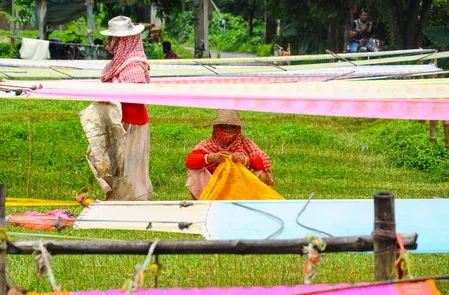
Under the updated schedule, powerloom weaving charges for dhotis have been raised to 14 paise per pick from the earlier 11 paise, while the rate for sarees moves to 13 paise per pick from 12.5 paise. The revised calculations are based on 68 picks per inch for dhotis and 64 picks per inch for sarees, translating to a complete weaving charge of ₹19.04 per dhoti and ₹45.76 per saree on powerlooms.
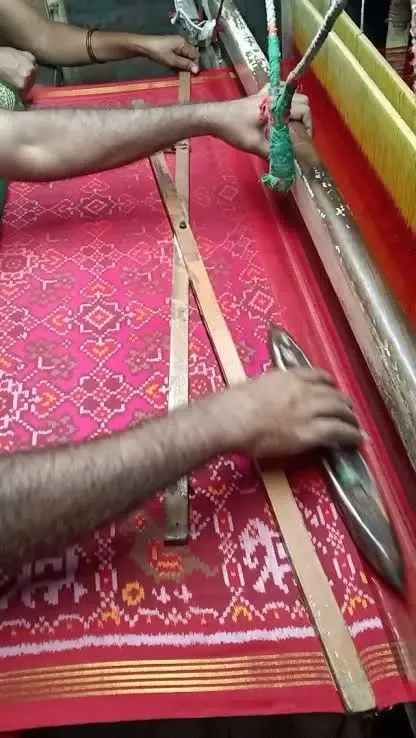
For pedal loom weavers, the government has fixed rates at 27.20 paise per pick for dhotis and 27.76 paise per pick for sarees, placing the weaving charge at ₹36.99 per dhoti and ₹97.72 per saree. Handloom weavers will also benefit: the charge for a handloom saree rises from ₹231.80 to ₹260.39, and the dhoti rate climbs from ₹96.13 to ₹107.76, according to a senior department official.
Scale of the Pongal Production Drive
The government has issued orders for powerloom production of 1.74 crore dhotis and 1.53 crore sarees, supplemented by four lakh dhotis and 24 lakh sarees through pedal looms and handlooms. A government order signed by R. Lilly, Secretary of the Handlooms, Handicrafts, Textiles and Khadi Department, formalised the revised charges. The state has allocated ₹300 crore as an advance towards production costs under the scheme.
Notably, the specifications for the garments have also been updated: dhotis now incorporate more intricate designs, and the prescribed dhoti length has been reduced from 3.75 metres to two metres. These production changes were taken into account while determining the new wage structure, officials said.
Weavers' Demands and the Gap That Remains
The revision follows repeated representations from weavers, particularly in Erode, who cited higher electricity tariffs, building rents, labour costs, and the rising price of spare parts as reasons for seeking an upward revision. The Tamil Nadu Weavers Associations Federation had sought 18 paise per pick for dhotis and 16 paise per pick for sarees — rates the government has not fully matched.
B. Kandavel, secretary of the Federation, acknowledged that the sanctioned rates fell short of their demands but said the increase offered 'some relief.' He described the revision — coming after the previous hike in 2024 — as a positive development for weavers engaged in the government's festival clothing programme. The increase in fabric thickness, Kandavel noted, had added to weaving requirements despite the reduction in dhoti length, making the cost pressure more acute than the length reduction alone would suggest.
Broader Context
Tamil Nadu's Pongal clothing scheme is one of the state's most visible welfare programmes, distributing free garments to crores of ration cardholders each year. This comes amid a wider pattern of input cost inflation affecting the handloom and powerloom sector across India, where electricity surcharges and raw material prices have squeezed margins for small weavers. Whether the revised rates will be sufficient to sustain weaver participation — or prompt fresh demands — is likely to depend on how production costs evolve through the festive season.
Point of View
Not a structural fix. Powerloom dhoti rates moved up by just 3 paise per pick — well below the 18 paise weavers sought — and the reduction in dhoti length from 3.75 metres to two metres partially offsets higher per-pick earnings. The state's ₹300 crore advance signals commitment to scale, but the continued gap between sanctioned and demanded rates suggests weaver associations will return with fresh demands once this season's production pressure eases. The deeper question is whether festival-driven procurement, by its nature a temporary and politically-timed intervention, can serve as a sustainable income support mechanism for a sector already squeezed by electricity tariffs and rising input costs.
NationPress
17 Oct 2026
Frequently Asked Questions
What changes has Tamil Nadu made to Pongal scheme weaving charges?
The Tamil Nadu government has raised powerloom weaving rates for dhotis to 14 paise per pick from 11 paise, and for sarees to 13 paise from 12.5 paise. Handloom and pedal loom rates have also been revised upward, with handloom saree charges rising from ₹231.80 to ₹260.39 per piece.
How many garments will be distributed under the Pongal scheme?
The government plans to distribute free clothing to 2.25 crore ration cardholders for the upcoming Pongal festival. Orders have been placed for 1.74 crore dhotis and 1.53 crore sarees on powerlooms, plus four lakh dhotis and 24 lakh sarees through pedal looms and handlooms.
Why did Tamil Nadu weavers demand higher rates?
Weavers, especially in Erode, cited rising electricity tariffs, building rents, labour costs, and higher spare parts prices as the main reasons for seeking increased charges. The Tamil Nadu Weavers Associations Federation had asked for 18 paise per pick for dhotis and 16 paise for sarees.
Are weavers satisfied with the revised rates?
Weavers have expressed partial satisfaction. B. Kandavel, secretary of the Tamil Nadu Weavers Associations Federation, said the hike offered 'some relief' but fell short of the rates demanded. He noted the revision was nonetheless a positive development, coming after the previous hike in 2024.
How much has Tamil Nadu allocated for the Pongal clothing scheme?
The state government has allocated ₹300 crore as an advance towards production costs under the scheme. The revised weaving charges are formalised through a government order issued by R. Lilly, Secretary of the Handlooms, Handicrafts, Textiles and Khadi Department.