Tejashwi Yadav: Religious Site Disputes Must Go Through Courts, Not Bulldozers

Synopsis
RJD leader Tejashwi Yadav demanded on 29 September 2026 that disputes over all religious sites — temples, mosques, madrasas, and shrines — be settled through constitutional and judicial process, explicitly rejecting bulldozer-style executive action.
Key Takeaways
Tejashwi Yadav , Leader of the Opposition in the Bihar Legislative Assembly , posted a sharp statement on 29 September 2026 calling for constitutional and legal process in all religious-site disputes.
He explicitly named all four types of sites — mandir, masjid, madrasa, and mazaar — framing his call as universally protective across faiths.
The post directly rejected 'bulldozer action' as a tool for resolving such disputes, invoking the Constitution, law, and judicial process instead.
The Places of Worship (Special Provisions) Act, 1991 , which bars conversion of religious sites from their 15 August 1947 character, forms the key legal backdrop to his argument.
The statement continues RJD 's long-standing secular and social-justice positioning in north Indian politics, contrasting judicial mechanisms with perceived executive overreach in BJP-ruled states.
With courts and demolition drives both shaping India's religious-site debates, RJD leader Tejashwi Yadav drew a sharp line on Tuesday, 29 September 2026 — insisting that disputes over temples, mosques, madrasas, and mazars must be resolved through constitutional and judicial process, never through executive force.
Posting on X, Yadav wrote: 'धार्मिक स्थलों की सुरक्षा के लिए संविधान और कानून का पालन जरूरी!' ('Following the Constitution and law is essential for the protection of religious sites!'). He added that any dispute linked to temples, mosques, madrasas, or shrines 'should be resolved not through bulldozer action but under the Constitution, law, and judicial process.'
The Bulldozer Politics Debate in India
The phrase 'bulldozer action' has become politically charged in India over the past several years, with opposition parties accusing some state governments of using demolition drives as extrajudicial punishment targeting minority communities and their places of worship or religious institutions. Rashtriya Janata Dal (RJD), the Bihar-based party founded by Lalu Prasad Yadav and long anchored in social-justice and secular politics, has consistently pushed back against this trend, framing it as a threat to constitutional order.
Tejashwi Yadav's statement fits squarely into that lineage — and carries particular weight from his position as Leader of the Opposition in the Bihar Legislative Assembly.
The Places of Worship Act and the Constitutional Guardrails
The legal framework Yadav invokes has deep roots. The Places of Worship (Special Provisions) Act, 1991, bars conversion of religious sites from their character as it stood on 15 August 1947, effectively freezing the communal status of places of worship and directing any disputes to judicial resolution. Critics of demolition drives argue that executive action on or near religious sites runs directly against this legislative intent.
By explicitly naming the full spectrum — mandir, masjid, madrasa aur mazaar (temples, mosques, madrasas, and shrines) — Yadav frames his appeal as universally protective, not partisan. The rhetorical structure is deliberate: no community is left out, and the Constitution — not any single faith — is positioned as the common arbiter.
Opposition's Consistent Rule-of-Law Messaging
Indian opposition parties have repeatedly argued that demolition orders issued without adequate notice or proper judicial review set a dangerous precedent for how the state handles religiously sensitive property. RJD's messaging from Bihar has consistently contrasted judicial mechanisms with executive overreach, a framing that resonates with the party's core vote base of backward classes, minorities, and constitutionalist voters.
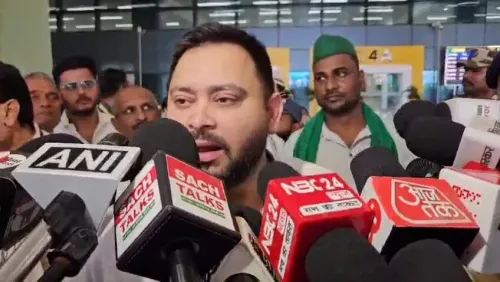
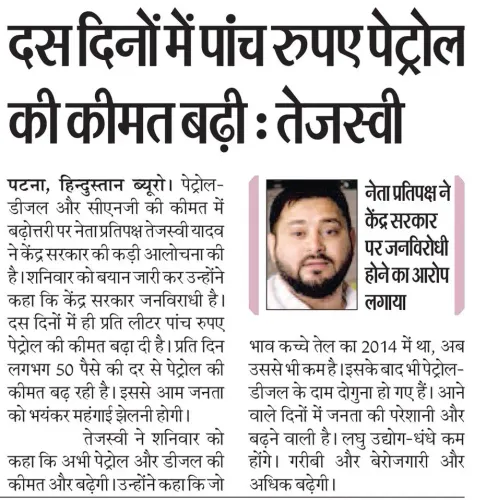
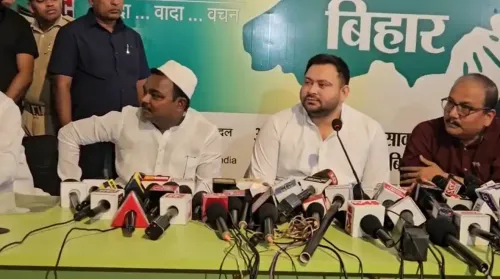
Yadav's post comes with four images attached — visual evidence, most likely, of sites at the centre of recent disputes, though the specific incidents referenced remain unconfirmed. The choice to pair images with a constitutional argument signals that this is not a passing remark but a curated political statement.
The Constitution does not expire under political pressure — and Tejashwi Yadav is betting that its protections, invoked loudly enough, will outlast the bulldozers.
Point of View
He ties bulldozer politics to a rule-of-law failure rather than a communal grievance. The inclusion of all four religious site types signals a calculated universalism designed to broaden RJD's appeal beyond its core Muslim-Yadav coalition. The statement also keeps opposition pressure on the BJP's record in states where demolition drives have faced court scrutiny, feeding into a wider national narrative about institutional independence ahead of possible state elections. Whether it prompts a floor debate in the Bihar Assembly or a response from the ruling NDA alliance in the state will test how much traction the message carries beyond social media.
NationPress
29 Sept 2026
Frequently Asked Questions
What did Tejashwi Yadav say about religious sites and bulldozer action?
Tejashwi Yadav said on 29 September 2026 that disputes involving temples, mosques, madrasas, and shrines must be resolved through the Constitution, law, and judicial process — not through bulldozer or demolition action by the executive.
What is the Places of Worship Act 1991 that Tejashwi Yadav refers to?
The Places of Worship (Special Provisions) Act, 1991, prohibits the conversion of any religious site from its character as it stood on 15 August 1947, and directs that all related disputes be resolved through legal and judicial channels.
Why is 'bulldozer action' a political issue in India?
Opposition parties have accused some state governments of using demolition drives near or at religious sites as extrajudicial punishment, arguing these actions bypass due process and disproportionately affect minority communities.
What is the RJD's position on communal and religious issues?
Rashtriya Janata Dal, founded by Lalu Prasad Yadav, is historically positioned on social justice and secular politics, frequently advocating for constitutional and judicial — rather than executive — resolution of communal disputes.
What is Tejashwi Yadav's current political position in Bihar?
Tejashwi Yadav is the Leader of the Opposition in the Bihar Legislative Assembly and a senior leader of the Rashtriya Janata Dal; he previously served as Deputy Chief Minister of Bihar.